Enhanced Package Security for Residents With Smart Lockers
Enhanced package security for residents starts with smart lockers, secure pickup codes, and alerts that help reduce theft and simplify delivery collection.

A package isn’t secure just because it has made it inside the building. Enhanced package security for residents depends on controlling access to deliveries and giving each recipient a clear, secure way to collect them. In apartment buildings, smart lockers can replace exposed drop-off areas with controlled access and private pickup codes.
That extra layer matters: shared lobbies and delivery areas can leave packages visible and accessible before residents get home. Property teams need a process that protects deliveries without making collection difficult, while residents need to know when and how to collect their packages.
This article explains why package theft happens in apartment communities and how access control, secure storage, pickup codes, and notifications work together. You’ll also learn what makes a locker system practical for residents and property teams, and how timely alerts and delivery records can clarify each handoff.
Key Takeaways
- Identify where unattended deliveries are exposed, then establish a consistent process for receiving and storing packages securely.
- Combine controlled access with thoughtful placement of cameras, package rooms, and building entry systems to strengthen protection.
- Assess locker capacity, resident access, and package-handling workflows before choosing and maintaining a system.
- Use individual pickup codes and timely notifications to make collection straightforward and clarify when deliveries are received and retrieved.
1. Why is package theft common in apartment complexes?
Enhanced package security for residents starts with controlling where deliveries are left. Apartment packages often arrive while residents are away, so parcels may sit in shared lobbies, mailrooms, or other common areas. Unlike a private doorstep, these spaces may be accessible to residents, visitors, and building staff. During busy delivery periods, packages can accumulate before recipients collect them.
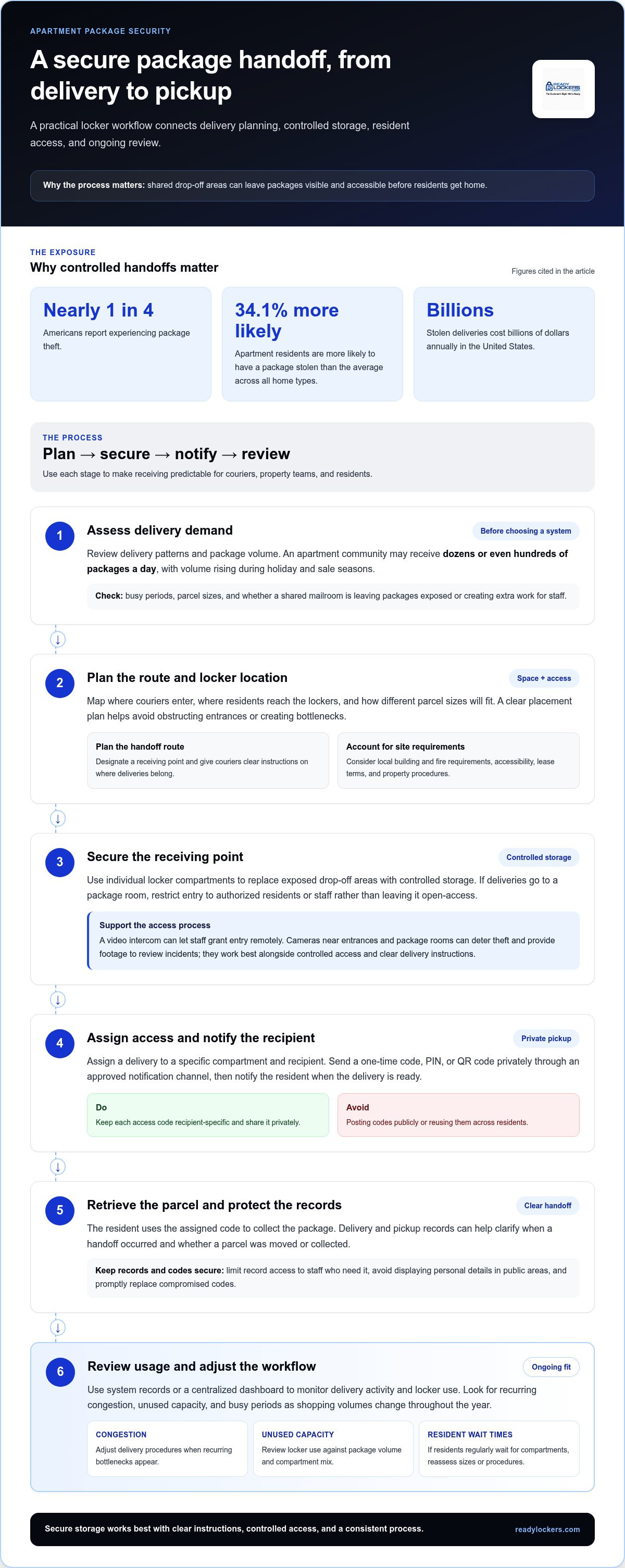
The problem reaches beyond individual buildings. Nearly one in four Americans report experiencing package theft, and apartment residents are 34.1% more likely to have a package stolen than the average across all home types. Stolen deliveries cost billions of dollars annually in the United States. In multifamily communities, frequent deliveries and shared drop-off areas can create more opportunities for packages to be misplaced or taken.
Residents can receive deliveries in several ways: a controlled-access package room, a locked mailroom, a front desk, or smart lockers. Locker systems can notify residents when a delivery is ready and provide a pickup code or QR code. The right fit depends on the building’s layout, delivery volume, and how easily residents can retrieve parcels. Enhanced package security for residents also depends on clear instructions showing couriers exactly where to leave deliveries.
If a package is marked delivered but is missing, review the delivery notice and check the usual drop-off area, package room, and nearby building spaces. Then promptly report the discrepancy to property management and the delivery company, sharing the tracking details and delivery time. Quick reporting helps staff review available records and determine whether the parcel was moved or collected.
Property teams can reduce lost packages by setting delivery protocols, directing couriers to a designated receiving point, and asking residents to report discrepancies promptly. A package room limits exposure when access is restricted to authorized people. Smart lockers add individual compartments and controlled pickup, while delivery and pickup records can help clarify where a handoff occurred.
Technology works best as part of a consistent process. Clear signs can guide couriers to the right location, and access controls can keep deliveries out of open lobbies. Property managers can explain where packages are stored and how residents can retrieve them, especially before peak delivery periods such as holidays and sale events.
2. Access control and property technology integrations
Building access control should separate public entrances from package areas. A video intercom can let staff grant entry remotely, helping couriers leave deliveries inside rather than outside. Cameras near entrances and package rooms can deter theft and provide footage to review incidents. They work best alongside controlled access, clear delivery instructions, and organized package management.
Is an open-access package room secure? Not by itself. If residents, visitors, and delivery personnel can enter freely, packages remain exposed, even indoors. Property management can restrict entry to authorized residents or staff, use a designated courier entrance, and post instructions directing deliveries to the right location.
Package-room and delivery requirements can depend on local building and fire requirements, accessibility, lease terms, and property procedures. These considerations shape where a room can be located, how people enter, and how deliveries move through the building. Property teams should account for them when planning a room or updating delivery procedures.
PIN and QR access codes create a more controlled handoff. Assign a code to a specific recipient and compartment, then share it privately through an approved notification channel. Don’t post codes publicly or reuse them across residents. For example, staff can direct a courier to a controlled room while the resident receives a private retrieval code.
Digital systems also create privacy and security risks. Delivery records may reveal residents’ names, apartment details, or collection times, while a shared or exposed access code could let someone retrieve another person’s package. Limit record access to staff who need it, avoid displaying personal details in public areas, and promptly replace compromised codes. During the busy holiday season, consistent access rules help property management handle higher delivery activity without opening the room to everyone.
3. Are smart locker systems worth it for apartment buildings?
Smart lockers can be worthwhile when a shared mailroom leaves packages exposed or creates extra work for staff. Traditional mailrooms provide a central drop-off area, but may rely on open shelves and manual sorting. Lockers assign deliveries to secure compartments, giving residents a controlled way to collect them. The benefit depends on package volume, available space, and how well the process fits residents’ routines.
Review delivery patterns before selecting package lockers. An apartment community may receive dozens or even hundreds of packages a day, with volume rising during holiday and sale seasons. Consider where couriers enter, how residents reach the lockers, and whether the site can accommodate different parcel sizes. A clear placement plan helps avoid obstructing entrances or creating bottlenecks.
After installation, monitor usage and package volume through system records or a centralized dashboard. Real-time delivery activity and locker use can help property teams spot recurring congestion, unused capacity, or busy periods. If residents regularly wait for compartments to open, adjust delivery procedures or reassess the mix of compartment sizes. Review these patterns as shopping volumes change throughout the year.
Authentication also affects day-to-day usability. Smart systems can assign a one-time code, PIN, or QR code to a delivery, then notify the recipient when it’s ready. Residents can retrieve packages without staff sorting each item, while a pickup record helps clarify whether a parcel remains stored or has been collected. Individual codes reduce reliance on shared keys or unrestricted room access.
Plan for ongoing upkeep, too. Assign responsibility for checking compartments, keeping delivery instructions readable, and responding to access problems. Review package volume and usage regularly, especially after peak periods. Lockers won’t prevent every package from being stolen, but controlled storage and clear retrieval steps can reduce exposure and simplify package management for multifamily buildings.
4. Resident pickup codes and real-time notifications
In multifamily buildings, a delivery alert turns an unseen parcel into a clear next step. After a carrier places a package in a locker, the resident can receive an SMS or QR code notification. The alert confirms that the package is ready and helps residents retrieve it without searching a shared room.
A one-time access code connects a specific delivery to its recipient. The resident enters the PIN or scans the QR code at the locker, and the assigned compartment opens. This makes each handoff more controlled than leaving a parcel on an open shelf. Keep codes private, and don’t post them near the locker or share them in resident chats.
Real-time records can show when a carrier deposited a package and when it was collected. Timestamped delivery and pickup events provide a clearer chain of custody if a resident reports a missing parcel. For example, property staff can compare the reported delivery time with the system record and follow up on the discrepancy.
Notifications also reduce delays between delivery and collection. A resident who receives an alert while away can plan a pickup after returning, rather than relying on a visit to the mailroom. Contactless pickup systems can support collection around residents’ schedules, with pickups available 24/7. Clear instructions should explain where to find the locker and how to use the code.
For property teams, consistent alerts can simplify package management during busy online shopping periods. Set a standard process: confirm the recipient’s contact details, send the pickup notification after deposit, and record collection. If an alert doesn’t arrive, residents should check their contact details and ask property staff to review the delivery record. Reliable notifications reduce confusion, while individual codes make access specific to each parcel.
Ready to streamline resident collection with a contactless package pickup system? Explore how pickup alerts and access codes can fit your multifamily property’s delivery workflow.
ReadyLockers: Smart Package Lockers
ReadyLockers helps apartment communities move deliveries from open drop-off areas into a controlled pickup process. Its Smart Package Lockers give couriers a secure place to deposit parcels, while Locker Management Software supports package handling. The Courier Access Interface helps couriers access the system, and the Contactless Pickup System lets residents collect deliveries without staff handling each handoff.
This approach can suit properties where shared mailrooms leave packages exposed, delivery activity strains staff workflows, or residents need a clear pickup process. Recipients receive SMS or QR code notifications, and pickups are contactless and available 24/7. Together, secure storage, access, and notifications help residents know when a package is ready and how to retrieve it.
For apartment package management, contact ReadyLockers to discuss how its smart locker platform can support your property’s delivery workflow.
Build a More Reliable Package Workflow
Enhanced package security for residents starts with a property-level plan: define where couriers leave parcels, how residents gain access, and who oversees package records. Review the process as resident needs and delivery patterns change. A clear approach helps staff follow consistent steps and gives residents a predictable way to collect deliveries.
ReadyLockers offers Smart Package Lockers, Locker Management Software, and a Contactless Pickup System to support this workflow. Property teams can consider how these offerings fit their building’s receiving area, staff processes, and residents’ pickup needs. The next step is to connect your package-handling challenges with a practical system design.
Contact ReadyLockers to discuss package security for your property. A clearer delivery process can help your team create a more organized, convenient experience for residents.
Frequently Asked Questions
Are smart locker systems worth it for apartment buildings?
Yes, smart lockers can be worthwhile when delivery volume, staffing demands, or an unsecured drop-off layout make manual handling difficult. Property managers can compare the staff time spent sorting parcels, resident reports, and congestion during delivery peaks with the workflow lockers would replace. They are particularly useful for properties that need organized collection without turning the front desk into a package holding area.
How can I ensure my parcel is delivered to a safe place?
Use the delivery instructions for your order to direct the carrier to your building’s designated secure receiving point. If your apartment community has a package room or locker system, include clear directions to that location. If you’re unsure where parcels are accepted, ask property management about the building’s delivery procedure before placing an order.
How do apartment package lockers work?
In a smart locker system, a courier places a parcel in a compartment, and the resident retrieves it using the assigned access method. With ReadyLockers, residents can use a PIN or QR code at the kiosk; the mobile app is optional. Residents can collect a package at the locker without needing a staff member to hand it over.
What is porch piracy in apartment buildings?
Porch piracy is the theft of packages delivered to residential addresses. In an apartment building, a parcel left in an open lobby or beside a shared entrance may be accessible to people beyond its intended recipient. It differs from a delivery sent to the wrong unit, so residents should report missing items and include the carrier’s delivery details.
Why is package theft common in apartment complexes?
Shared spaces can make it difficult to control who sees or reaches a delivery. For example, a parcel left near a lobby entrance may be exposed to visitors, contractors, and residents from several floors. A carrier may also leave an item in the wrong common area if instructions are unclear. Designated receiving locations and clear directions reduce these points of confusion.
How do secure package lockers and parcel rooms work?
A parcel room stores deliveries in a designated area, with access limited by the property’s entry procedures. Smart lockers instead place parcels in individual compartments that recipients access separately. A room can suit deliveries that need staff coordination or space for larger parcels, while lockers support individual retrieval. The building’s layout and delivery workflow help determine which arrangement fits.

Frequently Asked Questions
Are smart locker systems worth it for apartment buildings?+
Yes, smart lockers can be worthwhile when delivery volume, staffing demands, or an unsecured drop-off layout make manual handling difficult. Property managers can compare the staff time spent sorting parcels, resident reports, and congestion during delivery peaks with the workflow lockers would replace. They are particularly useful for properties that need organized collection without turning the front desk into a package holding area.
How can I ensure my parcel is delivered to a safe place?+
Use the delivery instructions for your order to direct the carrier to your building’s designated secure receiving point. If your apartment community has a package room or locker system, include clear directions to that location. If you’re unsure where parcels are accepted, ask property management about the building’s delivery procedure before placing an order.
How do apartment package lockers work?+
In a smart locker system, a courier places a parcel in a compartment, and the resident retrieves it using the assigned access method. With ReadyLockers, residents can use a PIN or QR code at the kiosk; the mobile app is optional. Residents can collect a package at the locker without needing a staff member to hand it over.
What is porch piracy in apartment buildings?+
Porch piracy is the theft of packages delivered to residential addresses. In an apartment building, a parcel left in an open lobby or beside a shared entrance may be accessible to people beyond its intended recipient. It differs from a delivery sent to the wrong unit, so residents should report missing items and include the carrier’s delivery details.
Why is package theft common in apartment complexes?+
Shared spaces can make it difficult to control who sees or reaches a delivery. For example, a parcel left near a lobby entrance may be exposed to visitors, contractors, and residents from several floors. A carrier may also leave an item in the wrong common area if instructions are unclear. Designated receiving locations and clear directions reduce these points of confusion.
How do secure package lockers and parcel rooms work?+
A parcel room stores deliveries in a designated area, with access limited by the property’s entry procedures. Smart lockers instead place parcels in individual compartments that recipients access separately. A room can suit deliveries that need staff coordination or space for larger parcels, while lockers support individual retrieval. The building’s layout and delivery workflow help determine which arrangement fits.