Corporate Office Package Security: Practical Guide for 2026
Boost corporate office package security in 2026. Discover how smart lockers and automated workflows prevent missing parcels and streamline your deliveries.

A package can pass through a guarded entrance and still go missing if its handoff isn’t controlled. Corporate office package security depends on knowing where deliveries go after arrival, who can access them, and how recipients collect them. Unattended parcels in reception areas and shared mailrooms create uncertainty, while manual sorting and notifications pull staff away from other work.
Stronger oversight doesn’t have to mean more front-desk tasks. This guide explains how to secure package handoffs with clear procedures, managed courier access, and smart locker technology. You’ll learn how to create a consistent process from courier deposit to employee pickup, keep deliveries in a designated location, and give recipients a convenient way to collect packages.
Smart lockers and cloud-based management software can support that process. Couriers deposit packages in secure lockers, and recipients receive an SMS or QR code notification for contactless pickup. That creates a more organized handoff, reduces routine interruptions for staff, and gives the office a clearer view of locker activity.
Key Takeaways
- Corporate office package security improves when every handoff has a clear point of responsibility, from courier receipt to recipient pickup.
- Map the delivery journey to identify where courier access, secure storage, alerts, and pickup procedures fit your current workflow.
- Compare staffed reception, shared mailroom shelving, and smart lockers by access control, staff effort, pickup flexibility, and delivery visibility.
- Use delivery patterns, receiving hours, package locations, and staff responsibilities to shape a practical security plan.
- Modular lockers and cloud-based management can support a coordinated process alongside broader building security measures.
Why Corporate Office Package Security Starts With a Clear Chain of Custody
Corporate office package security means controlling a delivery from arrival through pickup. That requires clear procedures for receiving packages, choosing where they’re stored, notifying recipients, and completing collection. A clear chain of custody applies this principle by documenting handoffs and making responsibility visible.
Package security is physical custody; cybersecurity protects digital systems and information. They’re different disciplines, but they can support one another. Digital records and notifications help coordinate physical handling, while clear access procedures help ensure a parcel is released through the intended process.
Where office packages become vulnerable
Unattended deliveries leave a basic question unanswered: who received or moved the package? A parcel placed at reception may be accessible to visitors, employees, and building staff. In an open mailroom, shared access and crowded shelving can make parcels harder to distinguish or locate. When notification practices vary, recipients may not know a delivery has arrived, and staff may need to search or follow up manually.
These conditions create uncertainty, but they don’t prove that a package has been lost. A camera or locked door may contribute to building security, but neither alone defines who accepted a parcel, where it was placed, or whether it reached its recipient. Clear procedures address those process gaps.
What a secure package handoff should accomplish
A reliable workflow accounts for courier access, package deposit, recipient notification, and pickup. For each stage, decide who can act, what information should be recorded, and how the next person in the process is informed. A courier access interface can help manage delivery access while fitting within the building’s broader access controls, rather than replacing them.
Set a defined storage location and a consistent method for identifying recipients. For example, a smart locker workflow can direct couriers to deposit parcels in secure compartments and send recipients an SMS or QR code for contactless collection. The locker and management platform support the handoff; office procedures determine how exceptions are handled.
A successful process does more than keep parcels out of public areas. Staff should be able to identify where a package belongs, recipients should know how to collect it, and each transfer should have an accountable step. That clarity supports reliable handling, reduces manual interruptions, and makes pickup straightforward.
How Corporate Office Package Security Works Across the Delivery Journey
A secure package workflow connects each handoff, so a delivery doesn’t simply disappear into reception or a shared mailroom. Corporate office package security works best when courier access, package placement, recipient notification, and pickup follow one clear process. A locker-based handoff connects a controlled deposit with secure storage and recipient collection.
How courier access and package deposit fit together
Start by defining how couriers reach the designated delivery point. A courier access interface can manage access to the locker deposit process, while the office’s existing building access controls continue to govern entry to other areas. This helps direct deliveries without granting unrestricted access to the workplace. Office teams should set site procedures, including where couriers should go and how exceptions are handled.
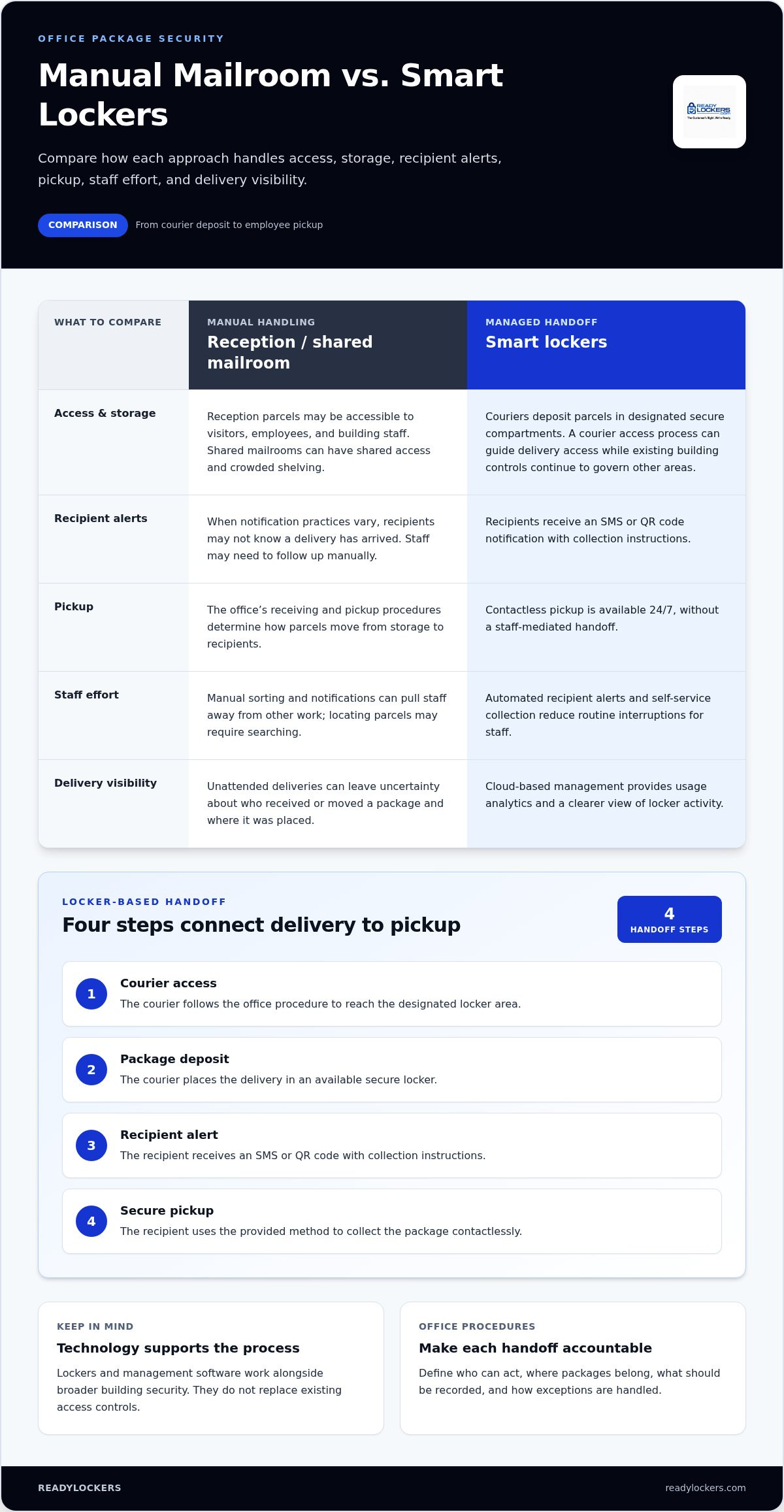
The workflow can be organized into four steps:
- Courier access: The courier follows the office’s procedure to reach the designated locker area.
- Package deposit: The courier places the delivery in an available secure locker.
- Recipient alert: The recipient receives an SMS or QR code notification with collection instructions.
- Secure pickup: The recipient uses the provided pickup method to access the package without a staff-mediated handoff.
This sequence gives each participant a clear next action. It also makes the process easier to review if a package is delayed or a recipient needs help locating it. CISA discusses how documented custody supports security and risk mitigation; the same basic principle helps offices make parcel handling more accountable.
How recipients retrieve packages and managers oversee activity
An SMS tells the recipient a package is ready and can provide pickup details. A QR code gives them a digital method to access the assigned locker. Both options connect a delivery with its intended recipient and avoid relying on staff to relay every arrival. Contactless pickup is available 24/7, giving recipients flexibility to collect packages when it suits their schedule. That availability is a workflow feature, not a guarantee against every security risk.
Cloud-based locker management software supports courier access management and provides usage analytics, helping office teams understand how the locker workflow is being used. It works alongside clear receiving procedures and broader building security, rather than replacing them. To see how smart package locker workflows can support an office handoff process, consider how controlled deposit and recipient pickup fit your current setup.
Manual Mailroom vs. Smart Lockers: Comparing Office Package Security
The right package process depends on delivery patterns, office layout, and how receiving is managed. Staffed reception or shared shelving can work well when deliveries are manageable and procedures are consistent. Smart lockers add controlled storage and self-service pickup when routine handoffs create extra work or parcels need a more defined path.
| What to compare | Staffed reception | Shared mailroom shelving | Smart locker workflow |
|---|---|---|---|
| Access control | Staff receive and manage parcels; access depends on reception procedures. | Shared access can make package handling less distinct. | Packages are placed in secure compartments through a controlled deposit process. |
| Recipient notification | Staff notify recipients using the office’s process. | Recipients rely on staff or their own checks unless alerts are arranged. | Recipients can receive an SMS or QR code notification. |
| Staff effort | Receiving, sorting, notifying, and releasing parcels require staff attention. | Staff may still need to organize parcels and help locate them. | Self-service pickup can reduce routine reception handoffs. |
| Pickup flexibility | Depends on reception coverage and release procedures. | Depends on mailroom access and office procedures. | Contactless pickup is available 24/7. |
| Visibility | Depends on how consistently staff record and communicate package status. | Can be limited when parcels are moved or stored without a clear process. | Cloud-based management supports oversight of locker activity. |
When reception or a shared mailroom may be sufficient
Manual handling can suit an office with low delivery volume and a consistently staffed receiving area. Make it dependable by designating a storage location, notifying recipients promptly, and setting a clear release procedure. Staff should know who accepts parcels, where they go, and how pickup is recorded. The method matters less than applying the process consistently.
When smart lockers can improve the package workflow
Smart lockers can help when packages compete for space in a lobby or open mailroom, or when staff spend time managing routine pickups. Secure compartments separate parcels from general access, while self-service collection gives recipients flexibility and reduces front-desk interruptions. Modular configurations can be tailored to office layout and package volume. For broader purchase considerations, see the smart package lockers buyer’s guide.
Compare the options against your actual receiving conditions, not just the hardware. A well-run manual process may suit one office, while another may benefit from a more controlled locker workflow. Corporate office package security improves when the approach fits how deliveries arrive and recipients collect them.
How to Build a Corporate Office Package Security Plan
A practical plan starts with the office’s real delivery habits, not assumptions about how a mailroom should work. Corporate office package security depends on a process that fits the building, assigns responsibilities, and gives staff a consistent way to handle routine deliveries and exceptions.
Assess the office’s package flow and physical space
Trace a delivery from building entry to receiving point, temporary storage, and recipient pickup. Observe the process during normal operating days. Note when deliveries arrive, receiving hours, where parcels accumulate, and which staff members handle them. Record the route couriers are expected to follow, including access points or shared areas where responsibility becomes unclear.
Then assess the physical space. Consider available floor area, employee access patterns, and whether the receiving location is easy to find without directing couriers through unrelated work areas. Use observed package sizes and delivery patterns to guide storage decisions rather than assuming a standard locker configuration or capacity. Modular locker configurations can be tailored to a property’s layout and package volume.
Set access, notification, and exception procedures
Turn observations into written steps. Assign responsibility for courier access, receiving and placing parcels, recipient communications, and unresolved delivery issues. Align courier procedures with building access policies and internal security practices. A controlled courier access process should direct deliveries to the intended receiving point without replacing broader building access controls.
Define what staff should do when a parcel is damaged, a recipient can’t be identified, a package remains unclaimed, or access to the receiving area is unavailable. Specify where the item should be held, who should be notified, and how its status is recorded. Clear exception steps help staff respond consistently instead of improvising during a busy period.
Set a standard for timely recipient alerts. SMS or QR code notifications can tell recipients when and how to collect a delivery, while contactless pickup can reduce routine staff handoffs. Keep the communication process simple, and make sure staff know what to do if a recipient doesn’t receive an alert.
Digital oversight can help teams review locker activity and understand how the process is being used. Smart locker management software can support operational visibility alongside documented procedures.
Review the plan after observing how it works in practice, and update responsibilities or procedures when the office layout or delivery flow changes. Explore smart locker solutions for office package handling as you shape a process that suits your workplace.
Secure Office Package Handoffs With ReadyLockers
Once an office has mapped its delivery patterns, available space, and access needs, it can turn those findings into a defined package workflow. ReadyLockers brings together smart locker hardware, courier access management, recipient notifications, and cloud-based oversight to support the handoff from deposit to pickup. It adds a practical layer to corporate office package security while fitting within the building’s wider procedures.
What an office locker workflow changes day to day
Couriers deposit parcels in secure lockers, so recipients don’t need to be present at the moment of delivery. After a package is placed, its recipient can receive an SMS or QR code notification with a way to collect it. Contactless pickup is available 24/7, giving employees flexibility without requiring reception staff to coordinate every routine handoff.
For office teams, the change is a more structured route for deliveries. Courier access management helps organize the deposit process, while cloud-based locker management software and usage analytics support visibility into locker activity. These tools support package handling, but they don’t replace building-wide access controls or clear procedures for exceptions.
Move from a security goal to a workable office setup
Use the office’s actual delivery patterns to guide the setup. Consider when packages arrive, how much space is available, where couriers can reach the receiving point, and how employees prefer to collect deliveries. Modular locker configurations can be tailored to property layout and package volume, helping the physical setup align with the workflow instead of forcing the office into a one-size-fits-all approach.
Then connect the hardware with clear responsibilities for delivery access, recipient communication, and unresolved parcels. The contactless delivery locker technology overview offers related considerations for planning a convenient pickup experience.
A well-designed locker workflow doesn’t replace the office’s security plan. It makes the package handoff more organized by giving couriers a designated deposit point, recipients a clear collection method, and teams a digital view of locker activity.
Explore ReadyLockers for office package security and plan a package handoff workflow around your workplace’s layout and needs.
Make Every Office Package Handoff More Accountable
Corporate office package security starts with a clear process: control courier access, place deliveries in a designated location, notify recipients, and define how pickup is completed. The right setup should fit your office’s delivery patterns and layout while giving each handoff a clear point of responsibility.
Smart lockers can support that workflow by giving couriers a secure place to deposit packages and recipients SMS or QR code notifications for collection. Contactless pickup is available 24/7, while cloud-based management software supports courier access management and usage analytics. These tools work alongside your office’s broader security procedures to keep package handling organized and visible.
Ready to turn your package security plan into a practical office workflow? Explore ReadyLockers for office package security and take the next step toward more controlled handoffs and convenient pickup. A clear process can make receiving packages simpler for your team and your recipients.
Frequently Asked Questions
Is a package locker more secure than leaving deliveries at reception?
A package locker provides controlled compartments and a defined pickup process, while staffed reception can work well when employees consistently receive and manage parcels. The stronger option depends on the full workflow: courier access, storage location, recipient notification, and package release. Compare delivery volume and staffing patterns before deciding. Neither lockers nor reception alone guarantee that packages can’t be lost or misdirected.
How can an office reduce package theft?
Reduce exposure by replacing unattended drop-off points with a designated receiving process, limiting access to stored packages, and notifying recipients promptly. Smart lockers can provide secure storage and contactless pickup as part of that process. Set written procedures for courier access, unclaimed deliveries, and exceptions. Cameras may help review events, but they don’t replace controlled handoffs or clear responsibility for packages.
Can smart lockers be used for corporate office package security?
Yes. Smart package lockers give couriers a designated place to deposit parcels and employees a self-service pickup process. ReadyLockers supports SMS or QR code notifications, courier access management, and usage analytics through its cloud-based platform. For effective corporate office package security, define how the locker fits existing building access rules and establish procedures for delivery exceptions, unclaimed parcels, and recipient support.
What happens if an employee does not collect a package?
The office should establish an unclaimed-package procedure before using lockers. Decide who monitors unresolved deliveries, whether and how recipients are reminded, and what happens next under internal policy. Locker management software and usage analytics can support oversight, but the organization’s procedures determine the action for each parcel. Set a consistent process staff can follow, and don’t assume one retention period applies to every workplace.
How do couriers access office package lockers?
Couriers follow a designated access process to reach the office’s locker deposit point, rather than relying on an employee to receive each parcel in person. ReadyLockers includes a courier access interface, while the office defines how it works with building access rules. Clear instructions help couriers complete deposits correctly. The office should also document how staff handle delivery exceptions and make sure recipients know how to collect their packages.
Are office package lockers available for pickup outside business hours?
ReadyLockers supports contactless pickup 24/7, so recipients can collect packages outside standard reception hours. Actual access to the locker still depends on the building’s entry rules, employee access policies, and locker placement. Include these considerations when designing the process, and explain them to recipients. Around-the-clock pickup is a system capability, not a promise that every building’s doors or access arrangements are unrestricted at all hours.
What should a corporate office consider before adding package lockers?
Review delivery patterns, receiving hours, available floor space, courier routes, and how employees will reach the pickup point. Identify who will manage access, notify recipients, and resolve exceptions. ReadyLockers offers modular configurations tailored to property layout and package volume, so planning can reflect the office’s actual conditions. Define how locker procedures will work alongside existing building access and security practices rather than treating lockers as a replacement.

Frequently Asked Questions
Is a package locker more secure than leaving deliveries at reception?+
A package locker provides controlled compartments and a defined pickup process, while staffed reception can work well when employees consistently receive and manage parcels. The stronger option depends on the full workflow: courier access, storage location, recipient notification, and package release. Compare delivery volume and staffing patterns before deciding. Neither lockers nor reception alone guarantee that packages can’t be lost or misdirected.
How can an office reduce package theft?+
Reduce exposure by replacing unattended drop-off points with a designated receiving process, limiting access to stored packages, and notifying recipients promptly. Smart lockers can provide secure storage and contactless pickup as part of that process. Set written procedures for courier access, unclaimed deliveries, and exceptions. Cameras may help review events, but they don’t replace controlled handoffs or clear responsibility for packages.
Can smart lockers be used for corporate office package security?+
Yes. Smart package lockers give couriers a designated place to deposit parcels and employees a self-service pickup process. ReadyLockers supports SMS or QR code notifications, courier access management, and usage analytics through its cloud-based platform. For effective corporate office package security, define how the locker fits existing building access rules and establish procedures for delivery exceptions, unclaimed parcels, and recipient support.
What happens if an employee does not collect a package?+
The office should establish an unclaimed-package procedure before using lockers. Decide who monitors unresolved deliveries, whether and how recipients are reminded, and what happens next under internal policy. Locker management software and usage analytics can support oversight, but the organization’s procedures determine the action for each parcel. Set a consistent process staff can follow, and don’t assume one retention period applies to every workplace.
How do couriers access office package lockers?+
Couriers follow a designated access process to reach the office’s locker deposit point, rather than relying on an employee to receive each parcel in person. ReadyLockers includes a courier access interface, while the office defines how it works with building access rules. Clear instructions help couriers complete deposits correctly. The office should also document how staff handle delivery exceptions and make sure recipients know how to collect their packages.
Are office package lockers available for pickup outside business hours?+
ReadyLockers supports contactless pickup 24/7, so recipients can collect packages outside standard reception hours. Actual access to the locker still depends on the building’s entry rules, employee access policies, and locker placement. Include these considerations when designing the process, and explain them to recipients. Around-the-clock pickup is a system capability, not a promise that every building’s doors or access arrangements are unrestricted at all hours.
What should a corporate office consider before adding package lockers?+
Review delivery patterns, receiving hours, available floor space, courier routes, and how employees will reach the pickup point. Identify who will manage access, notify recipients, and resolve exceptions. ReadyLockers offers modular configurations tailored to property layout and package volume, so planning can reflect the office’s actual conditions. Define how locker procedures will work alongside existing building access and security practices rather than treating lockers as a replacement.