Co-Working Package Delivery: 2026 Mailroom Guide
Streamline co-working space package delivery with smart lockers and automation. Learn how to cut front-desk chaos and secure member parcels in this 2026 guide.

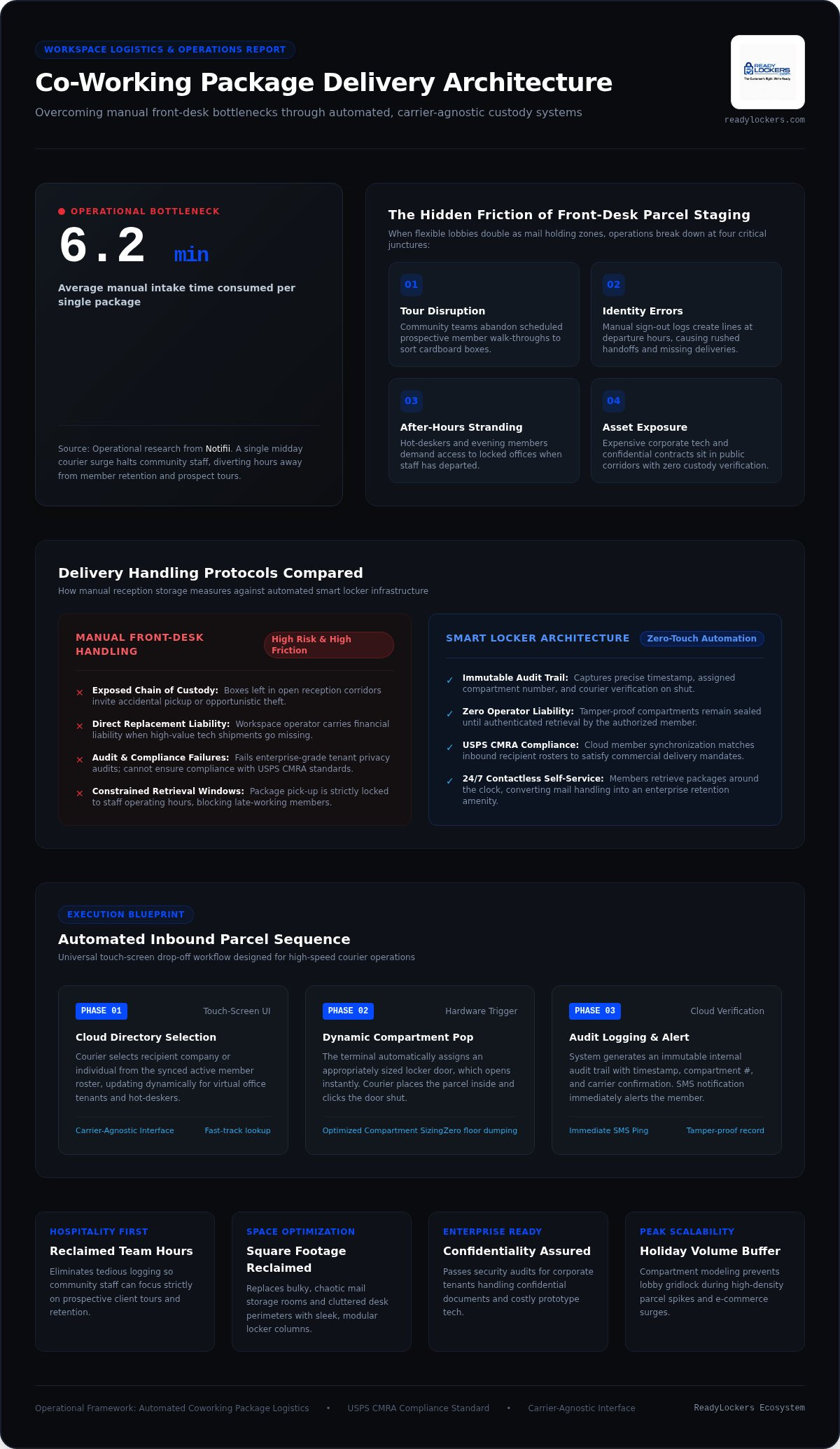
According to operational research from Notifii, manual parcel intake consumes an average of 6.2 minutes per package. In a thriving flexible office, a single midday courier drop-off can easily derail hours of administrative productivity. Streamlining co-working space package delivery shouldn't force your community team to abandon prospective member tours and retention initiatives just to sort cardboard boxes, manually log tracking codes, and track down misplaced deliveries.
You already know the daily frustration of cluttered reception counters, hot-deskers demanding after-hours parcel retrieval, and the liability risks surrounding expensive tech shipments. In this guide, you'll discover how automated smart locker systems and cloud software eliminate front-desk chaos, secure member packages with complete chain-of-custody logging, and transform mail handling into a high-value, scalable amenity. We cover carrier-agnostic drop-off workflows, essential regulatory compliance standards, and the self-service tech driving modern workspace operations.
Key Takeaways
- Modernizing your co-working space package delivery framework with carrier-agnostic drop-offs removes front-desk bottlenecks and frees community teams to prioritize member hospitality.
- Deploying modular smart package lockers paired with cloud management software establishes automated, tamper-proof chain of custody for every inbound shipment.
- Transitioning away from manual logging or dedicated mailrooms reclaims valuable square footage while eliminating package loss liability.
- Calculating member turnover ratios and locker compartment requirements ensures your lobby infrastructure scales smoothly with peak holiday parcel spikes.
- Providing a secure, 24/7 contactless pickup system turns routine mail receiving into a premium amenity that attracts enterprise teams and virtual office clients.
The Shared Workspace Parcel Dilemma: Why Front Desks Fail
Co-working space package delivery encompasses the end-to-end receipt, logging, physical storage, and handoff of inbound member parcels within a shared office environment. As e-commerce orders, client equipment, and everyday business supplies surge, reception counters built for hospitality quickly devolve into chaotic mail depositories. Pure software platforms might log digital entries, yet they cannot physically contain the dozens of boxes dumped daily across lobby floors.
When couriers drop parcels haphazardly, receptionists lose control over physical inventory. Misplaced shipments break member trust, spark awkward confrontations, and saddle workspace operators with direct replacement liability. Treating inbound logistics as an unmanaged front-desk courtesy inevitably turns professional shared workspaces into high-risk, cluttered corridors.
The Hidden Operational Cost of Manual Parcel Sorting
Daily deliveries from UPS, FedEx, Amazon, and local couriers arrive in waves, abruptly halting front-desk operations. Each drop-off requires staff to inspect labels, write manual notifications, and stash items behind counters. Inbound logistics become an administrative drag: manual package handling functions as a major operational bottleneck that routinely pulls community teams away from retention programs, prospect tours, and revenue-generating hospitality duties.
Beyond intake, the retrieval phase creates endless friction throughout the afternoon:
- Continuous desk interruptions pull staff away from higher-value member support.
- Manual sign-out logs create lines during peak departure hours.
- Rushed staff handoffs lead to mistaken identity handoffs and missing deliveries.
Liability and Privacy Vulnerabilities in Open Lobbies
Leaving packages on exposed tables or reception shelves invites opportunistic theft and accidental pickups. Corridors with high foot traffic offer zero chain-of-custody verification. Because shared environments host diverse companies under one roof, leaving corporate assets exposed creates unacceptable operational risk.
Enterprise workspace tenants face acute privacy concerns under open-shelf setups. Sensitive commercial contracts, trade show displays, and confidential prototype hardware demand verifiable security protocols. For operators seeking enterprise memberships, manual floor storage fails security audits, exposing client organizations to compliance violations. Deploying modern automated parcel locker systems replaces open-lobby exposure with secured, verifiable compartment architecture, ensuring every delivery remains sealed until authenticated retrieval occurs.
Core Architecture of an Automated Coworking Parcel Delivery System
A resilient framework for co-working space package delivery demands dedicated hardware paired directly with smart software. Relying on generic access apps or open cubbies fails to solve the physical custody problem. By contrast, a purpose-built parcel management ecosystem connects couriers, space administrators, and members into one automated sequence.
Central to this architecture is a cloud-connected digital directory. Flexible spaces experience continuous turnover as virtual office clients join, hot-deskers rotate, and enterprise teams adjust headcount. Cloud synchronization keeps active member rosters updated automatically, matching inbound names accurately while aligning operations with USPS Commercial Mail Receiving Agency requirements regarding authorized mail recipients.
Carrier-Agnostic Courier Access and Drop-Off Workflows
Couriers operate on tight delivery windows. If an intake interface feels cumbersome, drivers leave boxes on the floor. A universal courier access interface uses a responsive touch-screen terminal that guides drivers through rapid drop-offs:
- The driver selects the recipient company or individual from the synced directory.
- The terminal assigns an appropriately sized compartment, which pops open instantly.
- The courier inserts the package and closes the door, securing the item immediately.
The instant that door clicks shut, the system generates an immutable internal audit trail. This records the exact timestamp, compartment number, and carrier confirmation, removing front-desk liability entirely.
Contactless Member Retrieval via Cloud Software
Securing the parcel immediately triggers real-time delivery notifications via SMS and email. Rather than queuing at reception, members receive a unique pickup notification containing a one-time numerical PIN and encrypted QR code.
Recipients simply hold their QR code up to the terminal scanner. The designated locker unlocks automatically for rapid, touch-free collection. Connecting these physical stations through centralized smart locker management software allows operators to monitor locker turnover rates, clear abandoned deliveries, and audit chain-of-custody logs across multiple flexible workspaces nationwide.
Space-Saving Modular Hardware Configurations
Flexible workspaces vary dramatically in physical layout. Modular hardware architecture lets operators configure vertical locker columns to fit available reception alcoves, mailroom corners, or main corridors without obstructing pedestrian paths.
Modern column layouts combine small letter drops, medium parcel boxes, and oversized compartments for heavy carton deliveries. Built from heavy-gauge commercial steel, these enclosures withstand continuous multi-tenant use while keeping member shipments secure. If you want to eliminate administrative package burdens entirely, exploring modular smart package lockers offers a clean, self-contained path toward effortless parcel management.
Delivery Methods Compared: Manual Handling vs. Mailrooms vs. Smart Lockers
Selecting an inbound logistics framework directly impacts your bottom line, floor plan efficiency, and tenant retention. While early-stage spaces often rely on informal front-desk holding, scaling operations requires evaluating the trade-offs between manual intake, dedicated mailrooms, and smart electronic lockers. Each method delivers vastly different outcomes across labor overhead, space utilization, and package security.
Manual reception holding ties up staff and limits parcel pickups strictly to staffed business hours. Dedicated mailrooms solve reception clutter but consume high-value leasable square footage that could otherwise generate desk revenue. Smart parcel lockers decouple delivery from staff schedules, enabling 24/7 self-service access without requiring dedicated room footprints.
- Manual Front-Desk Holding: Zero initial capital expense, but incurs continuous payroll drain, high error rates, and zero after-hours member access.
- Dedicated Mailrooms: Keeps packages off lobby floors, yet consumes 100 to 200 square feet of monetizable space while still requiring sorting personnel.
- Smart Electronic Lockers: Modular footprint fits existing corridors, automates check-in logging, and provides secure 24/7 contactless pickup.
Staff Labor and Operational Overhead Analysis
Manual parcel intake consumes substantial administrative bandwidth. When staff spend minutes per delivery deciphering handwriting, logging items into spreadsheets, and emailing recipients, labor costs compound rapidly. Inbound co-working space package delivery becomes especially unsustainable during fourth-quarter holiday surges, when parcel volumes double and reception desks become overwhelmed with consumer shopping.
Automated parcel lockers eliminate this recurring payroll drag. Couriers interact directly with the locker terminal, logging and depositing parcels independently. Staff involvement drops to zero, removing human error from notification routing and shielding community managers from administrative burnout.
Chain of Custody and Audit Trail Integrity
Informal handoffs create serious legal exposure. When an expensive shipment goes missing from an unlocked shelf, the workspace operator invariably bears the blame. A landmark Harvard Business Review study on coworking environments highlighted that professionals thrive when their workspace provides frictionless, reliable operational infrastructure that lets them focus entirely on their work.
Smart locker systems protect that operational reliability by enforcing complete chain-of-custody tracking. Every transaction records precise digital timestamps:
- Carrier authentication and delivery compartment selection.
- Automated dispatch of the pickup notification to the authorized recipient.
- Time-stamped QR code scanning at the moment of physical retrieval.
This unbroken digital record eliminates lost-package disputes, satisfies enterprise data protection standards, and ensures seamless accountability across your entire shared facility.
Implementing Automated Parcel Delivery: Step-by-Step Operator Blueprint
Transitioning from disorganized manual intake to an automated parcel workflow requires methodical operational execution. Rather than treating hardware as an afterthought, workspace operators must align equipment sizing, physical site preparation, software integration, and courier onboarding into a single cohesive rollout.
Executing this deployment properly transforms your co-working space package delivery infrastructure into a reliable, hands-off utility that scales effortlessly as your facility expands:
- Audit Daily Inflow: Calculate peak inbound deliveries across business days to establish appropriate locker column counts.
- Prepare the Physical Space: Designate a central, ADA-compliant lobby alcove with dedicated power outlets and ethernet drops.
- Sync Your Member Directory: Connect your flex-space billing software to locker management software via API to automate move-ins and move-outs.
- Establish Courier Protocols: Program driver access permissions and position directional lobby signage at entry points.
- Onboard Tenants: Issue orientation notices detailing mobile pickup codes, automated reminders, and holding policies.
Sizing Locker Capacity for Dynamic Workspace Rosters
Compartment sizing depends on your specific membership profile. Hot-desk users generally generate occasional parcels, whereas full-time private office suites and virtual address subscribers receive continuous daily volume. Workspace operators typically budget roughly one locker compartment for every three to five active members, assuming steady turnover.
Prompt member collection prevents full compartments from backing up operations. Evaluating hardware footprints through the comprehensive guide to smart package lockers helps determine the right balance of small, medium, and oversized doors before committing capital.
Carrier Coordination and Building Access Protocols
Couriers stick to predictable daily routes. Ensuring carrier adoption simply requires making the drop-off terminal faster than searching for front-desk personnel. Assign couriers master PINs or key fob access to the lobby entrance, then mount clear directional signage pointing directly to the check-in screen.
When unexpected freight or bulky merchandise exceeds standard locker compartment dimensions, the terminal prompts couriers to route items to an overflow holding zone while pinging community staff with an oversize alert.
Member Onboarding and Dormant Package Management
Automated parcel management functions best when members collect items swiftly. Introduce new signups to the pickup workflow during their initial onboarding sequence. The cloud engine automatically issues follow-up SMS and email nudges if parcels remain inside compartments past forty-eight hours.
For abandoned items or members away on extended travel, managers utilize administrative override credentials to clear doors, relog shipments, or forward contents as requested. Ready to eliminate reception package clutter for good? Explore complete hardware configurations by visiting ReadyLockers today to streamline your workspace mailroom.
Transforming Package Logistics into a High-Yield Coworking Amenity
Automating your co-working space package delivery infrastructure does more than eliminate reception clutter; it unlocks a reliable revenue driver. Enterprise satellite teams, remote founders, and hybrid organizations evaluate prospective workspaces by their operational sophistication. Providing an automated, secure parcel experience signals that your facility respects member privacy and business continuity, directly driving tenant satisfaction and lease renewal rates.
Instead of treating package handling as an unbilled administrative cost, forward-thinking operators package physical intake into high-margin service tiers. Modernizing this touchpoint turns everyday logistical friction into a competitive advantage.
Monetizing Virtual Office and Mailbox Memberships
Virtual office memberships offer substantial profit margins, but scaling them manually quickly overwhelms front-desk teams. Smart lockers solve this capacity bottleneck by decoupling account growth from staff hours. Operators can comfortably expand virtual memberships without adding administrative payroll.
Flexible workspaces capture recurring revenue by structuring tiered mail packages:
- Base Virtual Address: Standard business address registration with digital intake notifications.
- Premium Parcel Access: Guaranteed locker placement, extended holding periods, and immediate SMS pickup alerts.
- Enterprise Freight Tier: Dedicated multi-compartment access for teams receiving frequent equipment shipments.
Adopting scalable contactless delivery locker technology lets operators deliver continuous self-service value while keeping operational overhead fixed.
ReadyLockers: Purpose-Built Parcel Tech for Commercial Spaces
ReadyLockers provides the dependable hardware and software backbone commercial spaces need to operate autonomously. Designed to fit existing corporate lobbies, alcoves, and corridors, modular smart package lockers integrate seamlessly into active flex environments without requiring structural renovations.
The universal courier access interface enables swift, carrier-agnostic drop-offs, while cloud-connected locker management software continuously syncs with dynamic member rosters. Administrators gain complete chain-of-custody audit logs, occupancy tracking, and remote override controls through an intuitive dashboard. Upgrade your space with an enterprise-ready amenity that frees your community team to focus on hospitality. Discover tailored installation options by exploring ReadyLockers to transform your property logistics today.
Modernize Your Workspace Parcel Operations for Sustainable Growth
Treating inbound mail as an informal front-desk task drains administrative hours, risks member trust, and compromises lobby security. Automating co-working space package delivery resolves these operational bottlenecks permanently. Transitioning to intelligent self-service infrastructure frees your community management team to focus on tenant retention, removes lost-parcel liability through timestamped audit trails, and establishes a premium amenity that attracts scaling enterprise teams.
ReadyLockers delivers the dedicated technological foundation modern shared offices need to scale effortlessly. Built with durable modular hardware designed for versatile corporate office configurations, the system integrates a universal courier-agnostic drop-off interface compatible with all major delivery providers alongside cloud-driven automated SMS and QR code alerts for 24/7 contactless pickup. Protect your team's bandwidth and establish a seamless delivery experience. Upgrade your workspace with automated smart package lockers to turn everyday parcel chaos into a reliable, competitive advantage.
Frequently Asked Questions
How does co-working space package delivery work with an automated smart locker?
Couriers access a central touch-screen terminal, select the member or company name from the directory, and deposit the shipment into an automatically opened compartment. Once the courier shuts the door, the system logs the transaction and sends an automated SMS or QR code pickup notification directly to the recipient. The member scans their code at the terminal to retrieve their parcel in seconds, without requiring front-desk involvement.
Can all delivery couriers deliver packages into smart lockers without special keys?
Yes, the courier access interface operates universally across all delivery services, including UPS, FedEx, USPS, Amazon, and regional couriers. Delivery personnel don't need proprietary key fobs or specialized carrier hardware. Couriers simply follow intuitive on-screen prompts at the terminal to identify the recipient, open an appropriately sized locker door, and complete the drop-off in seconds.
How do coworking members know when their package has arrived at the space?
Recipients receive automated delivery alerts via SMS text message and email the moment a courier closes the locker compartment door. These real-time notifications contain a unique pickup PIN and a dynamic QR code. Members can walk up to the terminal at their convenience, scan the code from their smartphone screen, and immediately retrieve their delivery.
What happens if a coworking member leaves their parcel in a locker for days?
Locker management software tracks package dwell times automatically and sends scheduled reminder notifications to members whose items remain uncollected after forty-eight hours. If a package stays dormant beyond your facility's defined holding window, community managers can use administrative master credentials to open the compartment, clear the door for new incoming deliveries, and relocate the package to secure storage.
Can virtual office members use smart lockers for after-hours package pickup?
Yes, smart package lockers provide secure 24/7 contactless pickup if your facility allows off-hours building access. Virtual office members receive an encrypted QR code and PIN as soon as their items are deposited. They can enter the lobby outside standard staffed hours, scan their phone at the terminal, and retrieve their shipments without needing on-site reception personnel.
How much physical floor space is required to install smart lockers in a coworking lobby?
Modular hardware configurations adapt easily to available reception alcoves, hallways, and dead-zone corridors. A standard multi-column installation typically requires just ten to twenty square feet of floor space while providing dozens of secure compartments vertically. Operators only need a flat wall space with access to a standard electrical outlet and a wired or wireless network connection.
How does the system handle high member turnover and changing desk assignments?
Managing co-working space package delivery amidst rapid roster shifts is seamless because the locker management software synchronizes directly with your workspace billing and directory platform. When members sign up, upgrade suites, or cancel plans, the cloud directory updates courier search results in real time. This automated synchronization prevents deliveries to departed tenants and keeps recipient data completely accurate.

Frequently Asked Questions
How does co-working space package delivery work with an automated smart locker?+
Couriers access a central touch-screen terminal, select the member or company name from the directory, and deposit the shipment into an automatically opened compartment. Once the courier shuts the door, the system logs the transaction and sends an automated SMS or QR code pickup notification directly to the recipient. The member scans their code at the terminal to retrieve their parcel in seconds, without requiring front-desk involvement.
Can all delivery couriers deliver packages into smart lockers without special keys?+
Yes, the courier access interface operates universally across all delivery services, including UPS, FedEx, USPS, Amazon, and regional couriers. Delivery personnel don't need proprietary key fobs or specialized carrier hardware. Couriers simply follow intuitive on-screen prompts at the terminal to identify the recipient, open an appropriately sized locker door, and complete the drop-off in seconds.
How do coworking members know when their package has arrived at the space?+
Recipients receive automated delivery alerts via SMS text message and email the moment a courier closes the locker compartment door. These real-time notifications contain a unique pickup PIN and a dynamic QR code. Members can walk up to the terminal at their convenience, scan the code from their smartphone screen, and immediately retrieve their delivery.
What happens if a coworking member leaves their parcel in a locker for days?+
Locker management software tracks package dwell times automatically and sends scheduled reminder notifications to members whose items remain uncollected after forty-eight hours. If a package stays dormant beyond your facility's defined holding window, community managers can use administrative master credentials to open the compartment, clear the door for new incoming deliveries, and relocate the package to secure storage.
Can virtual office members use smart lockers for after-hours package pickup?+
Yes, smart package lockers provide secure 24/7 contactless pickup if your facility allows off-hours building access. Virtual office members receive an encrypted QR code and PIN as soon as their items are deposited. They can enter the lobby outside standard staffed hours, scan their phone at the terminal, and retrieve their shipments without needing on-site reception personnel.
How much physical floor space is required to install smart lockers in a coworking lobby?+
Modular hardware configurations adapt easily to available reception alcoves, hallways, and dead-zone corridors. A standard multi-column installation typically requires just ten to twenty square feet of floor space while providing dozens of secure compartments vertically. Operators only need a flat wall space with access to a standard electrical outlet and a wired or wireless network connection.
How does the system handle high member turnover and changing desk assignments?+
Managing co-working space package delivery amidst rapid roster shifts is seamless because the locker management software synchronizes directly with your workspace billing and directory platform. When members sign up, upgrade suites, or cancel plans, the cloud directory updates courier search results in real time. This automated synchronization prevents deliveries to departed tenants and keeps recipient data completely accurate.