Tenant amenity package lockers for easier apartment deliveries
Tenant amenity package lockers offer secure, 24/7 delivery pickup. Learn where to place them, how tracking works, and how automation eases staff workloads.

Tenant amenity package lockers work best in accessible, secure shared spaces such as a lobby, mailroom, or area near the building entrance. With contactless pickup available 24/7, residents can collect deliveries on their own schedules. Automated systems can send an arrival notification and a unique access code, helping residents retrieve packages without relying on staff to manage each handoff.
For property managers, package handling is more than a logistics task: it shapes the everyday resident experience and can help distinguish a community from competing rental options. This article explains where lockers fit within an apartment property, how delivery tracking and recipient authentication work, and how automation can reduce routine staff involvement. You’ll also see how to think about resident convenience alongside practical factors such as package-room needs and the layout of shared spaces.
Key Takeaways
- Choose a shared-space location that balances easy resident access with secure package handling.
- Understand how delivery records and recipient-specific authentication can make package handoffs more accountable.
- Identify which repetitive package tasks automation can shift away from onsite staff.
- Assess how reliable delivery access can support resident satisfaction and help a property stand out.
Where do tenants want package lockers in apartments?
Residents need a secure pickup point they can reach without coordinating with leasing staff. A lobby, mailroom, or area near the main entrance can make access straightforward while keeping deliveries in a shared space. Other possible locations include amenity centers, mailbox areas, garages, or spaces near coworking areas. Choose a location based on foot traffic, visibility, available floor space, and how residents move through the property.
Access should fit real schedules, not office hours. Package lockers available 24/7 let residents collect deliveries when convenient, including evenings. After a courier deposits a parcel, a system can send a text, email, or app notification with a unique pickup code. Residents use that code to open the assigned compartment, creating a direct handoff without a staff member locating the package. Locker systems should also accommodate deliveries from major carriers such as Amazon, UPS, FedEx, and USPS.
When comparing smart lockers, assess compartment sizes, notification options, authentication methods, delivery records, carrier access, and how the system handles packages that do not fit. Electronic access controls and camera surveillance can support security in shared areas. Lockers eliminate the need to leave every delivery at a leasing desk, but oversized parcels still need a clear alternative, such as a dedicated delivery room.
Space, power, network access, and accessibility needs depend on the system and building layout. Choose a location with clear circulation, access to required utilities, and an accessible route to the pickup point. Applicable accessibility standards, building codes, and local ordinances may affect placement, so keep shared routes clear.
Responsibility for lost, damaged, oversized, or unclaimed parcels depends on delivery records, lease terms, and the property’s written package policy. Define how staff handle exceptions and how long unclaimed items remain in the pickup area. Before launch, notify residents, explain delivery alerts and pickup credentials, and provide clear instructions. A brief demonstration can show residents how to collect a package.
Automated delivery tracking and recipient authentication
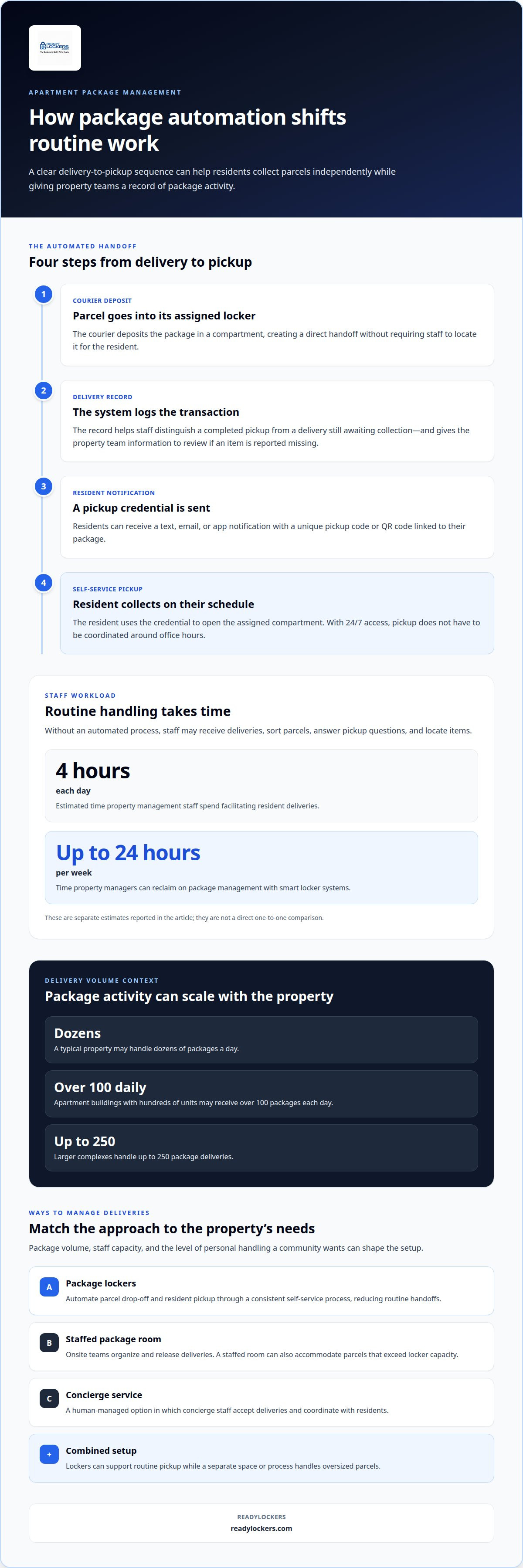
Automated tracking records a parcel’s movement through the property. A courier deposits a delivery, the system logs the transaction, and the resident collects the assigned package. This timeline helps staff distinguish a completed pickup from a delivery still awaiting collection. If a resident reports a missing item, the property team can review the transaction log instead of relying only on memory or scattered notes.
Recipient authentication links a package to the person collecting it. The system can issue a unique pickup code or QR code, limiting access to someone with the correct credential. That controlled handoff is useful in shared housing, where several deliveries may arrive close together. The credential should correspond to the package record so residents can open the assigned compartment without searching communal storage. Clear instructions also help when a household member collects a delivery.
A separate process is still needed for parcels that do not fit in lockers. Staff can organize these items by resident, unit, or arrival status, then use delivery records to track receipt and collection. Bringing deliveries to a central location can make the process easier to manage than scattered handoffs. It also gives property teams a place to review delivery patterns as part of broader sustainability planning, without assuming that consolidation alone reduces environmental impact.
Package theft is a concern in apartment buildings, so access records and recipient authentication can strengthen accountability. Automated systems can show when a parcel was deposited and whether a pickup was recorded. Residents also expect a straightforward process: a clear arrival alert, a usable credential, and an accessible pickup area. Together, these features help residents and staff follow package activity and give property teams a consistent way to investigate exceptions.
Reducing staff package-management workload
Frequent deliveries can create a steady workload for property teams. Automation reduces manual handling and gives staff more time to focus on resident needs.
Staff Time Savings
Package lockers save staff time by letting couriers deposit parcels and residents retrieve them independently. Property managers can reclaim up to 24 hours per week on package management with smart locker systems. That time matters when teams are balancing leasing, maintenance coordination, and resident service.
Without an automated process, staff may need to receive deliveries, sort parcels, answer pickup questions, and locate items. Property management staff spend an estimated four hours each day facilitating resident deliveries. A centralized system can reduce these repeated tasks and help keep lobby traffic moving, especially during busy delivery periods.
Comparing Package Management Options
Package lockers automate parcel drop-off and resident pickup, while staffed package rooms rely on onsite teams to organize and release deliveries. Concierge services can accept deliveries and coordinate with residents. The right arrangement depends on package volume, staff capacity, and how much personal handling the community wants to provide.
Lockers suit properties seeking a consistent self-service process. A staffed room can accommodate parcels that exceed locker capacity, but staff must manage access and organization. Concierge services offer a human-managed option, while lockers reduce routine handoffs. The approaches can work together when a property needs both automated pickup and space for oversized items.
Workload also changes with building scale. A typical property may handle dozens of packages a day, while apartment buildings with hundreds of units receive over 100 packages daily. Larger complexes handle up to 250 package deliveries. As volume grows, staff can spend more time answering delivery questions and coordinating storage unless routine handoffs are streamlined.
Automation does not eliminate every package task. Teams still need a process for parcels that do not fit, remain unclaimed, or arrive with delivery issues. Assigning responsibility for these exceptions helps maintain an efficient process without turning every delivery into a staff interaction. Onsite attention can then focus on cases that need it.
Resident demand for package lockers
Package access shapes how residents judge convenience in multifamily properties. The NMHC 2018 Consumer Housing Insights Survey found that 63% of renters said life felt hectic enough that they looked for ways to make it easier. For residents managing work, errands, and deliveries, a predictable way to retrieve parcels can simplify an ordinary task.
The same NMHC survey found that 72% of renters expected companies to understand their unique needs and expectations. For housing providers, that points to a broader lesson: amenities work best when they solve a practical, recurring problem. A resident who arrives after the leasing office closes, for example, benefits from a pickup process that doesn’t depend on staff availability.
Package needs vary by property. A building with frequent deliveries may need a different process from a smaller community with limited shared space. Consider residents’ routines, delivery locations, parcel volume, and available space near entrances or mail areas. These factors help determine whether lockers will work as an everyday amenity or whether another arrangement better suits the property.
Convenience depends on a clear process from delivery through pickup. Residents need to know where parcels are placed, how they will receive an alert, and what to do if an item does not fit. Clear signs, simple instructions, and an easy route from the entrance to the pickup area can make the amenity easier to use.
Package amenities can also give leasing teams a concrete way to show how a property meets residents’ everyday needs. Explain the pickup process during tours and include the same information in move-in communications. Prospective residents can see how deliveries are handled, and current residents know what to expect.
Explore package locker options for apartment communities to make delivery access part of a more resident-focused amenity plan.
ReadyLockers: Smart Package Lockers
ReadyLockers helps apartment communities organize package deliveries with Smart Package Lockers and Locker Management Software. The platform gives couriers a dedicated access interface for depositing parcels, while residents receive SMS or QR code notifications for pickup.
Its Contactless Pickup System lets residents retrieve deliveries without coordinating each handoff with onsite staff. Pickups are available 24/7, which suits properties where residents need access beyond leasing-office hours. Together, these tools support a clearer delivery process, from courier drop-off to resident collection, while helping property teams reduce routine package handling.
To plan a package locker system for your community, contact ReadyLockers to discuss your property’s layout and delivery needs.
Plan a Package Experience Residents Can Use
Tenant amenity package lockers work best when they suit a property’s daily routines, shared spaces, and resident expectations. Start by defining what a smooth package experience should look like in your community. Consider how residents move through the building, where deliveries will be handled, and how the process can adapt as needs change.
A clear plan connects resident convenience with practical operations. Decide which parts of package handling to automate and how staff will manage exceptions. Resident communication also supports adoption, especially when people know where deliveries go and how to retrieve them.
ReadyLockers can help property teams consider a package approach suited to their community. Start a conversation with ReadyLockers about your property’s delivery needs. A well-planned process can make package access easier for residents and more manageable for your team.
Frequently Asked Questions
How are smart lockers or automated mailroom solutions helping property managers differentiate themselves in an increasingly competitive real-estate environment?
Package lockers give prospective residents a visible example of how a property handles everyday deliveries. During a tour, leasing teams can demonstrate the pickup process instead of describing convenience in general terms. Applicants can see how a courier deposits a parcel and how a resident retrieves it, making the amenity tangible.
How do residential parcel lockers prevent package theft?
Lockers place deliveries inside secured compartments instead of leaving them unattended in an open lobby or outside an apartment door. Access controls limit pickup to someone with the recipient’s credential, while transaction records can help establish whether a delivery was deposited or collected. This reduces opportunities for casual access, though no package-handling method can eliminate every risk of loss or damage.
What are the main benefits of installing package lockers?
Package lockers give residents a designated place to collect deliveries and help property teams organize routine drop-offs. They can reduce staff involvement in locating and releasing individual parcels, while pickup records support follow-up when questions arise. Their value is greatest when the system’s configuration, location, and resident instructions suit the property’s delivery patterns.
What is a smart locker system for apartments?
A smart locker system combines electronically controlled compartments with software for managing deliveries and recipient access. At ReadyLockers, couriers use an access interface to deposit packages, and recipients can open lockers with a PIN or QR code at the kiosk. The optional free mobile app offers another access route, while property teams can review activity in the cloud-based dashboard.
What are tenant amenity package lockers in apartment buildings?
Tenant amenity package lockers are shared compartments for resident deliveries, not storage inside individual apartments. A courier places a parcel in an available compartment, and the recipient receives pickup instructions. Residents can then collect deliveries from the designated locker area without coordinating a handoff with leasing staff.
What types of package locker systems are available for multifamily properties?
Multifamily properties can use electronic smart lockers, staffed package rooms, or a combination of lockers and a room for parcels that exceed locker capacity. Locker configurations are sized to suit the property’s layout and delivery volume. ReadyLockers supports courier deposits, recipient authentication, and integrations with Genetec video surveillance and HID badge access, helping properties align package handling with existing workflows.

Frequently Asked Questions
How are smart lockers or automated mailroom solutions helping property managers differentiate themselves in an increasingly competitive real-estate environment?+
Package lockers give prospective residents a visible example of how a property handles everyday deliveries. During a tour, leasing teams can demonstrate the pickup process instead of describing convenience in general terms. Applicants can see how a courier deposits a parcel and how a resident retrieves it, making the amenity tangible.
How do residential parcel lockers prevent package theft?+
Lockers place deliveries inside secured compartments instead of leaving them unattended in an open lobby or outside an apartment door. Access controls limit pickup to someone with the recipient’s credential, while transaction records can help establish whether a delivery was deposited or collected. This reduces opportunities for casual access, though no package-handling method can eliminate every risk of loss or damage.
What are the main benefits of installing package lockers?+
Package lockers give residents a designated place to collect deliveries and help property teams organize routine drop-offs. They can reduce staff involvement in locating and releasing individual parcels, while pickup records support follow-up when questions arise. Their value is greatest when the system’s configuration, location, and resident instructions suit the property’s delivery patterns.
What is a smart locker system for apartments?+
A smart locker system combines electronically controlled compartments with software for managing deliveries and recipient access. At ReadyLockers, couriers use an access interface to deposit packages, and recipients can open lockers with a PIN or QR code at the kiosk. The optional free mobile app offers another access route, while property teams can review activity in the cloud-based dashboard.
What are tenant amenity package lockers in apartment buildings?+
Tenant amenity package lockers are shared compartments for resident deliveries, not storage inside individual apartments. A courier places a parcel in an available compartment, and the recipient receives pickup instructions. Residents can then collect deliveries from the designated locker area without coordinating a handoff with leasing staff.
What types of package locker systems are available for multifamily properties?+
Multifamily properties can use electronic smart lockers, staffed package rooms, or a combination of lockers and a room for parcels that exceed locker capacity. Locker configurations are sized to suit the property’s layout and delivery volume. ReadyLockers supports courier deposits, recipient authentication, and integrations with Genetec video surveillance and HID badge access, helping properties align package handling with existing workflows.