Reducing Legal Risk From Lost Packages: Understand Carrier Liability
Learn how reducing legal risk from lost packages starts with shipment records, timely claims, insurance terms, and safer delivery options for small businesses.

A delivery scan alone may not resolve a lost-package dispute. For small businesses, reducing legal risk from lost packages starts with clear shipment records, timely claim filing, and delivery options that help keep parcels from being left unattended.
A customer’s missing-order report can be frustrating, especially when you need to establish what happened and who may be responsible. Carrier liability and shipping insurance are separate, and insurance may cover theft only when the policy includes it. Keep the tracking number, parcel weight, proof of value, and any relevant damage photos together, then follow the applicable claim deadline.
Prevention matters, too. This guide covers practical ways to reduce theft risk, what to document when a package goes missing, and how to understand carrier liability without assuming every case is treated alike. It also explains how delivery lockers can give parcels a secure place to wait for pickup instead of leaving them unattended at a home.
Key Takeaways
- Make your shipping policy clear about dispatch timing, delivery expectations, the courier used, and how customers can report shipping problems.
- Use discreet packaging and keep customers informed about delivery dates and tracking updates to help reduce theft risk and avoid confusion.
- Separate carrier liability from shipping insurance, and review what the policy covers before relying on it for a theft claim.
- Consider delivery lockers when unattended drop-offs are a recurring concern, giving packages a more secure place to wait for pickup.
1. Claim documentation and filing deadlines
When a parcel goes missing, gather shipment records before filing a carrier or insurance claim. A clear evidence file connects the order, parcel, tracking history, and reported loss. Save the order confirmation, shipping label, carrier tracking page, customer messages, and any delivery photo. Record when the customer first reported the issue and what the tracking record showed then.
Include essential claim details: the parcel’s tracking number and weight, proof of value, and photos of damage when applicable. Proof of value may include the customer’s order confirmation or sales receipt. For a damaged delivery, photograph the packaging and item before discarding anything. Keep original files and copies together, as a carrier or insurer may request supporting documents during its review.
- Match the tracking number to the customer’s order.
- Record the parcel weight and gather proof of value.
- Photograph visible damage and retain relevant delivery records.
Filing deadlines depend on the carrier’s claim process and, for insured shipments, the policy terms. Find the applicable window in the shipping or insurance documents, then file promptly with the required evidence. Save the claim number, submission date, and follow-up messages. A complete file makes it easier to answer questions without reconstructing the shipment history.
Accurate labels also support reliable delivery records. Include the sender’s and customer’s names and addresses, along with relevant delivery and shipment details. The United States Postal Service’s Coding Accuracy Support System (CASS) helps improve carrier efficiency and minimize delivery errors. Accurate address data can reduce avoidable confusion when investigating a missing parcel.
When a customer complains, acknowledge the report, share available tracking information, and provide updates on delivery and claim progress. Handle refunds or replacement shipments according to the store’s published shipping and customer-service policies, and explain the next step clearly.
For legal context, the Porch Pirates Act was introduced in December 2025 as a proposal to make stealing packages delivered by private carriers such as UPS a federal crime; it has not become law.
2. How can my small business prevent package theft?
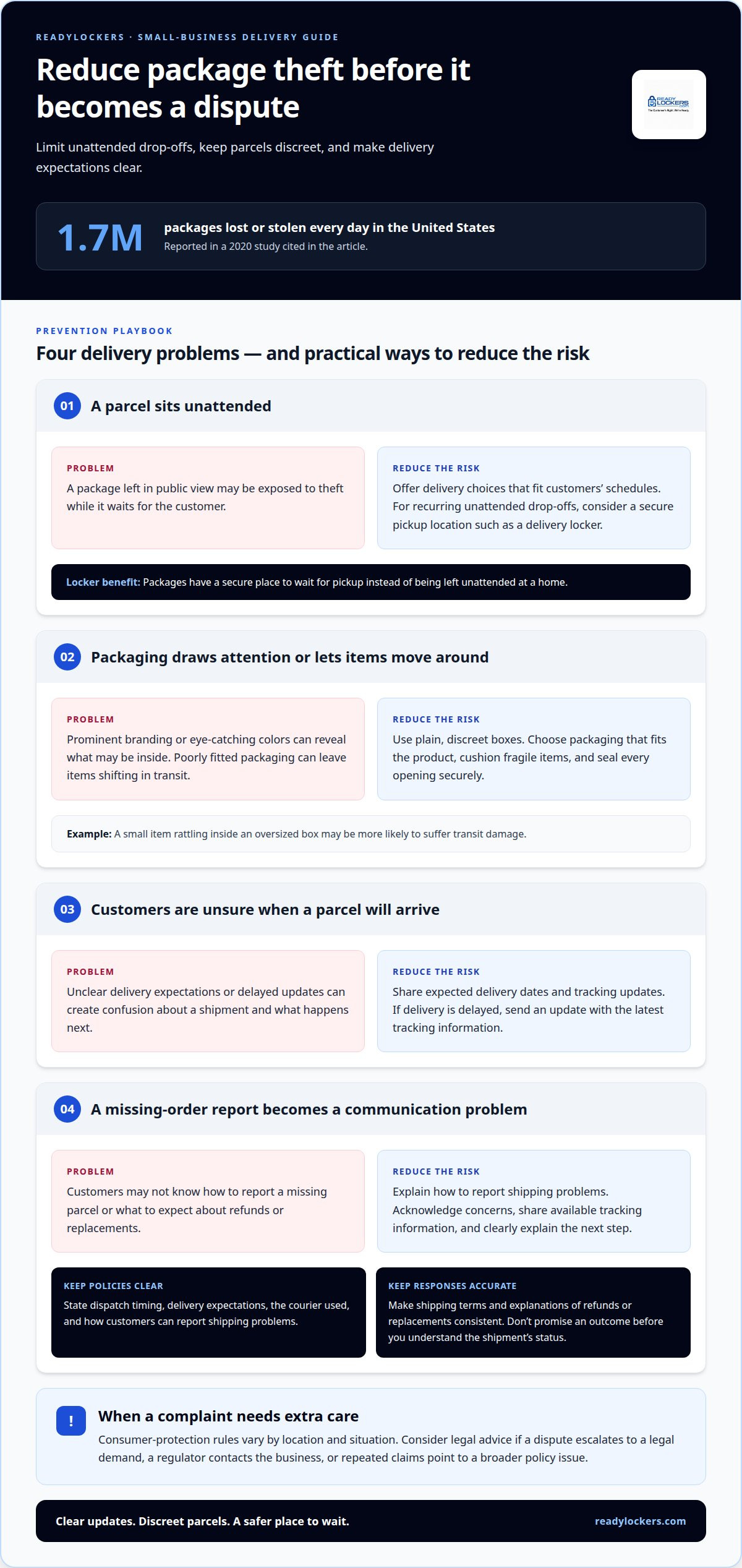
Reduce opportunities for theft by limiting how long a parcel sits unattended. Offer customers delivery choices that suit their schedules, and communicate expected arrival dates clearly. A 2020 study reported that 1.7 million packages were lost or stolen every day in the United States. For recurring unattended drop-offs, a secure pickup location can keep parcels out of public view.
Packaging affects the risk of theft and damage, too. Use plain, discreet boxes rather than prominent branding or eye-catching colors that reveal what may be inside. Choose packaging that fits the item and cushion fragile products so they don’t shift during handling. Seal every opening securely. For example, a small item rattling inside an oversized box may be more likely to suffer transit damage.
- Use discreet packaging that doesn’t advertise valuable contents.
- Fit the box to the product and add cushioning for fragile items.
- Share delivery dates and tracking updates, and explain how customers can report a missing order.
Clear customer communication supports both prevention and complaint handling. If delivery is delayed, send an update with the latest tracking information. If a customer reports a missing parcel, acknowledge the concern and explain what happens next. Consistent messages help prevent confusion about delivery expectations, refunds, or replacements.
Consumer-protection rules vary by location and situation. In lost-package complaints, relevant issues may include whether delivery promises, tracking updates, and explanations of refunds or replacements are accurate and consistent. Keep customer-facing shipping terms clear, and don’t promise an outcome before you understand the shipment’s status.
Consult a lawyer if a dispute escalates to a legal demand, a regulator contacts the business, or repeated claims point to a broader policy issue. Legal advice can help assess the specific facts, customer communications, and applicable state rules before you respond.
Businesses managing frequent unattended deliveries can consider secure package pickup options. A designated pickup point gives parcels somewhere other than a doorstep to wait, while discreet packaging and clear updates address other parts of the delivery process.
3. Carrier liability and declared value
Carrier liability and shipping insurance are separate. The carrier’s terms govern its responsibility for a shipment, while an insurance policy may cover loss, damage, or theft if those events fall within its coverage. The shipper usually bears costs associated with lost or stolen packages, so don’t assume a carrier scan alone determines who absorbs the loss.
Declared value is information supplied for a shipment under the carrier’s terms. It is not a substitute for insurance or proof that theft is covered. Before shipping, review the carrier’s conditions and any insurance policy for coverage, exclusions, claim evidence, and filing deadlines. Keep the order record and shipping documents together so you can compare the declared shipment details with the reported loss.
Under U.S. law, risk of loss does not transfer at one universal point in every sale. The sales agreement, delivery terms, transaction type, and applicable state law can affect the analysis. The Uniform Commercial Code (UCC) may apply to a sale of goods, but the contract and circumstances matter.
When applicable, UCC rules can inform a lost-shipment or delivery dispute, including how sales terms allocate delivery responsibilities. They don’t determine the outcome of every order. Before responding, a retailer should review the promise made at checkout, the chosen delivery arrangement, and the available tracking evidence.
A “delivered” scan is relevant evidence, but it does not by itself establish that the customer personally received the parcel. Review the tracking details, any available delivery photo or location information, and the customer’s report. Then explain the findings and next steps under the store’s published policies and applicable consumer-protection rules.
For each dispute, preserve the order terms, carrier record, customer communications, and insurance decision. Compare the actual loss with the policy coverage and the carrier’s stated responsibility. Keeping these issues separate helps businesses assess claims without promising reimbursement or treating declared value as automatic compensation.
4. Delivery lockers
A delivery locker gives couriers a secure place to leave parcels instead of an exposed doorstep, helping reduce the risk of packages being left unattended at a home. For businesses serving apartment buildings, offices, or shared properties, a central pickup point can make delivery handling more consistent.
Set a clear delivery process before using lockers. Couriers need instructions for placing parcels in the right location, and recipients need a reliable way to learn when items are ready. With a smart locker system, recipients receive an instant SMS or QR-code notification and can collect parcels through contactless pickup. This creates a clear handoff between delivery and collection.
For example, a customer who is away when a courier arrives can retrieve a parcel later from the designated locker, rather than relying on a package left outside. Pickups may be available 24/7, giving recipients flexibility to collect orders around their schedules. This can also reduce missed delivery attempts and the uncertainty of unattended drop-offs.
Lockers work best when property procedures support them. Establish where couriers should deliver, how recipients receive pickup instructions, and how staff should handle reported access or delivery problems. Locker management software can help organize parcel activity and pickup information. Keep customer instructions concise, including the locker location and collection steps.
- Choose a shared location that recipients can access conveniently.
- Give couriers clear placement instructions.
- Send pickup details promptly and explain how recipients can use them.
- Keep a record of delivery and collection information for resolving questions.
A locker doesn’t replace accurate shipment records or a clear claims process. It adds a controlled delivery destination, which can limit exposure between drop-off and pickup. Businesses dealing with recurring unattended deliveries can explore secure package locker options as part of a broader prevention plan.
ReadyLockers: Smart Package Lockers
ReadyLockers offers Smart Package Lockers for properties seeking a designated place for deliveries, rather than unattended doorstep drop-offs. Couriers can place parcels in lockers, and recipients receive SMS or QR code notifications for contactless pickup. Pickups are available 24/7, helping reduce missed deliveries and package-theft risk.
Locker management software and a courier access interface support the delivery and pickup process. This setup can suit businesses and properties that receive packages throughout the day or have recipients who cannot collect them right away. A locker system complements clear shipping policies and claim records; it replaces neither and does not determine carrier liability.
For a practical way to manage package pickup at your property, contact ReadyLockers.
Build a More Reliable Delivery Experience
Reducing legal risk from lost packages also means designing delivery processes that make secure receipt easier for customers. A clear pickup pathway can reduce reliance on unattended drop-offs and support a more consistent experience across your property.
ReadyLockers offers Smart Package Lockers, Locker Management Software, and a Contactless Pickup System to support this approach. These tools give couriers a designated place for parcels and recipients a structured way to collect them. They complement sound documentation and customer communication; they don’t replace claim procedures or determine carrier liability.
If unattended deliveries are a recurring concern, consider whether secure pickup fits your property and recipients’ needs. Explore secure delivery with ReadyLockers and take a practical step toward a more controlled package handoff.
Frequently Asked Questions
How can my small business prevent package theft?
Reduce unattended handoffs by directing orders to a secure pickup point when customers won’t be available. A shared locker can be useful for apartment buildings, offices, and other properties with regular deliveries. At checkout, make the delivery choice clear and explain how customers will receive pickup instructions. Discreet packaging and timely order updates can also reduce exposure and confusion.
What do I do if a shipped package is stolen?
Start by confirming delivery status with the customer and reviewing the carrier’s tracking details. Check whether the parcel may have been left at another entrance or accepted by someone at the delivery location. Then notify the carrier, file a claim within its deadline, and review any shipping insurance terms. Keep the customer informed about the investigation and next steps.
What legal liability do U.S. businesses have for packages lost in transit?
There isn’t one liability outcome for every U.S. shipment. Sales terms, the delivery arrangement, the carrier agreement, and applicable state rules can affect who bears a loss. Shippers usually bear costs associated with lost or stolen packages, but that doesn’t automatically resolve a retailer’s responsibilities to its customer. Review the order terms and promised delivery arrangement before responding.
How do carrier terms and conditions limit liability for lost packages?
Carrier terms explain the claim process and conditions, including required documentation and filing deadlines. They may also define covered losses and how compensation is assessed. Declared value is not automatically insurance, and separate shipping insurance has its own coverage terms. Read both documents before shipping so your customer-facing promises align with the protections available.
What records and evidence should businesses keep to defend lost-package claims?
Keep a shipment-specific record linking the customer’s order to its delivery history. Preserve the checkout terms shown to that customer, shipment confirmation, carrier updates, delivery notifications, and the full complaint timeline. Save original messages and claim correspondence rather than relying on summaries. For repeat incidents, an incident log can reveal patterns by delivery location or handoff method and inform process changes.
What contract terms and shipping policies can reduce legal risk from lost packages?
Clear terms support reducing legal risk from lost packages by setting consistent expectations before checkout. Explain when orders dispatch, which courier handles delivery, the expected delivery timeframe, and how customers can report shipping issues. State how the business communicates delays and handles missing-order reports. Make the same terms easy to find during checkout and in order confirmations so customers can refer back to them.

Frequently Asked Questions
How can my small business prevent package theft?+
Reduce unattended handoffs by directing orders to a secure pickup point when customers won’t be available. A shared locker can be useful for apartment buildings, offices, and other properties with regular deliveries. At checkout, make the delivery choice clear and explain how customers will receive pickup instructions. Discreet packaging and timely order updates can also reduce exposure and confusion.
What do I do if a shipped package is stolen?+
Start by confirming delivery status with the customer and reviewing the carrier’s tracking details. Check whether the parcel may have been left at another entrance or accepted by someone at the delivery location. Then notify the carrier, file a claim within its deadline, and review any shipping insurance terms. Keep the customer informed about the investigation and next steps.
What legal liability do U.S. businesses have for packages lost in transit?+
There isn’t one liability outcome for every U.S. shipment. Sales terms, the delivery arrangement, the carrier agreement, and applicable state rules can affect who bears a loss. Shippers usually bear costs associated with lost or stolen packages, but that doesn’t automatically resolve a retailer’s responsibilities to its customer. Review the order terms and promised delivery arrangement before responding.
How do carrier terms and conditions limit liability for lost packages?+
Carrier terms explain the claim process and conditions, including required documentation and filing deadlines. They may also define covered losses and how compensation is assessed. Declared value is not automatically insurance, and separate shipping insurance has its own coverage terms. Read both documents before shipping so your customer-facing promises align with the protections available.
What records and evidence should businesses keep to defend lost-package claims?+
Keep a shipment-specific record linking the customer’s order to its delivery history. Preserve the checkout terms shown to that customer, shipment confirmation, carrier updates, delivery notifications, and the full complaint timeline. Save original messages and claim correspondence rather than relying on summaries. For repeat incidents, an incident log can reveal patterns by delivery location or handoff method and inform process changes.
What contract terms and shipping policies can reduce legal risk from lost packages?+
Clear terms support reducing legal risk from lost packages by setting consistent expectations before checkout. Explain when orders dispatch, which courier handles delivery, the expected delivery timeframe, and how customers can report shipping issues. State how the business communicates delays and handles missing-order reports. Make the same terms easy to find during checkout and in order confirmations so customers can refer back to them.