Professional Smart Locker Installation Services: The 2026 Implementation Guide
Looking for smart locker installation services? Our 2026 guide covers site prep, connectivity, and courier adoption for a seamless, cost-saving deployment.

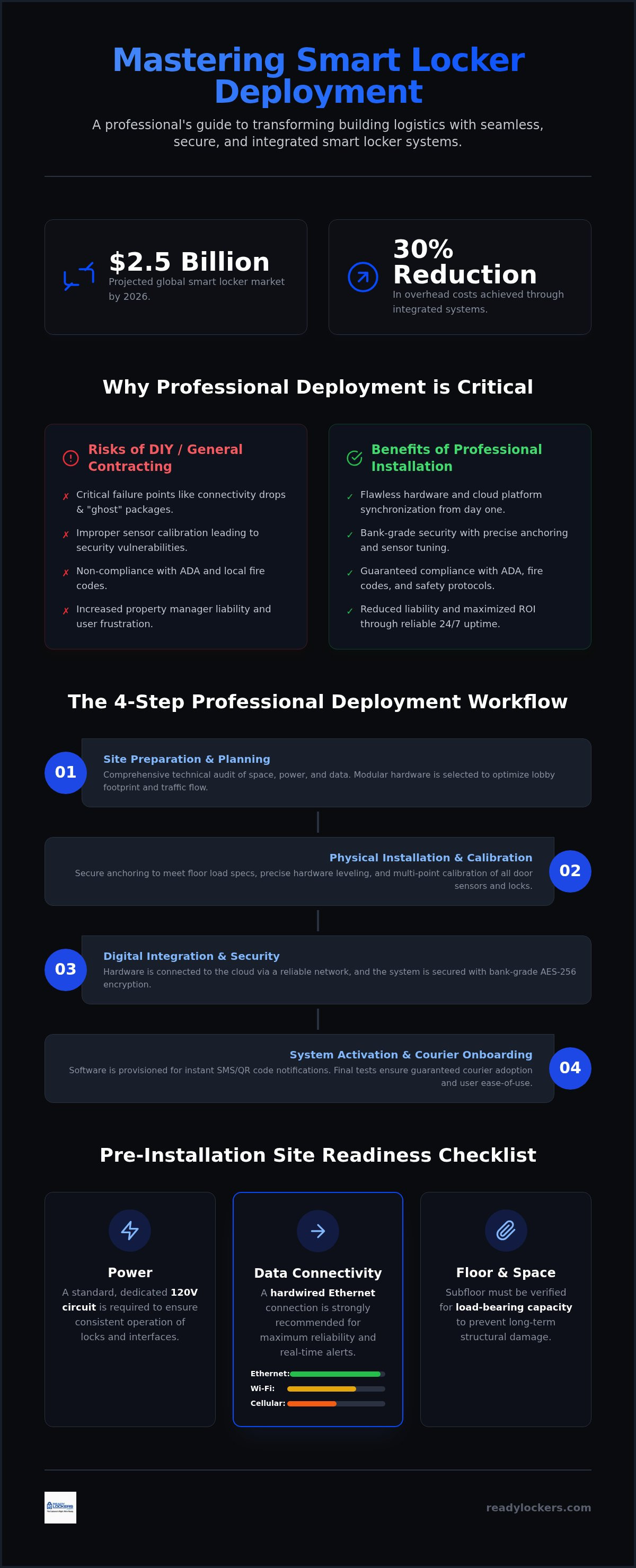
By 2026, the global smart locker market is expected to exceed $2.5 billion as businesses move to eliminate the friction of manual package handling. You likely recognize that traditional mailrooms can't keep pace with modern delivery volumes, yet the fear of building disruption often stalls necessary upgrades. It's common to worry about complex power requirements or whether couriers will actually use a new system once it's bolted to the floor. Professional smart locker installation services bridge this gap by transforming a potential construction headache into a seamless tech deployment.
We've designed this guide to help you master the implementation process without the typical downtime. You'll learn how businesses are achieving a 30% reduction in overhead costs by integrating modular hardware with bank-grade AES-256 encrypted cloud platforms. We will provide a definitive checklist for site preparation, explain the specific data needs for reliable connectivity, and share strategies for guaranteed courier adoption. By the end of this article, you'll have a clear roadmap to deploy a fully functional, 24/7 contactless pickup system that works for your management team and your end users alike.
Key Takeaways
- Understand why professional deployment is critical for aligning hardware with bank-grade security standards and complex network integration.
- Identify the specific space and power requirements needed to support modular units in diverse lobby or warehouse layouts.
- Learn the workflow for provisioning cloud-based management software to ensure instant SMS notifications and secure courier access.
- Discover how professional smart locker installation services maximize your return on investment by creating a scalable infrastructure for property management.
- Master the physical safety requirements for deployment, including precise hardware leveling and secure anchoring protocols.
Why Professional Smart Locker Installation Services are Essential
Deploying a modern delivery solution requires more than a screwdriver and a level. While many understand what are smart lockers in a general sense, the 2026 standard for high-volume environments involves deep network and security integration. Professional smart locker installation services ensure that the physical hardware communicates flawlessly with the cloud management platform from the moment of activation. It's a process that combines structural engineering with digital provisioning to create a reliable logistics hub.
Relying on DIY methods or general contractors often leads to critical failure points. A general contractor might secure the unit to the wall but fail to calibrate the weight sensors or configure the local Wi-Fi mesh. This results in "ghost" packages, connectivity drops, and frustrated users. Experts focus on the technical nuances that prevent these issues, ensuring the 24/7 operational uptime that's vital for contactless delivery locker technology to function as intended. Professional teams anticipate these hurdles before they disrupt your building's operations.
Security is the primary driver for these systems. Professional installers use high-grade anchoring systems and precise sensor calibration to prevent package theft. If a locker isn't perfectly level or the door sensors are off by even a millimeter, the system may fail to register a delivery or leave a door unlocked. Professional smart locker installation services eliminate these vulnerabilities through rigorous multi-point inspections during the deployment phase.
The Shift from Passive Storage to Active Logistics
Smart lockers have evolved into a building’s digital mailroom. They act as an active logistics hub rather than just a row of metal boxes. This transformation requires rigorous professional testing of every lock and sensor. In 2026, an integrated notification system is a baseline requirement. Professionals provision these systems during install, ensuring that residents receive SMS and QR codes the second a courier closes a locker door. This immediate feedback loop is only possible when the hardware and software are perfectly synchronized at the point of installation.
Reducing Property Manager Liability
Professional deployment directly reduces property manager liability. Experts ensure every installation complies with the Americans with Disabilities Act (ADA) and local fire codes. They also perform flow analysis to prevent "lobby chaos." By placing units strategically, installers manage traffic patterns so that courier drop-offs don't block resident exits. This proactive planning, combined with professional-grade hardware securing, extends the life of the investment and protects the property from avoidable accidents or security breaches.
Pre-Installation: Site Requirements and Hardware Planning
Effective smart locker installation services begin with a comprehensive technical audit of your physical space. Unlike fixed, one-size-fits-all units, modular hardware allows for precise space optimization. This flexibility is vital for properties with unique lobby footprints or restricted warehouse corridors. By selecting modular configurations, property managers can maximize storage density without obstructing high-traffic thoroughfares or emergency exits. Efficiency is the priority.
Power and data requirements are the backbone of a functional system. Most modular units require a standard 120V dedicated circuit to ensure consistent operation of the electronic locks and interface. For data, while Wi-Fi is often the most convenient, a hardwired Ethernet connection provides the highest level of reliability. This stability is critical for maintaining real-time SMS alerts and cloud synchronization. Some deployments utilize cellular bridges as a secondary fail-safe to maintain uptime during local network outages. Understanding these smart locker business models helps property owners appreciate how infrastructure choices directly impact long-term operational costs. Reliable data is essential.
Floor load-bearing capacity is a frequently overlooked detail. A full bank of modular lockers, especially when loaded with packages, exerts significant pressure. Professional installers verify that the subfloor can support these weights to prevent structural damage over time. If you're unsure about your site's readiness, you can explore modular locker specifications to see how different configurations impact your floor plan. Safety remains paramount.
Evaluating Your Property Layout
Placement strategy varies. Outdoor installations require specialized weatherproofing and high-visibility lighting to ensure user safety at night. Accessibility is equally important. ADA compliance dictates specific reach ranges and clear floor space, ensuring all users can access their packages regardless of physical ability. Planning for modular additions from day one allows you to scale as delivery volumes inevitably increase. Growth is expected.
Connectivity and Power Infrastructure
A stable internet connection is non-negotiable. Without it, the notification system cannot send the instant QR codes that facilitate a contactless pickup. Consider implementing a battery backup or Uninterruptible Power Supply (UPS) to maintain 24/7 access during brief outages. Professional cable management is the final touch. It hides unsightly wires and prevents tampering, maintaining the clean, high-tech aesthetic that modern tenants expect from a professional installation. Details matter.
The Installation Workflow: From Delivery to Deployment
The transition from strategic planning to physical execution requires a methodical approach to ensure hardware longevity. Professional smart locker installation services follow a strict five-step protocol to eliminate deployment errors. It begins with the unboxing and meticulous inspection of all modular components. Technicians inventory every part to verify that no structural damage occurred during transit. Next, the focus shifts to leveling and secure anchoring to floors or walls. It's a critical step for safety that prevents the unit from shifting under heavy use. Once the frame is stable, technicians perform internal wiring to connect the central controller board across all modular sections. Peripheral testing follows, where touchscreens, QR scanners, and electronic locks are rigorously cycled to confirm functionality. The process concludes with the final aesthetic finish and trim work to ensure the system integrates into your building's design.
Physical Assembly and Anchoring
Technicians use specialized anchoring techniques to prevent tipping or unauthorized tampering. It's especially important for modular configurations where multiple units must be joined to create a unified, professional appearance. Precision is the priority during this stage. Installers test each individual door tolerance and strike plate alignment. If a door is off by even a fraction of an inch, it can cause mechanical wear or software errors in the future. A professional install ensures the hardware feels like a single, solid utility. This stability protects your investment and provides a secure experience for every user. Our teams ensure the physical footprint remains stable even in high-traffic environments.
Hardware Component Calibration
Calibration is where the digital interface meets the physical hardware. Touchscreens are tuned for high-traffic responsiveness to prevent user lag during peak pickup hours. Technicians also test the QR code scanner under various lighting conditions, ranging from bright afternoon sun to dim evening lobby lights. This ensures couriers don't struggle with technical friction and can complete drop-offs in seconds. Finally, installers verify the manual override systems. These physical keys or mechanical releases provide essential emergency access during power failures. Verifying these backups ensures your property remains secure and functional regardless of external conditions. A calibrated system is a reliable system.
Digital Integration: Connecting Hardware to the Cloud
The final phase of a successful deployment moves from the physical hardware to the digital environment. Professional smart locker installation services ensure that the physical unit is fully provisioned to the property's network and cloud management platform. This step is critical for operational success. Without proper integration, the hardware cannot trigger the instant notifications that define a modern pickup experience. Technicians link every individual locker compartment to the smart locker management software, ensuring the SaaS platform recognizes the specific geometry and status of the installation.
Data security remains a top priority during this integration. Systems utilize AES-256 encryption for data at rest and in transit, matching the standards used by banks and government agencies. This protection ensures that resident data and access logs remain secure from the moment of activation. Once the connection is stable, the focus shifts to the administrative dashboard. This portal provides property managers with real-time usage analytics and package tracking capabilities. It's the central hub for managing the entire logistics lifecycle of the building.
SaaS Platform Provisioning
Effective provisioning starts with registering unique locker IDs within the cloud management system. This allows for real-time status updates and remote troubleshooting. During this phase, installers set up property-specific notification templates for SMS and QR code alerts. These templates ensure that the branding and instructions match your property's specific needs. Technicians then perform an end-to-end test. They simulate a courier drop-off to verify that the system correctly identifies the locker, secures the door, and sends an immediate notification to the recipient. This verification loop confirms that the digital and physical components are in perfect sync.
Courier Access Interface Setup
A system's success depends on courier adoption. Installers configure the Courier Access Interface to support major national delivery services through universal access codes. This simplifies the drop-off process for high-volume carriers. For secondary or local delivery services, technicians set up one-time access protocols to maintain security without sacrificing convenience. Training your on-site staff is the final part of this setup. Management needs to understand how to use the interface for manual overrides or to assist couriers during their first visit. If you're ready to secure your building's delivery workflow, contact our team to start your deployment today.
Maximizing ROI Through Strategic Deployment
Professional smart locker installation services act as the foundation for long-term financial returns. When a system is deployed correctly, it immediately streamlines smart locker integration for property management, reducing the labor hours staff spend on package logistics. Businesses that integrate these systems are seeing a 30% reduction in overhead costs. This efficiency isn't accidental. It's the result of a deployment that prioritizes high-quality hardware and seamless software calibration from day one.
High-quality initial deployment also minimizes the frequency of post-warranty repairs. When units are anchored securely and sensors are calibrated to 2026 standards, the mechanical wear on electronic locks decreases. This proactive approach protects your capital investment. Beyond the financial ledger, the impact on tenant retention is substantial. With 49 million packages stolen from porches in 2024, providing a secure, 24/7 pickup point is no longer a luxury. It's a standard requirement for maintaining modern property value and resident trust.
Measuring Success Post-Installation
Real-world success is measured through the administrative dashboard's analytics. Property managers can track locker turnover rates and occupancy levels to ensure the system meets current demand. These data points reveal peak delivery times, allowing you to optimize staff presence if manual assistance is ever required for oversized items. Most importantly, you can monitor the direct reduction in lost package claims. A professional setup ensures every delivery is recorded, verified, and secured, which eliminates the ambiguity that leads to tenant frustration and property liability.
Future-Proofing Your Installation
The logistics landscape is dynamic, and your infrastructure must be too. The modular nature of the hardware allows you to add new compartments as your building's delivery volume grows. You don't need a full reinstall to expand capacity; you simply add modules to the existing footprint. Professional deployment also prepares your system for ongoing software updates and new feature rollouts from the SaaS platform. This ensures your hardware remains compatible with evolving courier protocols and security standards for years to come. If you're ready to secure your lobby and enhance your property's efficiency, Explore our Smart Package Lockers to find the right configuration for your needs.
Scaling Your Property’s Logistics for 2026 and Beyond
Deploying a high-tech logistics hub requires a balance of structural precision and digital expertise. You've seen how professional smart locker installation services transform building operations by replacing manual mailroom chaos with a streamlined, 24/7 contactless pickup system. By prioritizing site preparation and rigorous component calibration, you protect your capital investment while significantly enhancing the resident experience. It's a shift from passive storage to active, data-driven logistics management.
The transition to automated package handling is now a standard requirement for any modern environment. Our modular hardware configurations are designed to fit any space, ensuring that even restricted layouts can accommodate high-volume delivery needs. Coupled with a SaaS platform that provides automated SMS notifications and real-time analytics, your property gains a scalable solution backed by 24/7 technical support. This proactive approach removes obstacles for managers and couriers alike, creating a frictionless exchange point that grows with your needs.
Get a Custom Installation Quote for Your Property to begin your deployment. We're ready to help you build a more efficient, secure, and future-proof property today.
Frequently Asked Questions
How long does a typical smart locker installation take?
A standard installation typically takes one to two business days to complete. The timeframe depends on the number of modular units being deployed and the complexity of your site's power and data infrastructure. Professional teams handle the unboxing, physical anchoring, and digital provisioning in a single workflow. This efficiency minimizes lobby disruption and ensures that your contactless pickup system is fully operational for residents and couriers as quickly as possible.
Do smart lockers require a dedicated internet connection to work?
Yes, a stable internet connection is essential for the system to function correctly. While some hardware can store data locally during brief outages, an active connection is required to send instant SMS and QR code notifications to recipients. Most providers recommend a hardwired Ethernet connection for maximum reliability. This ensures that the SaaS platform can synchronize delivery data and provide real-time usage analytics to property managers without interruption.
Can modular smart locker units be moved after they are installed?
Modular smart locker units can be relocated, but the process requires professional assistance to ensure structural integrity and safety. Because units are securely anchored to the floor or wall to prevent tipping, they must be properly detached and re-secured at the new location. Relocation also involves recalibrating the internal sensors and re-provisioning the network connection to maintain seamless communication with the cloud-based management platform and courier access interface.
What are the power requirements for a standard smart locker bank?
A standard smart locker bank typically requires a dedicated 120V power circuit. This ensures that the electronic locks, touchscreens, and internal controller boards have a consistent power supply without the risk of tripping breakers. High-volume configurations with multiple modular sections might require additional power considerations. It's vital to verify your site's electrical capacity during the pre-installation phase to prevent hardware malfunctions or connectivity drops once the system is live.
Is professional installation required for the SaaS platform to function?
Professional installation is critical for the SaaS platform because it involves hardware-to-cloud provisioning. During the setup, technicians register unique locker IDs and calibrate sensors to ensure the software correctly identifies every compartment's status. This digital integration allows for the automated delivery of QR codes and SMS alerts. Attempting a manual setup often leads to synchronization errors that prevent the notification system from communicating with the physical hardware, rendering the system unreliable.
How do couriers know how to use the new locker system?
Couriers interact with the system through a dedicated, intuitive interface designed for speed. The screen provides clear, step-by-step instructions that guide them through scanning a package and selecting the appropriate locker size. Major national carriers are often familiar with these universal interfaces, which reduces the learning curve. Additionally, professional smart locker installation services often include the placement of instructional signage to assist local or secondary delivery drivers during their first visit.
Are smart lockers ADA compliant for residential and commercial use?
Smart lockers are designed to be fully ADA compliant when installed according to federal reach-range requirements. This involves ensuring that the touchscreen interface and at least one of each locker size are accessible to users in wheelchairs. Professional installers perform a site flow analysis to verify that the placement provides the necessary clear floor space for maneuvering. Compliance is a standard feature of our deployment process to ensure inclusivity for all residents and employees.
What happens if a locker loses power or internet connectivity?
If the system loses power or connectivity, manual override protocols ensure that packages remain accessible. Most units include mechanical releases or physical keys that allow property managers to open doors during emergencies. For connectivity drops, the system often caches data locally and synchronizes once the network is restored. Many properties choose to include a battery backup or cellular bridge during their smart locker installation services to maintain 24/7 uptime and notification reliability.

Frequently Asked Questions
How long does a typical smart locker installation take?+
A standard installation typically takes one to two business days to complete. The timeframe depends on the number of modular units being deployed and the complexity of your site's power and data infrastructure. Professional teams handle the unboxing, physical anchoring, and digital provisioning in a single workflow. This efficiency minimizes lobby disruption and ensures that your contactless pickup system is fully operational for residents and couriers as quickly as possible.
Do smart lockers require a dedicated internet connection to work?+
Yes, a stable internet connection is essential for the system to function correctly. While some hardware can store data locally during brief outages, an active connection is required to send instant SMS and QR code notifications to recipients. Most providers recommend a hardwired Ethernet connection for maximum reliability. This ensures that the SaaS platform can synchronize delivery data and provide real-time usage analytics to property managers without interruption.
Can modular smart locker units be moved after they are installed?+
Modular smart locker units can be relocated, but the process requires professional assistance to ensure structural integrity and safety. Because units are securely anchored to the floor or wall to prevent tipping, they must be properly detached and re-secured at the new location. Relocation also involves recalibrating the internal sensors and re-provisioning the network connection to maintain seamless communication with the cloud-based management platform and courier access interface.
What are the power requirements for a standard smart locker bank?+
A standard smart locker bank typically requires a dedicated 120V power circuit. This ensures that the electronic locks, touchscreens, and internal controller boards have a consistent power supply without the risk of tripping breakers. High-volume configurations with multiple modular sections might require additional power considerations. It's vital to verify your site's electrical capacity during the pre-installation phase to prevent hardware malfunctions or connectivity drops once the system is live.
Is professional installation required for the SaaS platform to function?+
Professional installation is critical for the SaaS platform because it involves hardware-to-cloud provisioning. During the setup, technicians register unique locker IDs and calibrate sensors to ensure the software correctly identifies every compartment's status. This digital integration allows for the automated delivery of QR codes and SMS alerts. Attempting a manual setup often leads to synchronization errors that prevent the notification system from communicating with the physical hardware, rendering the system unreliable.
How do couriers know how to use the new locker system?+
Couriers interact with the system through a dedicated, intuitive interface designed for speed. The screen provides clear, step-by-step instructions that guide them through scanning a package and selecting the appropriate locker size. Major national carriers are often familiar with these universal interfaces, which reduces the learning curve. Additionally, professional smart locker installation services often include the placement of instructional signage to assist local or secondary delivery drivers during their first visit.
Are smart lockers ADA compliant for residential and commercial use?+
Smart lockers are designed to be fully ADA compliant when installed according to federal reach-range requirements. This involves ensuring that the touchscreen interface and at least one of each locker size are accessible to users in wheelchairs. Professional installers perform a site flow analysis to verify that the placement provides the necessary clear floor space for maneuvering. Compliance is a standard feature of our deployment process to ensure inclusivity for all residents and employees.
What happens if a locker loses power or internet connectivity?+
If the system loses power or connectivity, manual override protocols ensure that packages remain accessible. Most units include mechanical releases or physical keys that allow property managers to open doors during emergencies. For connectivity drops, the system often caches data locally and synchronizes once the network is restored. Many properties choose to include a battery backup or cellular bridge during their smart locker installation services to maintain 24/7 uptime and notification reliability.