HOA Package Management System: The 2026 Implementation Template for Boards
Implement a secure HOA package management system with our 2026 template. Learn how to eliminate lobby clutter, reduce liability, and boost resident satisfact...

With an estimated 24.6 billion packages shipping across the United States in 2026, the traditional lobby floor has officially reached its breaking point. You've likely seen the result: courier chaos blocking emergency exits, mounting resident disputes over missing deliveries, and a growing sense of liability for the board. It's a logistical nightmare that consumes hours of administrative time and erodes the peace of mind your community deserves. Transitioning to a professional HOA package management system is the only way to eliminate this friction and restore order to your common areas.
A secure, self-service delivery hub is no longer a luxury amenity; it's a critical utility that protects property values and reduces risk. By adopting modular hardware and cloud-based oversight, you can effectively remove package management from your meeting agenda while increasing resident satisfaction. This 2026 implementation template provides a clear roadmap for boards to deploy a modern solution. We'll explore how to integrate a streamlined courier access interface and automated notifications, ensuring your association remains a safe, efficient, and highly desirable place to live.
Key Takeaways
- Learn how to implement a professional HOA package management system to eliminate lobby clutter and reduce community liability.
- Identify why individual smart lockers provide superior security and organization compared to traditional open-access package rooms.
- Master a five-step implementation template that covers everything from parcel volume audits to power and connectivity requirements.
- Leverage automated SMS notifications and QR codes to provide residents with a secure, 24/7 contactless pickup experience.
- Discover how modular hardware configurations allow your association to scale its delivery infrastructure as parcel volumes grow in 2026.
What is an HOA Package Management System?
An HOA package management system is a unified infrastructure designed to automate the reception, storage, and distribution of resident deliveries. Unlike standard property management software that focuses on dues or maintenance tickets, this system bridges the gap between digital oversight and physical security. It consists of three core elements: modular locker banks, a courier access interface, and a cloud-based SaaS backend. This combination ensures that every parcel is accounted for from the moment a carrier arrives until the resident scans their QR code for pickup.
It's crucial for board members to distinguish this from "resale packages," which are legal documents used during property transfers. A logistics-focused system handles the high volume of boxes that arrive daily in a typical Homeowner association (HOA). By automating this process, boards eliminate the lobby clutter that creates fire hazards and remove the burden of package handling from staff or volunteers. This shift allows the board to focus on governance rather than acting as a temporary postal service.
Digital vs. Physical Package Management
Manual logbooks can't keep pace with 2026 delivery volumes. Modern systems replace paper trails with cloud-based platforms that manage dynamic courier access codes and real-time resident directories. When a courier arrives, they interact with a touchscreen interface rather than a person. This digital handshake ensures only authorized carriers enter the building, providing a level of security that guest logs simply can't match.
On the physical side, modular hardware prevents "porch piracy" by securing items in individual compartments. Open-access rooms often lead to residents accidentally or intentionally taking the wrong items. Lockers solve this by isolating each delivery, providing a secure environment that operates 24/7 without requiring a physical attendant. It's a frictionless experience that meets the demands of modern residents who expect immediate, contactless access to their property.
The Legal Shift in HOA Responsibility
One of the most significant benefits of an HOA package management system is the reduction of board liability. In legal terms, "bailment" occurs when an association takes possession of a resident's property. If a package sits unmonitored in a lobby, the board may be held liable for its loss, theft, or damage. This creates an unnecessary financial risk for the community.
Automated systems mitigate this risk by creating a verifiable digital audit trail. The software records the exact time of delivery, the carrier identity, and the specific moment of resident pickup. This data provides the evidence needed to resolve "missing" item disputes quickly and accurately. Many insurance providers also recognize secure storage solutions as a key risk-mitigation feature. Implementing these systems can lead to more favorable community insurance premiums, as they demonstrate a proactive approach to property protection and resident safety.
Essential Features for Community Association Boards
Selecting the right HOA package management system requires a focus on both physical adaptability and software intelligence. A high-performance solution must accommodate the rising delivery volumes cited in the National Multifamily Housing Council report, which notes that residents now expect seamless parcel handling as a core community amenity. Boards should prioritize systems that offer courier-agnostic interfaces. This ensures that carriers from USPS, UPS, FedEx, and Amazon can all access the lockers through a single, low-friction touchscreen interface, preventing deliveries from being left in unsecured common areas.
Modular hardware design is equally critical for diverse property types. Community associations often have limited lobby space or unique outdoor common area footprints. A modular approach allows the board to install a baseline configuration and expand with additional locker banks as parcel volume grows. This scalability protects the community's initial investment and ensures the system remains functional for years to come. For boards seeking a reliable partner in this transition, exploring the modular hardware options at ReadyLockers offers a clear path toward a more efficient community.
Contactless Retrieval Technology
QR code technology has redefined the resident experience by enabling 10-second pickups. Residents receive an automated SMS notification once a package is logged. They simply scan the provided code at the locker bank to trigger the door, eliminating the need to touch shared screens or interact with staff. This 24/7 availability is vital. It serves residents with non-traditional work schedules who cannot retrieve items during typical business hours. Inclusive communities must also ensure that locker installations follow ADA-compliant height requirements, making sure every resident can access their property safely and independently.
Cloud-Based Management and Analytics
The intelligence behind the hardware lies in its smart locker management software. A cloud-based SaaS platform provides boards with real-time usage analytics to track peak delivery times and locker turnover rates. This professional HOA package management system provides the data necessary to justify infrastructure improvements and monitor community performance. If a locker remains occupied for too long, the system automatically sends "stale package" reminders to the resident. This automated oversight keeps the locker bank fluid and prevents the "pile" effect often seen in unmanaged package rooms.
Comparing HOA Solutions: Lockers vs. Package Rooms
Boards often weigh the lower upfront cost of a package room against the long-term efficiency of an HOA package management system using smart lockers. While a room provides a dedicated space, it often fails to solve the core issues of security and organization. Smart lockers provide individual compartments that isolate deliveries, ensuring that only the intended recipient has access to their property. This structural difference is the primary factor in reducing resident disputes and community liability. It moves the association away from a "shared pile" model toward a professional, individual-access utility.
Installation requirements also vary significantly between these two options. A package room typically requires structural construction, including wall modifications, specialized shelving, and complex access control systems. In contrast, modular smart lockers are self-contained units that require only a standard power outlet and an internet connection. This makes them significantly easier to deploy in existing lobbies or outdoor common areas. As your community grows, you can add more locker units rather than being restricted by the physical dimensions of a fixed-wall room.
The Package Room Pitfalls
Open shelves in a package room inevitably lead to the "pile" effect. Carriers, under pressure to meet delivery quotas, often drop parcels in a heap rather than organizing them by unit number. This lack of structure forces residents to sift through others' property, which leads to "accidental" theft and frequent complaints. Without a dedicated staff member to manage the room, it quickly becomes a disorganized fire hazard. For a deeper look at hardware options, exploring multi family parcel locker systems illustrates how automation replaces these manual failures.
The Smart Locker Advantage
Smart lockers offer maximum security through individual compartment control. Each delivery is placed in a private locker that only opens when the correct QR code or PIN is entered. This eliminates neighbor-on-neighbor theft and ensures a clean, professional aesthetic for the lobby. Boards can also choose custom finishes to ensure the hardware matches the existing HOA decor. This level of smart locker integration for property management creates a seamless experience for both residents and carriers.
The NMHC/Kingsley Package Delivery Report highlights that property managers increasingly view these secure systems as essential for maintaining high resident retention rates. By choosing an HOA package management system with individual lockers over open rooms, boards invest in a scalable, secure utility that proactively removes logistical obstacles from their management agenda.
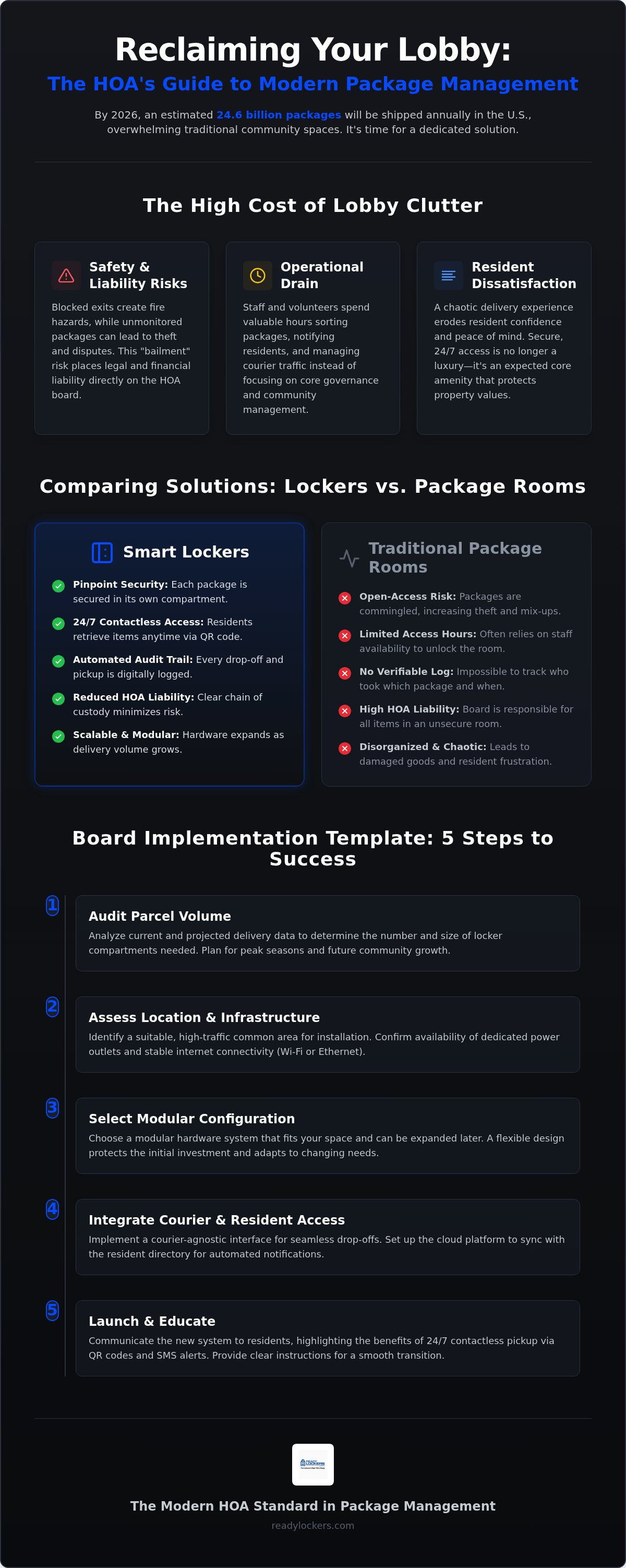
Board Implementation Template: 5 Steps to Success
Moving from a chaotic lobby to a streamlined HOA package management system requires a structured approach to ensure both board approval and resident adoption. Successful implementation isn't just about hardware; it's about aligning the community's physical space with its digital needs. Boards that follow a standardized framework avoid common pitfalls like underestimating parcel volume or choosing inflexible equipment. This five-step template provides a clear roadmap for a professional 2026 deployment.
- Conduct a parcel volume audit: Track delivery counts for 14 days to determine the peak door-to-resident ratio. This data ensures you don't outgrow your system within the first six months.
- Identify a technical location: Select a site with access to a standard 110V power outlet and high-speed internet via WiFi or Ethernet. Connectivity is the backbone of real-time notifications.
- Deliver a liability-focused proposal: Present a cost-benefit analysis to the board that emphasizes the reduction of "bailment" risks. Focus on how automation protects the association from lost property claims.
- Select modular hardware: Choose a configuration that fits your current footprint but allows for seamless expansion. Modular units ensure the system scales alongside the community.
- Execute resident onboarding: Launch the system with a clear instructional campaign. Providing residents with their registration details early prevents a bottleneck on the first day of operation.
For boards ready to begin the auditing process, you can explore modular smart locker configurations that adapt to your specific community requirements.
Site Selection and Requirements
The physical placement of your HOA package management system dictates its long-term utility. Boards must evaluate indoor versus outdoor placement based on common area accessibility and courier ease of use. If placing units outdoors, ensure they are under a canopy or rated for weather resistance. Plan for courier parking and a clear "path of travel" from the curb to the locker bank. A low-friction entry point for carriers ensures they actually use the lockers rather than leaving packages at the front door. Every second saved for the carrier increases the likelihood of a successful, secure delivery.
Resident Communication and Onboarding
Onboarding is the final hurdle to community-wide success. Draft an announcement letter that leads with security benefits and 24/7 access rather than technical specs. For residents who are less tech-savvy, emphasize that the system supports simple PIN codes alongside QR scans. It's also effective to set clear expectations for pickup windows. Encouraging residents to retrieve items within 24 hours keeps the locker turnover high and prevents congestion during peak delivery days. This proactive communication ensures the transition feels like a community upgrade rather than a logistical hurdle.
ReadyLockers: The Modern HOA Standard
ReadyLockers stands as the definitive HOA package management system for associations prioritizing modern efficiency. It isn't just a storage unit; it's a universal platform designed to meet the specific logistical needs of diverse property types, from sprawling townhome communities to high-density condominiums. By combining high-grade modular hardware with a sophisticated SaaS platform, associations gain a scalable utility that grows alongside their community. This hybrid model ensures that the physical infrastructure remains secure while the digital oversight provides real-time transparency for both boards and residents.
The system utilizes a contactless pickup system that prioritizes resident health and convenience. In the 2026 landscape, residents expect frictionless interactions that don't require shared surfaces or physical attendants. ReadyLockers delivers this through automated QR code notifications, allowing for rapid retrieval in seconds. Additionally, the low-friction courier access interface is engineered to ensure a 100% delivery success rate. By removing the technical barriers that often lead carriers to skip lockers, the system guarantees that parcels reach their intended compartments every time, eliminating the lobby piles that create fire hazards and security risks.
Why Boards Choose ReadyLockers
Boards favor ReadyLockers for its transparent financial model and operational reliability. The association makes a one-time hardware purchase, which is then supported by a predictable subscription for the locker management software. This structure provides a clear ROI by eliminating the hidden costs of lost packages and the administrative burden of resident disputes. With 24/7 availability, the system matches the fast-paced lifestyle of modern homeowners, providing peace of mind through constant accessibility. To ensure a flawless rollout, the company provides professional installation services that handle the technical setup from start to finish, ensuring the hardware integrates perfectly with the community's existing power and data infrastructure.
Next Steps for Your Association
Transitioning to an automated HOA package management system is a straightforward process when guided by the right data. Boards should begin by requesting a custom configuration quote based on their specific resident count and lobby footprint. This ensures the hardware is perfectly sized for the community's needs today while remaining modular for future growth. Scheduling a demo of the cloud management software allows board members to see the analytics dashboard in action, demonstrating how usage data can streamline property operations and resident notifications. For communities requiring technical assistance, reviewing the professional smart locker installation services guide provides a detailed look at the deployment phase and site requirements.
Secure Your Community's Future Infrastructure
The transition toward automated logistics is a necessary evolution for modern community associations. By implementing a professional HOA package management system, your board moves from reactive problem-solving to proactive community leadership. You effectively eliminate lobby chaos and parcel theft while providing residents with the 24/7 contactless pickup they expect. This secure infrastructure protects the association from liability and ensures that common areas remain clear, safe, and professional.
Leveraging automated SMS and QR notifications allows for immediate retrieval without the need for manual oversight. Cloud-based audit trails provide the transparency required to resolve delivery disputes instantly, keeping management focused on higher-priority governance. A modular approach ensures that your investment remains relevant as parcel volumes continue to rise throughout 2026 and beyond. It's a scalable utility that enhances property values and simplifies daily operations for everyone involved.
Ready to modernize your association's delivery hub? Request a custom HOA locker configuration and quote to see how modular hardware can transform your property. Take the first step toward a friction-free delivery experience that prioritizes security and resident satisfaction.
Frequently Asked Questions
Does an HOA package management system require a full-time staff member?
An HOA package management system does not require a full-time staff member or any manual oversight. The hardware and software work together to automate the entire delivery and pickup cycle. Couriers log deliveries via the touchscreen interface, and residents receive automated notifications for 24/7 retrieval. This self-service model removes the burden of parcel handling from board members and property managers, allowing the system to operate autonomously around the clock.
How do couriers like Amazon or USPS get access to the lockers?
Couriers like Amazon, UPS, and FedEx use a dedicated courier access interface to log deliveries. They select the resident from a digital directory, scan the parcel, and place it in an automatically opened compartment. For USPS, the system complies with federal standards to ensure carrier access. These systems are designed to be courier-agnostic, providing a fast and low-friction workflow that ensures carriers actually use the lockers instead of leaving items in the lobby.
What happens if a resident does not pick up their package for several days?
The locker management software monitors occupancy in real-time and automatically triggers reminders for uncollected items. If a resident leaves a package for several days, the system sends recurring SMS or email notifications to encourage pickup. This automated oversight keeps locker turnover high. Boards can also set specific policies for stale packages, such as administrative alerts or secondary storage protocols, to prevent system congestion during peak delivery periods in 2026.
Can smart lockers be installed outdoors in an HOA common area?
Yes, modular smart lockers can be installed in outdoor common areas. These units are engineered with weather-resistant finishes and specialized electronics to withstand various environmental conditions. Outdoor placement is often ideal for associations with limited lobby space or those wanting to provide courier access without granting entry to the main building. Boards should ensure the chosen site has a stable foundation, power access, and reliable internet connectivity via WiFi or Ethernet.
How much does a typical HOA package management system cost?
The investment for a professional HOA package management system typically involves two components: a one-time hardware purchase and a recurring SaaS subscription. While industry entry-level costs vary based on the number of locker doors and specific configurations, the long-term value lies in reduced liability and increased property appeal. Associations should request custom quotes to get accurate figures based on their specific resident count and modular hardware requirements rather than relying on broad industry averages.
Are these systems secure against hacking or physical break-ins?
These systems are built with high-grade steel and advanced digital encryption to prevent both physical break-ins and hacking. Each compartment is individually locked and only accessible via a unique, single-use QR code or PIN sent directly to the resident. Unlike open-access rooms, the system creates a cloud-based audit trail for every transaction. This level of security provides peace of mind by ensuring that only the verified recipient can retrieve their property from the locker bank.
How does the system handle oversized packages that do not fit in a locker?
Modular locker configurations include various compartment sizes to accommodate the majority of standard deliveries. However, extremely oversized items that exceed the largest locker dimensions may require alternative handling. Some associations designate a secure overflow area or utilize a hybrid approach with a smaller access-controlled room. The usage analytics provided by the software help boards determine if they need to add more large-scale modular units to their current bank to meet resident demand.
Is there an age limit or technical requirement for residents to use the system?
There is no age limit or high-level technical requirement for residents to use the system. The interface is designed for universal accessibility, utilizing simple prompts and clear visual instructions. Residents only need to scan a QR code or enter a numeric PIN to retrieve their items. The hardware is also installed at ADA-compliant heights to ensure that all community members, regardless of physical ability or technical experience, can use the system independently and safely.

Frequently Asked Questions
Does an HOA package management system require a full-time staff member?+
An HOA package management system does not require a full-time staff member or any manual oversight. The hardware and software work together to automate the entire delivery and pickup cycle. Couriers log deliveries via the touchscreen interface, and residents receive automated notifications for 24/7 retrieval. This self-service model removes the burden of parcel handling from board members and property managers, allowing the system to operate autonomously around the clock.
How do couriers like Amazon or USPS get access to the lockers?+
Couriers like Amazon, UPS, and FedEx use a dedicated courier access interface to log deliveries. They select the resident from a digital directory, scan the parcel, and place it in an automatically opened compartment. For USPS, the system complies with federal standards to ensure carrier access. These systems are designed to be courier-agnostic, providing a fast and low-friction workflow that ensures carriers actually use the lockers instead of leaving items in the lobby.
What happens if a resident does not pick up their package for several days?+
The locker management software monitors occupancy in real-time and automatically triggers reminders for uncollected items. If a resident leaves a package for several days, the system sends recurring SMS or email notifications to encourage pickup. This automated oversight keeps locker turnover high. Boards can also set specific policies for stale packages, such as administrative alerts or secondary storage protocols, to prevent system congestion during peak delivery periods in 2026.
Can smart lockers be installed outdoors in an HOA common area?+
Yes, modular smart lockers can be installed in outdoor common areas. These units are engineered with weather-resistant finishes and specialized electronics to withstand various environmental conditions. Outdoor placement is often ideal for associations with limited lobby space or those wanting to provide courier access without granting entry to the main building. Boards should ensure the chosen site has a stable foundation, power access, and reliable internet connectivity via WiFi or Ethernet.
How much does a typical HOA package management system cost?+
The investment for a professional HOA package management system typically involves two components: a one-time hardware purchase and a recurring SaaS subscription. While industry entry-level costs vary based on the number of locker doors and specific configurations, the long-term value lies in reduced liability and increased property appeal. Associations should request custom quotes to get accurate figures based on their specific resident count and modular hardware requirements rather than relying on broad industry averages.
Are these systems secure against hacking or physical break-ins?+
These systems are built with high-grade steel and advanced digital encryption to prevent both physical break-ins and hacking. Each compartment is individually locked and only accessible via a unique, single-use QR code or PIN sent directly to the resident. Unlike open-access rooms, the system creates a cloud-based audit trail for every transaction. This level of security provides peace of mind by ensuring that only the verified recipient can retrieve their property from the locker bank.
How does the system handle oversized packages that do not fit in a locker?+
Modular locker configurations include various compartment sizes to accommodate the majority of standard deliveries. However, extremely oversized items that exceed the largest locker dimensions may require alternative handling. Some associations designate a secure overflow area or utilize a hybrid approach with a smaller access-controlled room. The usage analytics provided by the software help boards determine if they need to add more large-scale modular units to their current bank to meet resident demand.
Is there an age limit or technical requirement for residents to use the system?+
There is no age limit or high-level technical requirement for residents to use the system. The interface is designed for universal accessibility, utilizing simple prompts and clear visual instructions. Residents only need to scan a QR code or enter a numeric PIN to retrieve their items. The hardware is also installed at ADA-compliant heights to ensure that all community members, regardless of physical ability or technical experience, can use the system independently and safely.