Indoor Smart Parcel Lockers: The 2026 Technical Reference & Implementation Guide
Discover how indoor smart parcel lockers solve lobby clutter & theft. Our 2026 guide covers technical specs, implementation, and ROI for modern properties.

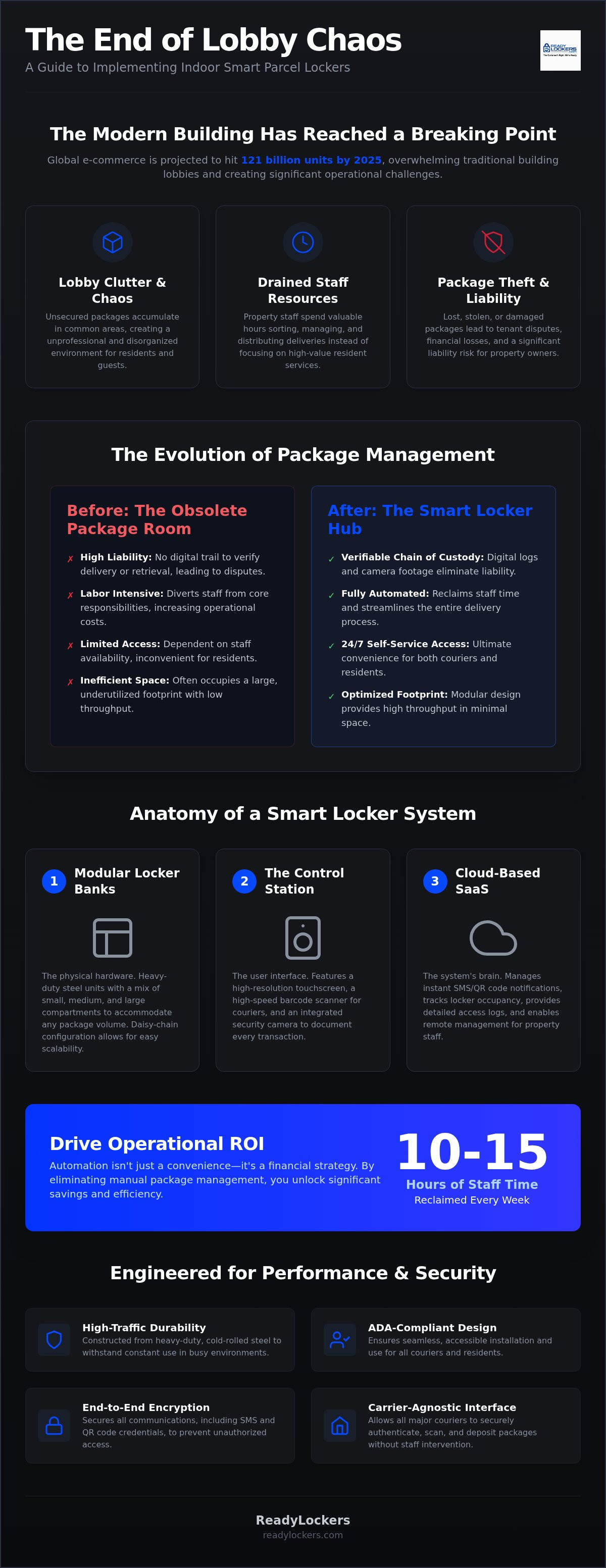
With global e-commerce volumes reaching 121 billion units in 2025, the traditional building lobby has officially reached a breaking point. You've likely seen the consequences firsthand: unsecured packages cluttering common areas, mounting liability for lost items, and property staff spending hours managing deliveries. Implementing indoor smart parcel lockers is the only way to resolve these pains while maintaining a professional, modern environment. It's a logical solution to a logistical bottleneck that currently drains your resources and compromises building security.
This 2026 technical reference and implementation guide explores how modular hardware and advanced SaaS integration transform chaotic lobbies into streamlined, secure hubs. You'll discover how to optimize limited floor space, eliminate package theft, and significantly reduce operational overhead through automated 24/7 delivery points. We will detail the specific spatial requirements, software capabilities, and deployment strategies needed to provide a frictionless experience for both couriers and residents; this ensures your property remains a leader in modern efficiency.
Key Takeaways
- Transition from manual mailrooms to 24/7 self-service hubs to eliminate package theft and resolve lobby clutter.
- Leverage modular hardware configurations that scale with your property's volume while connecting to a centralized cloud-based management platform.
- Calculate precise locker-to-resident ratios and ensure ADA-compliant spatial planning for the seamless installation of indoor smart parcel lockers.
- Implement carrier-agnostic interfaces that allow all major couriers to securely authenticate, scan, and assign compartments without staff intervention.
- Drive operational ROI by reclaiming up to 15 hours of staff time weekly through automated notifications and detailed usage analytics.
What Are Indoor Smart Parcel Lockers?
An Parcel locker is an automated, secure storage system designed for the efficient receipt and distribution of packages. In an indoor context, these systems integrate specialized modular hardware with a cloud-based SaaS platform. This combination allows for a frictionless "chain of custody" from the moment a courier scans a package to the second a recipient retrieves it. By 2026, these systems have evolved from luxury amenities into essential utility hubs, operating 24/7 without the need for human oversight.
The primary driver for adopting indoor smart parcel lockers is the elimination of "porch piracy" and the chaotic accumulation of boxes in unsecured lobbies. Unlike outdoor units that prioritize weatherproofing, indoor systems focus on architectural integration and high-traffic durability. They're designed to withstand constant use while matching the modern aesthetic of a professional lobby or corporate office. They provide a secure, centralized point that protects high-value deliveries from theft and damage.
Key Components of a Smart Locker System
- Modular locker banks: These are the physical storage units. Their modular nature allows property managers to customize the compartment mix. This ensures there are enough small, medium, and large slots to meet specific resident volume.
- The Control Station: This is the user interface. It features an integrated touchscreen, a high-speed barcode scanner for couriers, and a camera system to document every transaction for security.
- SaaS backend: This acts as the system's "brain." It manages real-time SMS or QR code notifications, tracks inventory levels, and provides detailed access logs for building audits.
Why Traditional Package Rooms Are Becoming Obsolete
Unmanaged package rooms create significant liability for property owners. Without a digital log, proving whether a high-value item was lost, stolen, or damaged is nearly impossible. This lack of accountability often leads to tenant disputes and financial losses. Automation removes these risks by creating a verifiable digital trail for every parcel.
Labor costs also make traditional rooms unsustainable. Staff-managed distribution is a financial drain that diverts employees from higher-value tasks. Transitioning to indoor smart parcel lockers reclaims approximately 10 to 15 hours of property management time every week. Finally, space efficiency is a major factor. A dedicated package room is often a graveyard of wasted square footage. Modular lockers occupy a smaller footprint while offering higher throughput, converting static space into a dynamic, automated service point.
The Technical Anatomy of Smart Locker Hardware and Software
Modern indoor smart parcel lockers aren't just metal boxes; they're sophisticated IoT devices that combine structural engineering with cloud computing. The hardware relies on a modular architecture. A single master controller, which houses the primary touchscreen and scanning hardware, manages multiple expansion units. This daisy-chain configuration allows property managers to scale their capacity as package volumes grow without replacing the core system. It's a plug-and-play approach that ensures the infrastructure remains relevant as e-commerce trends evolve.
Durability is a non-negotiable technical spec for indoor environments. While these units don't face extreme weather, they must withstand high-frequency physical interactions in busy lobbies. Systems are typically constructed from heavy-duty, cold-rolled steel and impact-resistant polycarbonate. These materials ensure a professional finish that resists scratches and dents while maintaining a secure enclosure for high-value items. Security is further bolstered by end-to-end encryption for all SMS and QR code communications, preventing unauthorized interception of access credentials. According to recent Smart Locker Technology Growth Analysis, this focus on secure IoT integration is a primary driver in system reliability and user trust.
The Role of Cloud-Based Management Software
The SaaS platform acts as the invisible engine of the entire operation. When a courier scans a label at the control station, the system triggers an instantaneous notification via SMS or a dedicated mobile app. Administrative dashboards provide property managers with real-time visibility into locker occupancy and turnover rates. This data is vital for identifying "stale" packages that haven't been picked up within 48 hours. SaaS integration serves as the essential bridge between courier drop-off and recipient pickup. If you're planning a lobby upgrade, you can examine modular smart package lockers to see how these digital tools integrate with physical hardware.
Contactless Retrieval Technology
Users in 2026 expect a touch-free experience that prioritizes speed and hygiene. QR code scanning is the primary method for secure access; the recipient holds their mobile device to the scanner, and the correct compartment door opens automatically. For higher security requirements, systems can employ RFID or secondary multi-factor authentication to verify the recipient's identity. Accessibility is also a core technical requirement. Modern units are designed with ADA-compliant screen heights and compartment placements. This ensures every tenant, regardless of physical ability, can retrieve their parcels without assistance or obstruction.
Modular Configurations and Spatial Planning for Indoor Units
Effective implementation of indoor smart parcel lockers begins with precise spatial planning and a clear understanding of your building's specific throughput needs. In 2026, property managers typically aim for a ratio of one locker compartment for every four to five residential units. This ratio ensures sufficient capacity for daily deliveries while allowing for the seasonal surges common in modern e-commerce. If your building serves a high-volume demographic, such as young professionals, a more aggressive ratio of one-to-three might be necessary to avoid logistical bottlenecks.
Space requirements extend beyond the physical footprint of the locker bank itself. You must account for the door swing radius, which typically requires 24 to 30 inches of unobstructed clearance. Maintaining ADA-compliant pathways is also a legal necessity. This involves ensuring a minimum of 48 inches of clear floor space in front of the units to allow for wheelchair maneuverability. By integrating these units into existing alcoves or recessed walls, you can maintain a professional, modern aesthetic that complements the building’s architecture rather than cluttering the lobby flow.
Standard Locker Compartment Sizes
A successful configuration relies on a balanced mix of compartment sizes to accommodate varying parcel volumes. Most properties find success with a distribution of 60% medium lockers, 25% small lockers, and 15% large or oversized units. Small compartments handle daily mail and small electronics, while medium units are the workhorses for standard consumer goods like apparel and shoe boxes. Oversized compartments are essential for handling larger items like bulk household orders or electronics. Modular flexibility allows you to adjust this mix over time, adding expansion units as occupancy grows or as tenant delivery habits shift.
Power and Connectivity Requirements
Technical infrastructure is the foundation of a reliable system. The master control station requires a dedicated 110v or 220v electrical outlet to power the touchscreen, scanner, and internal computer. Connectivity is equally critical for real-time SaaS communication. While cellular LTE or 5G can serve as a backup, a hardwired Ethernet connection is the gold standard for consistent data transmission and notification speed. It's important to remember that smart locker installation services require professional network assessment to ensure the hardware maintains a stable link to the cloud backend. Proper planning here prevents future downtime and ensures the 24/7 promise of the system remains intact.
Streamlining Courier Access and Tenant Retrieval
The operational success of indoor smart parcel lockers hinges on the efficiency of the interface for both couriers and recipients. A truly carrier-agnostic system allows every major service provider, such as UPS, FedEx, USPS, and DHL, to use the same terminal without specialized training. This universal accessibility ensures that no delivery is redirected or delayed due to hardware incompatibility. It creates a standardized drop-off point that simplifies the final leg of the logistics chain and ensures every package reaches its destination securely.
The Courier Experience: Speed and Security
Courier workflows are optimized for maximum speed and security. Upon reaching the locker bank, a driver authenticates their identity using a secure PIN or assigned credentials. For high-volume days, bulk delivery modes allow the courier to scan and deposit multiple items in seconds. The system's intelligent software assigns compartments based on parcel dimensions, which maximizes space utilization. Every transaction is recorded in a digital log, often accompanied by photo capture. This provides the building with ironclad proof of delivery and liability protection, which is essential for managing the chain of custody.
The Tenant Journey: Frictionless Pickups
For the recipient, the journey begins the instant the courier closes the compartment door. The SaaS backend immediately triggers an automated notification via SMS or email, containing a unique QR code for retrieval. This transition is instantaneous and requires no staff intervention. By implementing smart package lockers for apartments, property owners provide a premium amenity that directly impacts resident satisfaction and long-term retention. It turns a formerly tedious chore into a seamless, high-tech interaction.
Retaining the contactless nature of the interaction is a standard requirement in 2026. Tenants use their mobile devices to scan the QR code at the control station, which triggers the specific door to open automatically. There's no need to touch shared surfaces or coordinate with building staff. This 24/7 availability removes the "missed delivery" bottleneck that often plagues working professionals. If you're ready to modernize your building's logistics, you can contact our team to explore courier access interfaces that fit your specific layout and volume needs.
Implementing ReadyLockers for Long-Term Operational ROI
Investing in indoor smart parcel lockers is a strategic move to recapture lost productivity and mitigate financial risks. While previous sections detailed the technical mechanics and spatial requirements, the ultimate value lies in the cumulative operational return. For property managers, the most immediate impact is the reclamation of 10 to 15 hours of staff labor every week. Automation eliminates the need for employees to sign for, log, and distribute packages, allowing them to focus on high-value tenant services and building maintenance. This shift doesn't just improve morale; it directly reduces the overhead costs associated with manual mailroom management.
Security enhancements provide a second layer of ROI through risk mitigation. By providing a secure, verifiable chain of custody, building owners see a direct correlation between locker implementation and reduced insurance claims related to package theft or damage. Usage analytics from the SaaS platform allow you to monitor turnover rates and occupancy levels in real-time. This data informs your long-term strategy, identifying when it's time to add modular units to your smart locker management software as building occupancy grows. This data-driven approach ensures your infrastructure scales perfectly with actual demand.
The ReadyLockers Advantage: Hardware Meets SaaS
The ReadyLockers model combines a one-time hardware investment with a recurring SaaS subscription. This structure provides you with lifelong physical assets while ensuring your system receives continuous firmware updates, security patches, and 24/7 technical support. The versatility of this platform extends beyond residential use. It's a universal solution currently utilized in hospitals for medical supplies, schools for student equipment, and corporate offices for internal asset tracking. This broad application proves the system's reliability across diverse, high-pressure environments.
Next Steps: Planning Your Indoor Installation
Transitioning to an automated system requires a methodical approach to ensure technical readiness. The process begins with a comprehensive site assessment of your lobby or mailroom to evaluate power access and network stability. Once the environment is verified, you'll select a custom configuration of modular units that matches your specific parcel volume and resident count. The final phase involves a structured launch and training period. Providing tenants with clear instructions on QR code retrieval and mobile app usage ensures a frictionless transition. By following this roadmap, you'll convert a chaotic delivery environment into a streamlined, high-tech utility that serves your property for years to come.
Future-Proofing Your Property Logistics
Integrating indoor smart parcel lockers is no longer a luxury; it's a standard operational requirement for any modern environment. You've seen how modular hardware and SaaS integration resolve the chaos of unsecured lobbies while reclaiming up to 15 hours of staff time weekly. By prioritizing technical readiness and spatial planning, you ensure a frictionless experience that scales with your building's growth. This transition replaces manual liability with automated precision, protecting both your assets and your residents' peace of mind.
ReadyLockers provides the essential infrastructure to eliminate package theft and liability concerns. Our modular configurations fit any layout, offering 24/7 contactless pickup via SMS and QR codes. These tools are supported by comprehensive cloud-based usage analytics that help you optimize your compartment mix over time. You can Streamline your building's logistics with ReadyLockers and transform your lobby into a secure, high-tech hub. Modern efficiency is well within your reach, and the transition is simpler than you think.
Frequently Asked Questions
How much floor space do indoor smart parcel lockers require?
Indoor smart parcel lockers require a footprint based on your specific unit count, typically starting at approximately 18 to 24 inches in depth. You must also account for 24 to 30 inches of door swing clearance and 48 inches of unobstructed ADA-compliant floor space. Modular designs allow these units to fit into existing alcoves or recessed wall areas. This flexibility ensures you optimize lobby space without compromising the building's primary traffic flow or architectural integrity.
Are indoor smart lockers secure against theft and tampering?
Yes, these systems provide a high level of physical and digital security. They're constructed from heavy-duty, cold-rolled steel and impact-resistant materials that prevent forced entry. Integrated cameras document every courier drop-off and tenant retrieval, creating a verifiable chain of custody. Digitally, the system uses end-to-end encryption for all SMS and QR code communications. This multi-layered approach effectively eliminates package theft and tampering in unsecured lobby environments while providing total peace of mind.
Do all couriers like UPS and FedEx know how to use these lockers?
Major carriers like UPS, FedEx, USPS, and DHL are highly familiar with these systems. The courier access interface is designed for universal use, requiring only a secure scan of the parcel label to assign a compartment. Because the workflow is carrier-agnostic, drivers don't need specialized training for different buildings. This standardization speeds up the delivery process and ensures that couriers actually use the lockers rather than leaving packages in common areas or unsecured mailrooms.
Can the locker system be customized to match our building's interior design?
You can customize the physical configuration of the modular units to fit your building's specific hallway or alcove dimensions. While the core hardware is designed for durability, the modular nature of indoor smart parcel lockers allows for straight, L-shaped, or U-shaped layouts. This ensures the system integrates seamlessly into your modern lobby or mailroom design. Choosing a configuration that matches your building's aesthetic helps maintain a professional environment while providing a high-tech amenity residents value.
What happens if there is a power outage or internet failure?
Reliable systems include internal battery backups and local data storage to maintain functionality during power or network interruptions. If the internet fails, the hardware uses cached access codes to ensure tenants can still retrieve their items. Many units also feature cellular LTE or 5G failovers to maintain real-time communication with the cloud backend. These redundancies ensure your delivery point remains available 24/7, providing consistent peace of mind regardless of external technical challenges or building maintenance issues.
Is there a monthly fee for the smart locker management software?
Access to the cloud-based platform involves a recurring subscription fee that covers essential digital services. This SaaS fee ensures your building receives continuous firmware updates, security patches, and 24/7 technical support. It also powers the automated notification system and provides property managers with detailed usage analytics. This model shifts the cost from a single capital expenditure to a manageable operating expense, ensuring the software remains modern and secure for the entire lifespan of the hardware.
Can smart lockers handle oversized packages like furniture or TVs?
Modular configurations include oversized compartments specifically designed for electronics, bulk household orders, and larger consumer goods. While they aren't intended for massive items like sofas, they easily accommodate common bulk deliveries that would otherwise clutter your lobby. You can adjust your compartment mix to include more large slots if your building sees a high volume of electronics or appliance deliveries. This adaptability ensures your system handles the evolving variety of modern e-commerce while maintaining a clean lobby.
How do tenants receive notifications when a package arrives?
Recipients receive automated alerts the moment a courier closes the locker door. The SaaS platform triggers an instantaneous notification via SMS, email, or a dedicated mobile app. These alerts include a unique QR code or secure PIN required for retrieval. This automated process removes building staff from the logistics chain, ensuring tenants get their packages faster. It provides a frictionless experience that allows for 24/7 pickup without any manual intervention from property management or front desk staff.

Frequently Asked Questions
How much floor space do indoor smart parcel lockers require?+
Indoor smart parcel lockers require a footprint based on your specific unit count, typically starting at approximately 18 to 24 inches in depth. You must also account for 24 to 30 inches of door swing clearance and 48 inches of unobstructed ADA-compliant floor space. Modular designs allow these units to fit into existing alcoves or recessed wall areas. This flexibility ensures you optimize lobby space without compromising the building's primary traffic flow or architectural integrity.
Are indoor smart lockers secure against theft and tampering?+
Yes, these systems provide a high level of physical and digital security. They're constructed from heavy-duty, cold-rolled steel and impact-resistant materials that prevent forced entry. Integrated cameras document every courier drop-off and tenant retrieval, creating a verifiable chain of custody. Digitally, the system uses end-to-end encryption for all SMS and QR code communications. This multi-layered approach effectively eliminates package theft and tampering in unsecured lobby environments while providing total peace of mind.
Do all couriers like UPS and FedEx know how to use these lockers?+
Major carriers like UPS, FedEx, USPS, and DHL are highly familiar with these systems. The courier access interface is designed for universal use, requiring only a secure scan of the parcel label to assign a compartment. Because the workflow is carrier-agnostic, drivers don't need specialized training for different buildings. This standardization speeds up the delivery process and ensures that couriers actually use the lockers rather than leaving packages in common areas or unsecured mailrooms.
Can the locker system be customized to match our building's interior design?+
You can customize the physical configuration of the modular units to fit your building's specific hallway or alcove dimensions. While the core hardware is designed for durability, the modular nature of indoor smart parcel lockers allows for straight, L-shaped, or U-shaped layouts. This ensures the system integrates seamlessly into your modern lobby or mailroom design. Choosing a configuration that matches your building's aesthetic helps maintain a professional environment while providing a high-tech amenity residents value.
What happens if there is a power outage or internet failure?+
Reliable systems include internal battery backups and local data storage to maintain functionality during power or network interruptions. If the internet fails, the hardware uses cached access codes to ensure tenants can still retrieve their items. Many units also feature cellular LTE or 5G failovers to maintain real-time communication with the cloud backend. These redundancies ensure your delivery point remains available 24/7, providing consistent peace of mind regardless of external technical challenges or building maintenance issues.
Is there a monthly fee for the smart locker management software?+
Access to the cloud-based platform involves a recurring subscription fee that covers essential digital services. This SaaS fee ensures your building receives continuous firmware updates, security patches, and 24/7 technical support. It also powers the automated notification system and provides property managers with detailed usage analytics. This model shifts the cost from a single capital expenditure to a manageable operating expense, ensuring the software remains modern and secure for the entire lifespan of the hardware.
Can smart lockers handle oversized packages like furniture or TVs?+
Modular configurations include oversized compartments specifically designed for electronics, bulk household orders, and larger consumer goods. While they aren't intended for massive items like sofas, they easily accommodate common bulk deliveries that would otherwise clutter your lobby. You can adjust your compartment mix to include more large slots if your building sees a high volume of electronics or appliance deliveries. This adaptability ensures your system handles the evolving variety of modern e-commerce while maintaining a clean lobby.
How do tenants receive notifications when a package arrives?+
Recipients receive automated alerts the moment a courier closes the locker door. The SaaS platform triggers an instantaneous notification via SMS, email, or a dedicated mobile app. These alerts include a unique QR code or secure PIN required for retrieval. This automated process removes building staff from the logistics chain, ensuring tenants get their packages faster. It provides a frictionless experience that allows for 24/7 pickup without any manual intervention from property management or front desk staff.