Package Theft Prevention: Which Delivery Setup Fits Your Property
Explore package theft prevention for commercial properties. Compare smart lockers, secure package rooms, and access control to protect every building delivery.

Package theft prevention for commercial properties starts with reducing unattended, easy-to-reach drop-offs. U.S. e-commerce sales reached $1.19 trillion in 2024 and increased 8.1% year over year, putting more deliveries into shared building spaces. SafeWise reported 104 million packages stolen in the United States in 2025, even as its report marked the first year-over-year decline in package theft in eight years.
For property teams, package theft prevention for commercial properties starts with more than counting incoming parcels. Consider where couriers leave them, who can enter the delivery area, and how quickly recipients collect them. Packages left in an open lobby or an entry area without clear oversight are exposed to theft.
This guide explains how to match package security to your property. Compare smart lockers, controlled package rooms, and surveillance, then assess how delivery access, available space, package volume, and staff workflows affect the right setup.
Key Takeaways
- Choose between a controlled package room and lockers by weighing available space, delivery volume, carrier access, and how access will be managed.
- Plan camera coverage around delivery entrances, drop-off zones, and exit paths, then establish clear procedures for reviewing and responding to incidents.
- Match locker capacity and pickup workflows to recurring package traffic, while accounting for busy delivery periods.
- Compare lockers, staffed reception, and off-site pickup based on the staffing, access, and convenience needs of your property.
- Use delivery trends and incident records to identify weak points and decide which security changes will make the most practical difference.
1. Are Package Lockers Better Than an Access-Controlled Package Room?
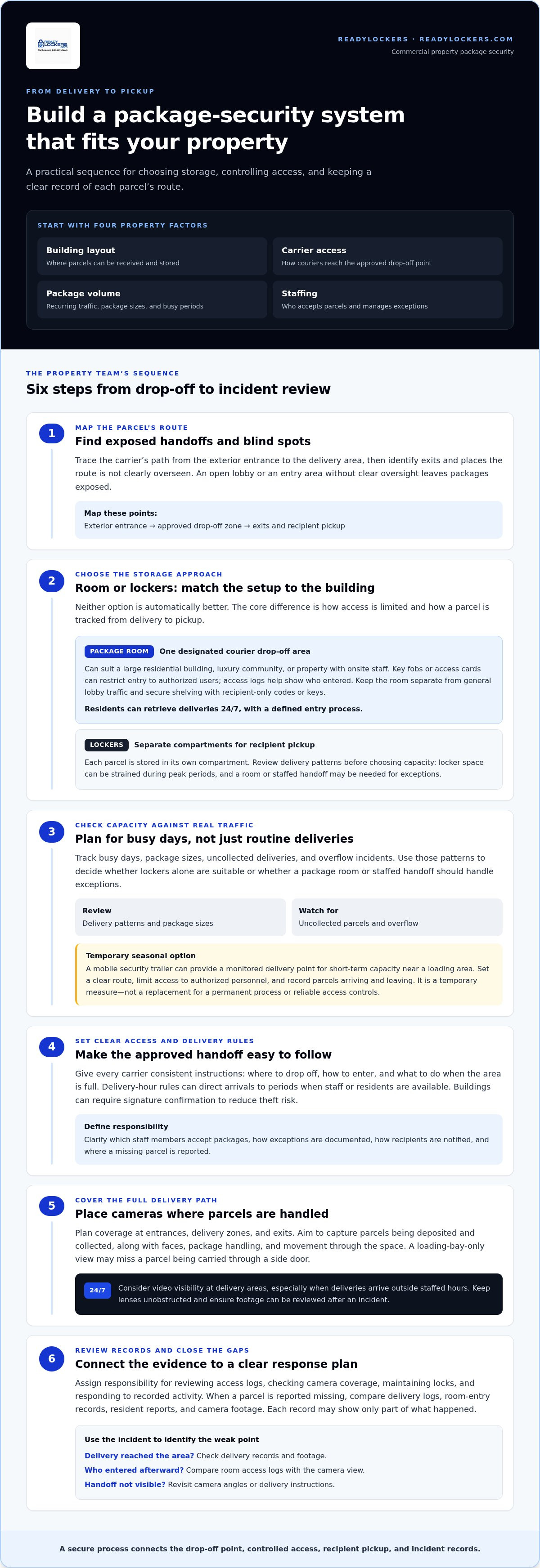
Neither setup is automatically better. Match the delivery method to your building’s layout, carrier access, package volume, and staffing. A controlled package room gives couriers one designated drop-off area, while lockers assign deliveries to individual compartments. For package theft prevention for commercial properties, the key difference is how each setup limits access and tracks a parcel from delivery to pickup.
A secure package room can suit a large residential building, luxury community, or property with onsite staff. Key fobs or access cards can limit entry to authorized users, while access logs help show who entered. Keep the delivery area separate from general lobby traffic, and use recipient-only codes or keys for secured shelving. National Business Research Institute found that apartment residents ranked parcel lockers as their second most crucial community amenity, after secure parking.
Rooms need usable space, upkeep, and consistent access control. Log deliveries and room entries to support a clear chain of custody. Then compare those records with resident reports and camera footage. If a package goes missing, the team can identify whether the delivery reached the room, whether someone entered afterward, and where records leave gaps. Residents can retrieve deliveries from package rooms 24/7, but convenient access still needs a defined entry process.
Lockers suit properties that want each parcel stored in a separate compartment for recipient pickup. Capacity can be strained during peak delivery periods, so review delivery patterns before choosing a setup. Track busy days, package sizes, uncollected deliveries, and overflow incidents. These signals can show whether lockers alone are suitable or whether a room or staffed handoff should handle exceptions.
Seasonal spikes may call for temporary operational changes. A mobile security trailer can provide a monitored delivery point when a property needs short-term capacity near a loading area. Set a clear drop-off route, restrict access to authorized personnel, and record when parcels arrive and leave. Treat the trailer as a temporary measure, not a replacement for a permanent package process or reliable access controls.
Monitoring also requires clear responsibility. Property teams should decide who reviews access logs, checks camera coverage, maintains locks, and responds to recorded activity. Cameras may provide only partial information, so compare footage with entry records and delivery logs. Clarify which staff members accept packages and document exceptions. These steps help identify operational gaps without assuming footage alone will resolve every incident.
2. Surveillance coverage at loading docks and delivery areas
Cameras work best when they cover a parcel’s full route, not just the loading dock. Map the carrier’s path from the exterior entrance to the delivery zone, then identify exits and blind spots. Position cameras to capture parcels being deposited and collected. A camera aimed only at the loading bay may record a vehicle but miss someone carrying packages through a side door.
Commercial property teams can use cameras at entrances, delivery zones, and exits to document incidents and help deter theft. Consider 24/7 video visibility at delivery areas, especially when deliveries arrive outside staffed hours. Check that the view captures faces, package handling, and movement through the space. Review footage with access-control records when a parcel is reported stolen, since either record alone may show only part of the activity.
Coverage also needs an operating plan. Assign responsibility for monitoring and maintaining cameras and responding to recorded activity. Keep lenses unobstructed and ensure footage can be reviewed after an incident. Property owners or HOAs may take on additional monitoring, maintenance, and response responsibilities after installing cameras. Set a process for reporting suspicious activity, preserving relevant footage, and documenting who reviewed it.
Planning around delivery periods reduces the time packages sit unattended. Compare delivery patterns with staffing schedules and identify periods when the package area lacks close oversight. If overflow storage is needed, designate a specific monitored location before peak periods. Keep it within camera coverage and access control instead of letting carriers use an unmonitored hallway or lobby corner. Record overflow deliveries and pickups so staff can trace each parcel’s handling.
Give every carrier clear, consistent delivery instructions. Specify the approved drop-off area, how to enter, and what to do when it is full. Buildings can require signature confirmation to reduce theft risk, and delivery-hour rules can direct arrivals to periods when staff or residents are available. Tell recipients how they’ll receive notifications and where to report a missing parcel. For example, instruct carriers to leave packages in the designated room, not beside the loading-dock door.
Review incidents and delivery records together. If a camera shows the package arriving but no authorized pickup, examine access logs and the route between the delivery zone and exit. If footage misses the handoff, adjust camera angles or instructions. Clear courier access procedures can also help carriers reach the correct delivery point and keep parcels out of unsecured areas.
4. Package lockers and theft-prevention boxes
Package lockers reduce exposure by keeping deliveries in separate, secured compartments until recipients collect them. Traditional lockers use physical keys or combination locks, while smart lockers can assign access to a recipient through a code or digital notification. In either setup, define who can access the delivery area and how exceptions are recorded. A locked box alone won’t show whether a parcel was placed in the wrong compartment.
State laws differ in how they classify package theft and set penalties. Eight states classify package theft as a felony. Stealing USPS mail or packages is a federal felony, while stealing packages other than USPS mail or packages is a misdemeanor in most states.
Choose between a package room and lockers by comparing available space, delivery volume, and staff capacity. A room can hold secured shelving and accommodate parcels that don’t fit standard compartments, but it needs strict access control. Lockers organize pickups parcel by parcel, though capacity may become an issue during peak periods. A property can use both, assigning lockers to routine deliveries and a controlled room to overflow.
Apartment buildings should avoid relying on a postal lock as the only barrier to a package area. Limit entry to authorized users, keep the delivery route visible, and place secured shelving or lockers away from public access. Lighting helps staff observe the approach and makes activity easier to review. A resident survey found that 95% said knowing a package is secure until they get home is important.
Capacity and pickup rules matter as much as the locking mechanism. Smart lockers are suited to mid-size and high-volume communities with recurring package traffic, but peak periods can exceed available space. Track overflow, uncollected parcels, and deliveries that don’t fit. Modern package lockers can be available for pickup 24/7, giving recipients flexibility while keeping parcels out of open lobbies.
For each delivery, record its arrival, storage location, recipient notification, and pickup. A consistent log helps property teams trace handling when someone reports a missing package. It also clarifies responsibility during a disputed handoff and can inform a liability review. Set a separate procedure for oversized or unusually shaped parcels so staff don’t leave them beside the lockers.
Review the setup when delivery patterns change. If overflow repeatedly fills the package room, adjust the storage process or reassess locker capacity. If residents use unsecured areas instead, improve instructions and clarify the designated pickup route. Matching the system to actual package flow helps the property manage access, space, and accountability together.
5. Package theft statistics and e-commerce growth
U.S. e-commerce sales reached $1.19 trillion in 2024, increasing 8.1% year over year. Online sales accounted for 16.1% of total U.S. retail sales that year. More online orders mean more parcels moving through commercial buildings, apartment lobbies, loading docks, and shared mail areas. For property management, the practical concern is both delivery volume and exposure, not only the national theft total.
The USPS Office of Inspector General reported more than 58 million packages stolen nationwide in the United States in 2024. SafeWise reported 104 million stolen packages in 2025, while marking the first year-over-year decline in eight years. SafeWise also reported one million fewer stolen packages than in 2024. These counts come from separate reports, so property teams shouldn’t treat them as a single, consistent year-to-year series.
Other 2025 estimates put package theft losses at $15 billion, with the average stolen package valued at $143. The estimated average value increased 8% from the prior year. Fewer than one in four package-theft victims reports the crime to local law enforcement. That reporting gap means property incident logs can reveal issues that police reports alone may not show.
E-commerce growth also changes where property teams should focus. Mobile commerce accounts for nearly 44% of U.S. e-commerce sales, and three out of four shoppers make purchases on smartphones. Residents increasingly expect deliveries to fit around their schedules. A 2025 survey found that 62% of U.S. online shoppers felt anxious waiting for deliveries. These trends make timely notifications and dependable pickup procedures relevant parts of building operations.
Use local records to turn national figures into practical decisions. Compare delivery logs, resident reports, package-room overflow, and surveillance footage. Note where carriers leave parcels, when unsecured deliveries occur, and whether reports cluster around particular entrances. If logs show repeated drop-offs in an open lobby, revise carrier instructions and direct deliveries to a controlled location. If reports involve an obscured doorway, adjust camera placement or lighting.
Choose security measures in response to recorded patterns, rather than treating one national estimate as a property forecast. For example, rising package volume and recurring overflow may warrant reviewing storage capacity and pickup procedures. More reports near a loading dock may point to gaps in access control or camera coverage. Track the same measures after each change, including missing-package reports and unattended deliveries. This gives property managers a clearer basis for judging whether an adjustment addresses the concern and where thieves may find opportunities.
5. What are the pros and cons of package lockers, staffed reception, and off-site delivery?
Package lockers, staffed reception, and off-site pickup solve different delivery problems. Compare them against your property’s package volume, staffing pattern, available space, and recipient access needs. A system that works for a staffed office may not suit an apartment building where residents collect parcels throughout the day.
Package lockers separate deliveries into secured compartments and give recipients a defined pickup process. They can reduce the time staff spend sorting and handing over parcels. Multifamily properties implementing smart lockers can reclaim 25 to 30 hours of staff time per week previously spent handling packages. The trade-off is capacity: during peak delivery periods, compartments may fill before recipients collect older parcels. Review package sizes, overflow frequency, and pickup records when deciding whether lockers can handle routine deliveries alone.
Staffed reception provides a human handoff. A receptionist or concierge can direct carriers, accept packages, and answer recipient questions. This can suit a property with a consistently staffed front desk and a manageable flow of deliveries. However, reception depends on staff being present and following a consistent logging process. Define who may accept a parcel, where it will be stored, how recipients are notified, and what happens when an oversized delivery arrives.
Off-site pickup shifts collection away from the property. For NYC building residents concerned about package security, delivery to a local post office or pickup point can reduce theft risk. This option can help when a building lacks secure storage, but recipients must travel elsewhere to collect parcels. It may be less convenient for people with limited mobility, tight schedules, or deliveries that are difficult to carry.
Use delivery records to compare the options instead of choosing by preference alone. Track where parcels accumulate, how often staff handle them, and whether recipients report missed handoffs. If a staffed desk becomes overwhelmed, lockers may reduce routine handling. If the building cannot accommodate secure storage, off-site pickup offers another option. Some properties can combine methods, using reception for exceptions and lockers for standard parcels.
Set a clear process for each method. Tell carriers where to leave deliveries, notify recipients when parcels are ready, and record handoffs or pickup-point redirections. Review the process when package volume or building staffing changes. To reduce routine handling while giving recipients controlled access, explore smart package locker options for your property.
ReadyLockers: Smart Package Lockers
ReadyLockers helps commercial properties manage deliveries with Smart Package Lockers and Locker Management Software. Its Courier Access Interface enables couriers to place packages in secure lockers, while recipients receive instant SMS or QR code notifications. The Contactless Pickup System lets recipients collect deliveries without a staff handoff, with pickups available 24/7.
This setup can suit properties seeking a defined delivery point, controlled package storage, and a simpler pickup process. It helps address unattended lobby deliveries and missed handoffs by connecting courier access, package storage, and recipient notification. For properties reviewing locker-based delivery management, visit ReadyLockers.
Make Your Next Delivery-Security Decision Count
Package theft prevention for commercial properties is an ongoing operational decision, not a one-time equipment choice. As delivery patterns change, property teams can review access procedures, storage capacity, and incident records to keep the setup aligned with how the building is used. Start by identifying where the current process breaks down: parcels arrive without oversight, staff spend too much time handling them, or recipients lack a clear pickup route.
ReadyLockers offers Smart Package Lockers, Locker Management Software, and a Contactless Pickup System to support secure storage and organized parcel collection. Consider how these offerings could fit your property’s delivery flow and management priorities. A clear next step is to discuss the delivery-security needs you’ve identified and the setup you’re considering.
Contact ReadyLockers about delivery security and take a practical step toward a delivery process that works better for your property.
Frequently Asked Questions
Why Is Package Theft Rising in Apartment Buildings?
More online purchases mean more parcels passing through shared apartment spaces, including lobbies, mailrooms, and loading areas. Theft risk increases when deliveries arrive during unattended periods or remain accessible to people who don’t live in the building. Frequent visitor turnover and courier access can also make informal handoffs difficult to track. Start by comparing resident reports with delivery locations and times to identify where packages are exposed.
Are Package Lockers Better Than an Access-Controlled Package Room?
Lockers provide separate, controlled access to individual parcels; a package room offers more flexibility for irregularly sized deliveries. The right option depends on available floor space, package mix, carrier access, and staff capacity. For example, a property receiving bulky supplies may need a managed room alongside lockers for routine parcels. Compare overflow and handling patterns before deciding, then set a clear process for deliveries that don’t fit the primary setup.
Who is liable if a package is stolen?
Responsibility depends on where the package was lost and who had custody under the delivery arrangement. Review the carrier’s delivery record, building procedures, recipient instructions, and any staff handoff documentation. For example, a parcel marked delivered to a lobby raises different questions from one accepted and logged by reception. Preserve messages and relevant records promptly, then assess the circumstances rather than assuming the property owner or carrier is automatically responsible.
What are the most effective package theft prevention measures for commercial properties?
Use layered controls for delivery, storage, and pickup instead of relying on a single device. Direct carriers to a defined receiving point, limit access to authorized people, and document handoffs. Give recipients a clear way to report missing parcels, then compare reports with delivery records to identify recurring process failures. For example, repeated deliveries beside a lobby desk may call for clearer carrier instructions and a more controlled receiving procedure.
How can businesses secure entrances, mailrooms, and loading docks against package theft?
Start with the building’s access points: keep entry locks and door closers working, and restrict routes into mailrooms and loading areas. Store parcels away from public entrances, secure secondary doors, and improve lighting where people could approach unseen. At a loading dock, mark the approved drop-off point and prevent deliveries from being left beside an open vehicle entrance. Clear signs and consistent staff instructions help visitors and carriers follow the intended route.
What security cameras, access controls, and alarms help prevent package theft?
Use cameras to cover delivery entrances, package handling areas, and paths leading out of the building. Key fobs or access cards can limit entry and create access records. Direct-wire, multiplex, or radio-based alarm systems can detect unauthorized entry. Match each control to a specific risk: an alarm can flag entry, while camera footage can help review activity. Assign responsibility for monitoring, maintenance, and response so alerts and recordings have a clear operational purpose.
How should commercial properties manage deliveries and maintain chain-of-custody records?
Create a single receiving procedure that records a parcel’s arrival, designated storage location, recipient notification, and final handoff or pickup. Document exceptions too, such as a carrier leaving a parcel elsewhere or staff moving it to overflow storage. Use consistent timestamps and parcel identifiers so a manager can trace each handoff without relying on memory. When a recipient reports a discrepancy, compare these records with access logs and delivery confirmation.
What liability do commercial property owners have for stolen tenant packages?
Property-owner responsibility depends on the circumstances of the loss, including whether staff accepted the parcel, what the building’s procedures required, and whether those procedures were followed. Delivery records and handoff logs can help establish where custody changed. A tenant’s package left in a public lobby presents a different record from one received and stored by building staff. Document the incident and review applicable agreements and local rules before determining responsibility.

Frequently Asked Questions
Why Is Package Theft Rising in Apartment Buildings?+
More online purchases mean more parcels passing through shared apartment spaces, including lobbies, mailrooms, and loading areas. Theft risk increases when deliveries arrive during unattended periods or remain accessible to people who don’t live in the building. Frequent visitor turnover and courier access can also make informal handoffs difficult to track. Start by comparing resident reports with delivery locations and times to identify where packages are exposed.
Are Package Lockers Better Than an Access-Controlled Package Room?+
Lockers provide separate, controlled access to individual parcels; a package room offers more flexibility for irregularly sized deliveries. The right option depends on available floor space, package mix, carrier access, and staff capacity. For example, a property receiving bulky supplies may need a managed room alongside lockers for routine parcels. Compare overflow and handling patterns before deciding, then set a clear process for deliveries that don’t fit the primary setup.
Who is liable if a package is stolen?+
Responsibility depends on where the package was lost and who had custody under the delivery arrangement. Review the carrier’s delivery record, building procedures, recipient instructions, and any staff handoff documentation. For example, a parcel marked delivered to a lobby raises different questions from one accepted and logged by reception. Preserve messages and relevant records promptly, then assess the circumstances rather than assuming the property owner or carrier is automatically responsible.
What are the most effective package theft prevention measures for commercial properties?+
Use layered controls for delivery, storage, and pickup instead of relying on a single device. Direct carriers to a defined receiving point, limit access to authorized people, and document handoffs. Give recipients a clear way to report missing parcels, then compare reports with delivery records to identify recurring process failures. For example, repeated deliveries beside a lobby desk may call for clearer carrier instructions and a more controlled receiving procedure.
How can businesses secure entrances, mailrooms, and loading docks against package theft?+
Start with the building’s access points: keep entry locks and door closers working, and restrict routes into mailrooms and loading areas. Store parcels away from public entrances, secure secondary doors, and improve lighting where people could approach unseen. At a loading dock, mark the approved drop-off point and prevent deliveries from being left beside an open vehicle entrance. Clear signs and consistent staff instructions help visitors and carriers follow the intended route.
What security cameras, access controls, and alarms help prevent package theft?+
Use cameras to cover delivery entrances, package handling areas, and paths leading out of the building. Key fobs or access cards can limit entry and create access records. Direct-wire, multiplex, or radio-based alarm systems can detect unauthorized entry. Match each control to a specific risk: an alarm can flag entry, while camera footage can help review activity. Assign responsibility for monitoring, maintenance, and response so alerts and recordings have a clear operational purpose.
How should commercial properties manage deliveries and maintain chain-of-custody records?+
Create a single receiving procedure that records a parcel’s arrival, designated storage location, recipient notification, and final handoff or pickup. Document exceptions too, such as a carrier leaving a parcel elsewhere or staff moving it to overflow storage. Use consistent timestamps and parcel identifiers so a manager can trace each handoff without relying on memory. When a recipient reports a discrepancy, compare these records with access logs and delivery confirmation.
What liability do commercial property owners have for stolen tenant packages?+
Property-owner responsibility depends on the circumstances of the loss, including whether staff accepted the parcel, what the building’s procedures required, and whether those procedures were followed. Delivery records and handoff logs can help establish where custody changed. A tenant’s package left in a public lobby presents a different record from one received and stored by building staff. Document the incident and review applicable agreements and local rules before determining responsibility.