Courier Onboarding for New Locker Systems: 2026 Guide
Master courier onboarding for new locker systems. Learn access setup, delivery workflows, exception handling, and rollout steps in our complete 2026 guide.

A one-time locker demonstration won’t create reliable delivery habits. Courier onboarding for new locker systems works best when access, package placement, and exception steps form a repeatable workflow couriers can follow on every visit.
Couriers may continue using familiar drop-off routines if instructions are unclear. That can delay deliveries and create avoidable questions for property teams. A defined process helps couriers use the lockers consistently while keeping day-to-day oversight manageable.
This guide explains how to prepare for launch, communicate access steps, handle packages that don’t fit or compartments that can’t be used, and review adoption after rollout. It also shows how courier access management, locker operations, and recipient SMS or QR code notifications fit into one delivery workflow. Use the steps to create a plan your property team can refine as it learns what couriers need in daily operations.
Key Takeaways
- Map delivery patterns and package needs to shape a locker workflow that fits your property’s operations.
- Choose an onboarding approach based on courier team size and how consistently instructions need to be shared.
- Use a launch checklist and name an internal owner to keep preparation, testing, and follow-up on track.
- Set distinct response steps for access issues, packages that don’t fit, and unavailable compartments.
- Connect locker management software, courier access management, and recipient notifications in one handoff process.
Why courier onboarding matters when launching a new locker system
Installing lockers and configuring their software establish the system, but they don’t ensure delivery teams will use it consistently. Courier onboarding for new locker systems means preparing couriers to follow the property’s delivery workflow, from gaining access to placing a package and completing the handoff. Define that workflow before launch so each courier knows what to do on arrival.
Without concise instructions, a courier may default to a familiar drop-off routine, leave a package outside the intended location, or stop to ask property staff for help. This can lead to a missed handoff, interruptions for the team, or different practices from one visit to the next. A functioning locker still needs a clear, usable process around it.
Lockers are part of the last mile in transportation, where a delivery reaches its intended destination. Clear site instructions help make that final step predictable.
Clear delivery instructions give couriers a repeatable path from site access to package placement, supporting a more consistent locker handoff.
What changes for couriers when a property introduces lockers?
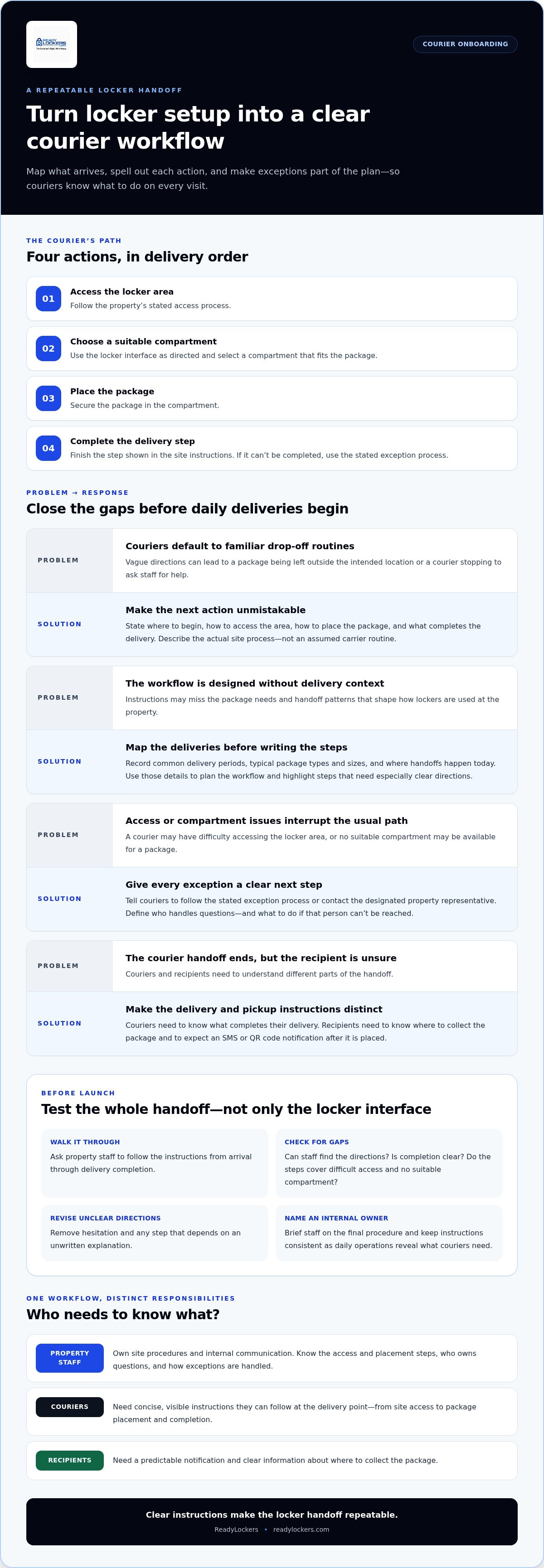
A direct handoff or general drop-off becomes a locker delivery. The courier follows the property’s access process, uses the locker interface as directed, selects a suitable compartment, places the package, and completes the delivery step. Because the sequence can vary by site, instructions should describe the property’s actual workflow rather than assume every carrier operates the same way.
Recipient notifications complete the handoff after the locker delivery. ReadyLockers sends recipients an SMS or QR code notification to support contactless pickup. Couriers need to know what completes their part of the delivery, while recipients need to know how they’ll be notified and where to collect the package.
Who needs to be ready before launch?
Property operations staff own site procedures and internal communication. They should know the access steps, the package-placement process, and how to direct questions or handle exceptions. Couriers need concise instructions they can follow at the delivery point. Recipients benefit from a clear, predictable notification process after a package is placed.
Readiness is shared, but responsibilities differ. Before launch, confirm that:
- Staff understand the delivery workflow and know who owns questions.
- Couriers can find and follow the access and placement instructions.
- Recipients know to look for an SMS or QR code notification after delivery.
Make the workflow visible and specific. Tell couriers where to begin, what to do after accessing the locker, and which property contact or process applies if they can’t complete the usual steps. This gives everyone a clear role without adding unnecessary daily oversight. Lockers become part of routine operations when couriers can repeat the steps and staff support the same process consistently.
How to prepare a courier-ready locker workflow
A reliable launch starts with the delivery process, not assumptions about how couriers will use the equipment. Map what arrives, define the steps couriers should follow, and test the instructions with the people responsible for daily operations. This makes onboarding specific to the property instead of dependent on informal explanations at the door.
Map deliveries and define the courier’s steps
Start by recording common delivery periods, typical package types and sizes, and where handoffs happen today. Use that information to plan the workflow and identify which steps need the clearest directions. The goal is to understand the property’s actual delivery flow and plan around it.
Next, write the courier sequence from arrival to completion. Keep it in the order a driver will experience it:
- Follow the property’s stated process for accessing the locker area.
- Use the locker interface as directed and select a compartment suitable for the package.
- Place the package securely and complete the delivery step shown in the site instructions.
- If a step can’t be completed, follow the stated exception process or contact the designated property representative.
Make each action concrete. “Use the lockers” leaves room for interpretation. “Access the locker area, place the parcel in a suitable compartment, and complete the delivery on the interface” gives the courier a clear sequence. Define who handles exceptions internally, and make sure the instructions explain what to do if that person can’t be reached.
Prepare instructions and test the handoff
Keep courier instructions brief, visible, and focused on the next action. Explain how to access the area, where to begin, how to complete package placement, and what to do if the usual process doesn’t work. Before sharing the instructions with couriers, ask property staff to walk through the sequence from arrival to completion. Revise any direction that causes hesitation or depends on an unwritten explanation.
Test the whole handoff, not just the locker interface. Can staff find the correct instructions? Is the completion step clear? Do the directions explain what to do if access is difficult or no suitable compartment is available? A practice run can reveal gaps before they become repeated questions during daily operations.
After testing, brief staff on the final procedure and assign an internal owner to keep instructions consistent. The locker hardware and software support the workflow, while clear operating steps make it repeatable. For a closer look at how platform operations fit into the process, explore the 2026 smart locker management software guide. Properties planning a connected delivery process can also review smart package locker solutions as part of their operational setup.
Which onboarding approach fits your courier and property setup?
The right onboarding format depends on how many couriers use the site, how often deliveries arrive, and how much time staff can spend explaining the process. A brief verbal overview may work for a small, familiar group. Where couriers change frequently or delivery activity is more complex, written guidance provides a consistent reference. A demonstration can clarify physical steps, but it doesn’t have to be the only method.
Choose a format that makes the same workflow clear on every visit. Explain access in a way that matches the locker setup at the property, and describe the actual steps couriers need to follow.
| Approach | Audience | Effort | Consistency | Suitable use case |
|---|---|---|---|---|
| Informal verbal guidance | A small, familiar courier group | Low to start, but requires staff to repeat the explanation | Can vary between conversations | A limited operation where staff can easily brief each courier |
| Written instructions | Couriers who need a quick reference | Requires preparation and occasional review | Supports the same steps being shared each time | Regular deliveries or teams with changing couriers |
| Structured demonstration | Couriers or staff who benefit from seeing the physical process | Requires time to organize and deliver | Clear when the same workflow is demonstrated | A new or less familiar process with physical steps that are easier to show |
| Written instructions plus demonstration | Teams needing both a walkthrough and a lasting reference | More preparation than either method alone | Reinforces the workflow in two formats | Busy or complex operations where instructions need to be repeatable |
Written instructions, demonstrations, or both?
Written guidance lets couriers revisit the steps without waiting for a staff member. A demonstration shows how the process works in the actual locker area, including where to begin and how the interface fits into the delivery sequence. Combining concise instructions with a walkthrough reinforces one shared workflow. Use a demonstration to clarify physical tasks, then keep written steps available for reference.
How property type and delivery patterns affect the choice
Consider courier turnover, delivery frequency, and staff availability together. An office with a small, familiar delivery group may be able to start with a staff briefing and short written directions. An apartment property with varied courier visits may benefit from instructions that stand on their own. For residential operating contexts, the guide to multi-family parcel locker systems provides related planning context.
Schools and warehouses may have different access routines and delivery flows, so tailor the explanation to the site rather than copying another property’s process. If staff are rarely near the delivery point, a written reference can reduce reliance on verbal reminders. If the workflow is unfamiliar, a demonstration can help staff and couriers understand the sequence before routine use. Review the approach after launch and adjust it when delivery patterns or staffing change. Effective onboarding matches the communication method to the people using the workflow, not simply to the locker hardware.
How to launch courier onboarding and handle exceptions
A controlled launch gives staff and couriers one agreed process to follow and makes early problems easier to identify. Assign an internal owner before rollout. This person maintains the property’s instructions, coordinates staff communication, and gathers feedback so updates don’t create conflicting versions of the workflow.
What to communicate before and during launch
Share the intended locker delivery steps with relevant courier teams before the system goes live. Focus on what couriers need to do at the site, and make sure the instructions match the actual setup. Property staff should use the same concise language when explaining the process or directing a courier to the designated contact for help.
Use this launch checklist to confirm the essentials are in place:
- Brief property staff. Review the delivery procedure, explain who owns questions, and agree on how to record issues.
- Share courier instructions. Make the access and package-placement steps easy to find and follow.
- Test the workflow. Walk through the process at the property, including the completion step and exception directions.
- Name an internal owner. Give one person responsibility for keeping instructions current and reviewing feedback.
- Check early use. Review whether couriers are following the intended process and whether staff are fielding recurring questions.
Instructions should be readable and easy to find where they’re needed. Don’t rely on staff to fill in missing steps from memory. If the site procedure changes, update the instructions and tell staff what changed so they can guide couriers consistently.
How to manage early exceptions and measure adoption
Define a property-approved next step for each issue before launch. Keep responses distinct so staff can identify the problem and apply the right procedure:
- Access difficulty: Direct the courier to the property’s designated contact or escalation process.
- No suitable compartment: Explain how the courier should report the issue and which property-defined procedure to follow next.
- Compartment unavailable: Explain how to alert the designated staff contact and record the delivery issue.
These are property operating procedures. Review staff reports regularly during the early rollout. If the same question or obstacle appears repeatedly, clarify the relevant instruction instead of relying on one-off verbal workarounds.
Assess adoption with defined operational measures, not anecdotes alone. Track whether couriers have received or completed onboarding, review locker utilization over time, and log recurring staff-reported friction. Together, these measures help distinguish a communication gap from a workflow issue and show where instructions may need refinement. For properties planning a more consistent locker handoff, explore ReadyLockers smart package lockers.
How ReadyLockers supports a consistent courier-to-recipient handoff
A locker workflow depends on both the physical system and the process around it. ReadyLockers provides smart package lockers and cloud-based management software, with courier access management supporting the delivery side of the handoff. Property teams define local procedures, including where couriers go, how they use the locker at that site, and what staff do if the usual process can’t be completed.
A platform supports a consistent workflow, while couriers still need clear site instructions and staff need agreed exception procedures. Treat the locker and management software as connected parts of daily operations, then align onboarding with the property’s actual setup. This keeps guidance practical across different sites and courier teams.
Connecting courier access with recipient pickup
The handoff has two connected stages. First, the courier follows the property’s instructions and uses the locker process to complete package placement. Then the recipient receives an SMS or QR code notification through the ReadyLockers platform, supporting contactless pickup. ReadyLockers supports pickup around the clock, while the property’s instructions explain where recipients go and how they collect a package at that location.
Keep courier directions focused on the actions needed at the site. Describe the access method and interface steps used in the property’s locker workflow. The goal is a clear handoff: couriers know how to complete their delivery step, and recipients know to use their notification for pickup.
Turn onboarding into an ongoing operating routine
Launch is the start of the routine, not the end of onboarding. Property teams can review recurring courier questions, staff-reported friction, and locker utilization as part of regular operational reviews. If couriers repeatedly pause at the same instruction or staff explain a step differently, refine the site guidance and communicate the update to the relevant team.
Keep reviews simple and tied to observable information. Note which onboarding steps have been communicated, whether locker use is becoming part of the delivery routine, and which issues staff report more than once. These observations help property teams decide whether to clarify instructions, revisit the workflow, or brief staff again.
Effective courier onboarding for new locker systems connects courier access, package placement, and recipient pickup with procedures the property can maintain. ReadyLockers provides the smart locker and cloud-based management platform; the property’s operating instructions make the workflow relevant to its site. To explore a system for your property, explore ReadyLockers smart locker solutions.
Make your locker workflow part of daily operations
Treat launch as the beginning of an operating routine. Set a time to review how the process works in practice, invite staff to flag friction, and adjust the guidance when the site’s needs change. This keeps onboarding connected to real operations rather than making it a one-time rollout task.
A locker setup should fit the way your property handles deliveries and recipient pickup. ReadyLockers brings smart package lockers and cloud-based management software together to support that workflow, including courier access management and recipient notifications. Property teams can build on this foundation with site procedures suited to day-to-day needs.
Explore ReadyLockers smart locker solutions and take the next step toward a delivery process designed for your property.
Frequently Asked Questions
How do you onboard couriers to a new locker system?
Make the property’s locker procedure easy to understand and repeat. First decide how drivers will learn the process, then give them a concise reference they can consult during a delivery. Assign a staff owner to collect questions and clarify instructions. If couriers ask where to begin, for example, make the starting point more visible in the guidance.
What should courier instructions for parcel lockers include?
Include the locker location, the site’s access process, package-placement directions, and the action that completes the delivery. Add a clear response for common issues, such as a package that won’t fit or an access problem, using the property’s procedure. Keep the wording literal and easy to scan. Avoid internal jargon or steps that depend on a staff member explaining them each time.
Do couriers need an app to deliver packages to smart lockers?
Whether an app is needed depends on the locker system’s access workflow. Base instructions on the interface and steps couriers use at the property. ReadyLockers’ platform includes courier access management, so describe the applicable site process rather than assuming a particular app, carrier integration, or credential format.
How can a property encourage couriers to use parcel lockers?
Make the intended locker process clear and straightforward at the delivery point. Share consistent directions with relevant courier teams, and ask property staff to use the same explanation when questions arise. If drivers repeatedly bypass the lockers, look for a practical obstacle: instructions may be hard to find, the route to the locker area may be unclear, or the delivery steps may need simplifying.
What should couriers do if a locker is full or inaccessible?
Couriers should follow the property’s written exception procedure rather than leave a package in an unintended location. For a full locker, explain how to report the issue and what the site directs them to do next. For access difficulty, identify the appropriate property contact or escalation route. Keep the responses distinct so staff can identify and address the actual issue.
How can property managers measure courier adoption of a locker system?
Track a small set of operational signals over time: which courier teams received instructions, how locker use changes, and which questions staff report repeatedly. Compare observations across consistent review periods so a busy delivery day doesn’t define the overall picture. If use remains uneven, investigate whether the cause is communication, access, or a recurring exception, then update the relevant process and review the results.
Can one courier onboarding process work across different property types?
A shared framework can work, but site instructions should reflect each property’s layout and operating routines. Keep common elements, such as the expected delivery completion step, consistent where they apply. Then tailor details such as locker location, staff escalation route, and delivery-area directions. A process suitable for an office may not fit an apartment or warehouse without those local adjustments.

Frequently Asked Questions
What changes for couriers when a property introduces lockers?+
A direct handoff or general drop-off becomes a locker delivery. The courier follows the property’s access process, uses the locker interface as directed, selects a suitable compartment, places the package, and completes the delivery step. Because the sequence can vary by site, instructions should describe the property’s actual workflow rather than assume every carrier operates the same way. Recipient notifications complete the handoff after the locker delivery. ReadyLockers sends recipients an SMS or QR code notification to support contactless pickup. Couriers need to know what completes their part of the delivery, while recipients need to know how they’ll be notified and where to collect the package.
Who needs to be ready before launch?+
Property operations staff own site procedures and internal communication. They should know the access steps, the package-placement process, and how to direct questions or handle exceptions. Couriers need concise instructions they can follow at the delivery point. Recipients benefit from a clear, predictable notification process after a package is placed. Readiness is shared, but responsibilities differ. Before launch, confirm that: Make the workflow visible and specific. Tell couriers where to begin, what to do after accessing the locker, and which property contact or process applies if they can’t complete the usual steps. This gives everyone a clear role without adding unnecessary daily oversight. Lockers become part of routine operations when couriers can repeat the steps and staff support the same process consistently. A reliable launch starts with the delivery process, not assumptions about how couriers will use the equipment. Map what arrives, define the steps couriers should follow, and test the instructions with the people responsible for daily operations. This makes onboarding specific to the property instead of dependent on informal explanations at the door.
Written instructions, demonstrations, or both?+
Written guidance lets couriers revisit the steps without waiting for a staff member. A demonstration shows how the process works in the actual locker area, including where to begin and how the interface fits into the delivery sequence. Combining concise instructions with a walkthrough reinforces one shared workflow. Use a demonstration to clarify physical tasks, then keep written steps available for reference.
How do you onboard couriers to a new locker system?+
Make the property’s locker procedure easy to understand and repeat. First decide how drivers will learn the process, then give them a concise reference they can consult during a delivery. Assign a staff owner to collect questions and clarify instructions. If couriers ask where to begin, for example, make the starting point more visible in the guidance.
What should courier instructions for parcel lockers include?+
Include the locker location, the site’s access process, package-placement directions, and the action that completes the delivery. Add a clear response for common issues, such as a package that won’t fit or an access problem, using the property’s procedure. Keep the wording literal and easy to scan. Avoid internal jargon or steps that depend on a staff member explaining them each time.
Do couriers need an app to deliver packages to smart lockers?+
Whether an app is needed depends on the locker system’s access workflow. Base instructions on the interface and steps couriers use at the property. ReadyLockers’ platform includes courier access management, so describe the applicable site process rather than assuming a particular app, carrier integration, or credential format.
How can a property encourage couriers to use parcel lockers?+
Make the intended locker process clear and straightforward at the delivery point. Share consistent directions with relevant courier teams, and ask property staff to use the same explanation when questions arise. If drivers repeatedly bypass the lockers, look for a practical obstacle: instructions may be hard to find, the route to the locker area may be unclear, or the delivery steps may need simplifying.
What should couriers do if a locker is full or inaccessible?+
Couriers should follow the property’s written exception procedure rather than leave a package in an unintended location. For a full locker, explain how to report the issue and what the site directs them to do next. For access difficulty, identify the appropriate property contact or escalation route. Keep the responses distinct so staff can identify and address the actual issue.
How can property managers measure courier adoption of a locker system?+
Track a small set of operational signals over time: which courier teams received instructions, how locker use changes, and which questions staff report repeatedly. Compare observations across consistent review periods so a busy delivery day doesn’t define the overall picture. If use remains uneven, investigate whether the cause is communication, access, or a recurring exception, then update the relevant process and review the results.
Can one courier onboarding process work across different property types?+
A shared framework can work, but site instructions should reflect each property’s layout and operating routines. Keep common elements, such as the expected delivery completion step, consistent where they apply. Then tailor details such as locker location, staff escalation route, and delivery-area directions. A process suitable for an office may not fit an apartment or warehouse without those local adjustments.