Top 2026 Electronic Parcel Locker Systems: Buyer's Guide
Discover the top 2026 electronic parcel locker systems. Our guide helps you choose the best hardware & software to end package theft and reclaim staff hours.

What if your property management team could reclaim twenty hours of labor every week while simultaneously ending the "missing package" emails that flood their inboxes? As e-commerce volume hits record highs in 2026, electronic parcel locker systems have transitioned from a premium building amenity to a critical infrastructure requirement. You're likely tired of seeing lobbies cluttered with boxes and hearing from frustrated tenants about missed deliveries or stolen goods. It's a logistical bottleneck that drains resources and creates unnecessary liability for your staff.
This guide will show you how to implement a total automation strategy for your delivery cycle, ensuring every package is secured behind a UL 365-2026 certified door and available for 24/7 contactless pickup. We'll analyze the top-rated hardware configurations and SaaS platforms that integrate seamlessly into your existing workflow to eliminate theft and boost property value. By the end of this review, you'll know exactly which systems provide the best balance of secure hardware and intuitive management software for your specific property type.
Key Takeaways
- Understand the transition from passive storage rooms to active, automated hubs that eliminate manual logging and property liability.
- Learn how to evaluate electronic parcel locker systems based on modular hardware flexibility, material durability, and current safety certifications.
- Discover the critical role of cloud-based SaaS in managing the notification lifecycle through automated SMS and QR code alerts.
- Identify the ideal locker configurations for your specific needs, whether prioritizing high-volume residential turnover or secure corporate asset tracking.
- See how a universal, courier-agnostic interface ensures seamless, 24/7 contactless pickup for all major national delivery services.
What Are Electronic Parcel Locker Systems and Why Are They Essential in 2026?
Electronic parcel locker systems are secure, automated infrastructures that combine modular storage units with cloud-based management software. They represent a fundamental shift in how modern properties handle the logistical burden of last-mile delivery. In 2026, relying on a manual "package room" or requiring concierge staff to log deliveries is no longer just inefficient; it's a significant liability. Manual systems create bottlenecks, increase the risk of theft, and place the burden of lost goods squarely on the property's shoulders.
By implementing an automated system, you effectively transfer the chain of custody from your staff to a secure digital environment. Once a courier deposits a package, the system assumes responsibility for the item's security until the recipient retrieves it. This total automation of the delivery cycle eliminates the human error and liability gaps that often lead to resident frustration and lost revenue. It's a proactive solution that anticipates the needs of a high-volume delivery environment.
The Evolution of Package Management
The transition from lobby chaos to streamlined, contactless delivery workflows is driven by necessity. Traditional mailrooms simply can't scale to handle current e-commerce volumes. With the global smart parcel locker market estimated to reach up to $1.55 billion in 2026, these systems have become a standard requirement for any contemporary environment. Properties that adopt this technology see a marked improvement in tenant retention. They provide 24/7 recipient access and a courier-agnostic interface that works with all major delivery services, turning a logistical headache into a high-value property amenity.
Core Functionality: How the System Works
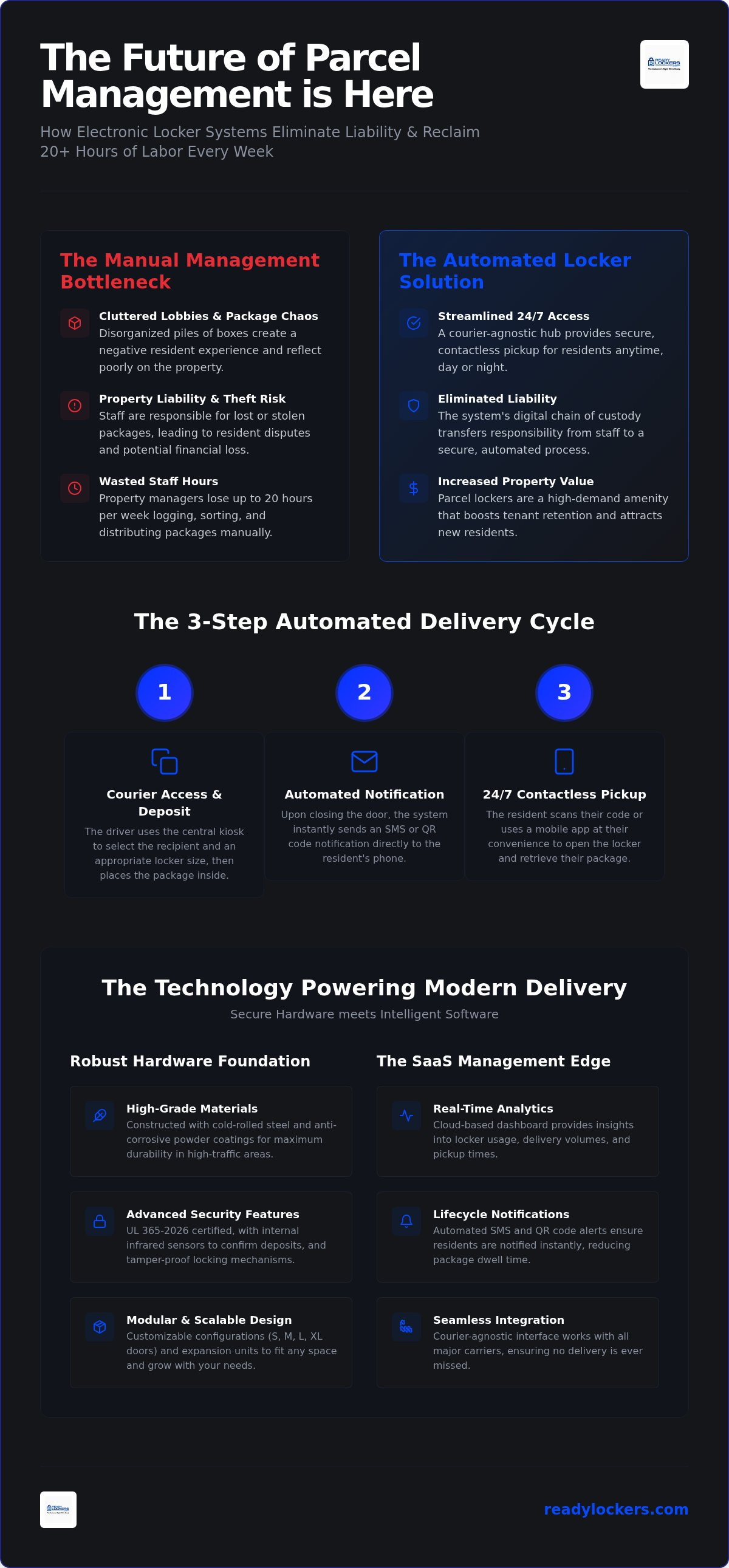
The operational cycle is designed for speed and security. It follows a logical three-step process that ensures a frictionless experience for both couriers and recipients. This workflow reduces the "time-to-pickup" and keeps the locker bank available for new deliveries.
- Step 1: Courier Access. The delivery driver uses a dedicated interface or scans a QR code to gain entry. They select the recipient from the directory and choose an appropriately sized locker.
- Step 2: Secure Deposit. The courier places the item in the assigned compartment. Upon closing the door, the SaaS platform triggers an automated SMS and QR code notification directly to the recipient.
- Step 3: Contactless Pickup. The recipient arrives at the lockers at their convenience. They use their unique access code or mobile app to open the door, completing the delivery without any staff intervention.
The Hardware: Modular Designs and Technical Specifications
The efficacy of electronic parcel locker systems depends on the structural integrity and adaptability of the hardware. These units are engineered using high-grade materials like cold-rolled steel and finished with anti-corrosive powder coatings. This ensures they withstand the rigors of high-traffic environments, whether they're placed in a corporate lobby or an outdoor courtyard. As of August 2026, all outdoor smart parcel lockers must be certified under the UL 365-2026 standard to meet federal safety requirements for commercial use.
Internal infrared sensors provide an additional layer of security by detecting successful deposits. This technology prevents "ghost" deliveries where a courier might close an empty locker, ensuring the chain of custody remains intact. The physical build is designed to be tamper-proof, using concealed hinges and reinforced locking mechanisms that protect against unauthorized access.
Modular Configurations for Every Space
A one-size-fits-all approach doesn't work for modern properties. Modular designs allow property managers to customize their installation based on specific floor plans and delivery volumes. You can start with a base controller and add expansion units as your building occupancy increases.
- Standard door sizes (small, medium, large, and extra-large) to handle everything from padded envelopes to oversized boxes.
- Scalable columns that can be arranged in linear, L-shaped, or U-shaped configurations to fit any architectural footprint.
- Weatherproofed outdoor hardware equipped with reinforced seals and specialized finishes to protect against rain, snow, and UV exposure.
When planning your layout, remember that at least 5% of lockers must be ADA compliant. This requires placing opening and locking mechanisms between 15 and 48 inches from the floor. Choosing modular smart package lockers allows you to meet these regulatory standards while maximizing your available space.
Security and Access Control Hardware
The Courier Access Interface is the primary point of contact for delivery drivers. It must be intuitive and rugged. Most modern systems utilize industrial-grade touchscreens that comply with WCAG 2.1 Level AA standards for digital accessibility. These interfaces are designed for 24/7 operation and can withstand extreme temperatures.
To ensure mission-critical reliability, these systems include several hardware-level safeguards:
- Integrated 4K cameras that record every interaction, providing a clear audit trail for every package handled.
- Motion-activated LED lighting that illuminates the locker bank during use to ensure safe retrieval at any hour.
- Internal battery backup systems that maintain full functionality for several hours during local power outages.
- Offline access modes that allow recipients to retrieve items using stored local codes even if the building’s internet connection fails.
The SaaS Edge: Cloud-Based Management and Analytics
While the physical build provides the necessary security, the true intelligence of modern electronic parcel locker systems resides in their cloud-based management software. The software layer acts as the brain of the operation, coordinating every interaction between couriers, recipients, and property managers. As the software segment of this market grows at a projected 11.7% CAGR through 2035, the focus has shifted from simple storage to a sophisticated notification lifecycle that ensures maximum locker turnover and system efficiency.
This digital infrastructure is what allows for the total automation of the delivery cycle. It removes the need for manual logging and creates a secure, verifiable audit trail for every package. By April 2026, all digital interfaces on these systems must comply with WCAG 2.1 Level AA standards. This ensures that the software remains accessible to all users, regardless of their physical or cognitive needs, reinforcing the system's role as a standard utility in inclusive environments.
Intelligent Notification Logic
The primary goal of the SaaS platform is to reduce the "time-to-pickup," which keeps locker compartments available for new deliveries. Automated notification logic achieves this through a series of targeted alerts and reminders. When a courier completes a deposit, the system immediately triggers a unique access code or QR code sent via SMS or email. This creates a frictionless, contactless experience where the recipient spends mere seconds at the kiosk.
- Customizable Alert Schedules. Property managers can set automated reminders for packages left for more than 24 or 48 hours to prevent locker "squatting."
- Multi-User Access. The software can link multiple authorized users to a single office department or household, ensuring the right person can retrieve sensitive items.
- Dynamic QR Codes. These provide a higher level of security than static pins and allow for completely touchless interaction with the locker interface.
Administrative Dashboard and Reporting
Effective property management requires data, not guesswork. A robust administrative dashboard provides real-time visibility into the health and occupancy of the entire locker bank. This transparency is vital for maintaining 100% uptime and documenting the secure chain of custody. If a resident claims a package is missing, the manager can instantly pull a time-stamped report with photo evidence of the delivery.
Usage analytics allow managers to identify peak delivery times and optimize locker allocation. If the data shows that medium-sized lockers are consistently at 95% capacity while small lockers remain empty, the modular hardware can be reconfigured to match actual demand. Remote troubleshooting capabilities further enhance reliability. Software updates and system diagnostics are performed over-the-air, ensuring the platform remains secure against evolving cybersecurity threats without requiring on-site technician visits.
Evaluating the Best Systems for Different Property Types
Electronic parcel locker systems must adapt to the specific demands of the environment they serve. A residential complex requires high-volume turnover and 24/7 accessibility, whereas a retail store needs a system that enhances the customer’s click-and-collect experience. Understanding these nuances is critical for achieving a high return on investment and ensuring long-term operational success across different verticals.
Smart Package Lockers for Apartments
For multifamily developments, the primary goal is reducing lobby friction and preventing package theft. Residents now view smart package lockers for apartments as an essential utility rather than a luxury perk. These systems allow management to reclaim hours previously spent logging deliveries while offering tenants the security they expect. High-volume turnover is managed through automated reminders that keep compartments clear for the next delivery cycle.
Commercial and Office Solutions
In the corporate world, the focus shifts toward employee productivity and internal logistics. Offices use lockers to manage personal deliveries so that receptionists can focus on high-value tasks. These systems also facilitate the secure distribution of hardware and sensitive internal documents without requiring face-to-face handoffs. It's a professional solution that maintains a clean, organized office environment.
- Streamlined IT asset distribution for remote or hybrid workforces.
- Secure exchange of HR or legal documentation with verifiable audit trails.
- Seamless integration with corporate badge access and security systems.
Specialized Use Cases: Retail, Healthcare, and Education
Retailers use these systems to bridge the gap between online shopping and physical pickup. By providing a secure kiosk for orders, they drive foot traffic and reduce staffing costs at service counters. The customer experience is improved through immediate, contactless access that bypasses traditional checkout lines. It's an efficient way to handle the growing demand for local pickup options.
In healthcare and education, the stakes are higher. Systems in these sectors must manage sensitive medical supplies or student parcels with extreme precision. The software ensures that every transaction is recorded, providing the transparency required for regulatory compliance and internal accountability. Universities use them to secure student packages in high-density dormitories, ensuring every item reaches its recipient without a centralized mailroom. If you're ready to modernize your property’s logistics, you can explore our universal smart locker solutions to find the right fit for your specific facility.
ReadyLockers: The Integrated Standard for Electronic Parcel Systems
ReadyLockers serves as the definitive answer to modern logistical challenges by providing a universal platform that bridges the gap between physical security and digital efficiency. This system is designed to act as a central hub for all incoming and outgoing goods, regardless of the property type. By combining rugged hardware sales with a high-performance SaaS subscription, the platform ensures that your investment remains functional and secure long after the initial installation. It's a proactive solution for property owners who prioritize frictionless operation and long-term reliability.
A courier-agnostic approach is the only future-proof choice for modern properties. Unlike carrier-specific solutions that limit access to a single provider, these electronic parcel locker systems allow every national delivery service to utilize the same secure interface. This inclusivity maximizes the utility of the hardware and ensures that no package is left unsecured in a lobby or hallway. National support and installation services provide professional setup across the United States, guaranteeing that every unit is configured to meet local safety and accessibility requirements from day one.
A Scalable Investment for Property Owners
Implementing a smart locker strategy shouldn't disrupt your daily operations. The onboarding process is designed for low-friction implementation, moving quickly from initial layout design to full software integration. Once the system is live, it provides ongoing value through automatic cloud updates and deep usage analytics. These data points allow you to monitor the health of your delivery cycle and adjust your configuration as your building’s needs change. For a deeper look at hardware options and software features, consult our smart package lockers buyer's guide.
- Automated software updates protect against emerging cybersecurity threats.
- Usage reports identify peak delivery windows to help staff manage traffic.
- Modular expansion units can be added without replacing the core controller.
Getting Started with Your Smart Locker Strategy
The first step in modernizing your delivery workflow is assessing your building's current package volume. You should also project growth based on occupancy trends and the continued rise of e-commerce. Evaluating the ROI of automated package management reveals significant savings when compared to the high cost of manual labor and the potential liability of lost items. Staff members who previously spent hours logging boxes can be redirected to high-value resident services or property maintenance tasks.
Consulting with an efficiency expert allows you to design a modular configuration that fits your specific architectural footprint. Whether you need a small bank for a boutique office or a massive installation for a 400-unit apartment complex, the hardware is adaptable. This strategic planning ensures that your system meets current demand while leaving room for the logistical challenges of the future. It's time to eliminate the chaos of manual deliveries and provide the secure, 24/7 contactless experience your tenants and employees expect.
Modernizing Your Property's Logistics
The transition from manual package rooms to automated electronic parcel locker systems is a fundamental requirement for any property aiming to stay competitive in 2026. You've seen how modular hardware and cloud-based SaaS work together to eliminate lobby chaos and transfer liability away from your staff. By prioritizing a courier-agnostic platform, you ensure that every delivery is secured and every recipient enjoys frictionless access. These systems are no longer a luxury; they're the standard for efficient property management.
ReadyLockers provides the professional infrastructure needed to handle rising delivery volumes with ease. Our platform combines modular hardware for any property size with 24/7 contactless pickup technology and cloud-based SaaS for real-time tracking. This integrated approach ensures that your facility remains secure, organized, and ahead of the logistical curve. It's time to stop managing boxes and start managing your property's growth.
Streamline your package management with ReadyLockers today and experience the peace of mind that comes with total automation.
Frequently Asked Questions
How do electronic parcel locker systems prevent package theft?
These systems eliminate unsecured "lobby drop" deliveries by requiring couriers to deposit items into secure, cold-rolled steel compartments. Integrated 4K cameras record every transaction, while internal infrared sensors verify that an item was actually placed inside. This creates a verifiable audit trail that transfers liability away from property staff and ensures only the authorized recipient with a unique code can access the parcel.
Are smart lockers compatible with all major couriers like UPS, FedEx, and USPS?
Yes, the platform utilizes a courier-agnostic interface designed for universal accessibility. Any delivery driver from a national carrier can use the dedicated kiosk to select a recipient and secure a package. This open-access approach ensures that your building’s logistics aren't limited to a single provider, making it a future-proof investment for any high-volume commercial or residential property.
What happens if a recipient loses their access code or QR code?
Recipients can instantly request a code resend through the mobile app or via the automated notification system. If a user doesn't have their device, property managers can access the administrative dashboard to verify the recipient's identity and manually trigger the locker door. This dual-layered recovery process ensures that packages are always retrievable while maintaining strict security protocols at the kiosk.
Can these systems be installed outdoors, or are they for indoor use only?
Electronic parcel locker systems are available in both indoor and specialized outdoor configurations. Outdoor units feature reinforced weatherproofing, anti-corrosive finishes, and sealed electronics to withstand rain, snow, and extreme temperatures. To ensure safety and reliability, outdoor installations must comply with the UL 365-2026 standard, which is the current federal requirement for commercial smart lockers in public spaces.
How much space is required for a modular smart locker installation?
The required footprint depends entirely on your building’s specific delivery volume and architectural layout. Because the hardware is modular, you can start with a single base controller unit and add expansion columns as needed. A typical starter bank for a medium-sized office or apartment complex occupies approximately six to ten linear feet of wall space, though configurations can be scaled up indefinitely.
Do electronic parcel lockers require a dedicated internet connection?
Yes, a stable internet connection is necessary to sync the hardware with the cloud-based SaaS platform for real-time tracking and notifications. However, advanced systems include offline functionality that allows recipients to use locally stored access codes to retrieve their items during a temporary network outage. This ensures that the system remains operational even if the building’s primary internet service fails unexpectedly.
How does the system handle oversized packages that don't fit in a locker?
Modular systems include extra-large door sizes specifically designed to accommodate oversized parcels and bulkier items. If a package exceeds these dimensions, the courier interface typically provides instructions for an alternative secure drop-off point or alerts management to handle the delivery manually. Analyzing your package volume data helps you choose the right mix of small, medium, and oversized lockers during the initial configuration.
Is there a monthly fee for the smart locker management software?
Yes, a SaaS subscription is required to power the automated notification lifecycle and the administrative dashboard. This recurring fee covers the cost of SMS and email alerts, real-time usage analytics, and remote software updates that maintain system security. This subscription ensures that your property always has access to the latest logistics technology and 24/7 system monitoring without requiring on-site technical maintenance.

Frequently Asked Questions
How do electronic parcel locker systems prevent package theft?+
These systems eliminate unsecured "lobby drop" deliveries by requiring couriers to deposit items into secure, cold-rolled steel compartments. Integrated 4K cameras record every transaction, while internal infrared sensors verify that an item was actually placed inside. This creates a verifiable audit trail that transfers liability away from property staff and ensures only the authorized recipient with a unique code can access the parcel.
Are smart lockers compatible with all major couriers like UPS, FedEx, and USPS?+
Yes, the platform utilizes a courier-agnostic interface designed for universal accessibility. Any delivery driver from a national carrier can use the dedicated kiosk to select a recipient and secure a package. This open-access approach ensures that your building’s logistics aren't limited to a single provider, making it a future-proof investment for any high-volume commercial or residential property.
What happens if a recipient loses their access code or QR code?+
Recipients can instantly request a code resend through the mobile app or via the automated notification system. If a user doesn't have their device, property managers can access the administrative dashboard to verify the recipient's identity and manually trigger the locker door. This dual-layered recovery process ensures that packages are always retrievable while maintaining strict security protocols at the kiosk.
Can these systems be installed outdoors, or are they for indoor use only?+
Electronic parcel locker systems are available in both indoor and specialized outdoor configurations. Outdoor units feature reinforced weatherproofing, anti-corrosive finishes, and sealed electronics to withstand rain, snow, and extreme temperatures. To ensure safety and reliability, outdoor installations must comply with the UL 365-2026 standard, which is the current federal requirement for commercial smart lockers in public spaces.
How much space is required for a modular smart locker installation?+
The required footprint depends entirely on your building’s specific delivery volume and architectural layout. Because the hardware is modular, you can start with a single base controller unit and add expansion columns as needed. A typical starter bank for a medium-sized office or apartment complex occupies approximately six to ten linear feet of wall space, though configurations can be scaled up indefinitely.
Do electronic parcel lockers require a dedicated internet connection?+
Yes, a stable internet connection is necessary to sync the hardware with the cloud-based SaaS platform for real-time tracking and notifications. However, advanced systems include offline functionality that allows recipients to use locally stored access codes to retrieve their items during a temporary network outage. This ensures that the system remains operational even if the building’s primary internet service fails unexpectedly.
How does the system handle oversized packages that don't fit in a locker?+
Modular systems include extra-large door sizes specifically designed to accommodate oversized parcels and bulkier items. If a package exceeds these dimensions, the courier interface typically provides instructions for an alternative secure drop-off point or alerts management to handle the delivery manually. Analyzing your package volume data helps you choose the right mix of small, medium, and oversized lockers during the initial configuration.
Is there a monthly fee for the smart locker management software?+
Yes, a SaaS subscription is required to power the automated notification lifecycle and the administrative dashboard. This recurring fee covers the cost of SMS and email alerts, real-time usage analytics, and remote software updates that maintain system security. This subscription ensures that your property always has access to the latest logistics technology and 24/7 system monitoring without requiring on-site technical maintenance.