Unattended Delivery Lockers: How They Work and When to Use Them
Learn how unattended delivery lockers work to secure packages without staff. Explore automated pickups, key benefits, and how to choose the right system today.

What if a delivery could be handed off securely even when nobody is available to receive it? Unattended delivery lockers give couriers a designated place to leave packages and recipients a straightforward way to collect them, without requiring a staff member to handle every exchange.
That convenience matters when deliveries arrive throughout the day and property teams need visibility without constant onsite supervision. But “unattended” doesn’t mean “unmanaged.” A locker system can automate access and notifications, while people still oversee system settings, physical placement, and day-to-day operations.
This guide explains the delivery and pickup cycle, what a locker platform can handle automatically, and where oversight remains important. You’ll also learn how to assess fit based on package volume, available space, and operational needs. ReadyLockers combines smart locker hardware with cloud-based management, courier access, SMS or QR code notifications, and usage analytics. Its configurable layouts can be planned around different property footprints. Use the guidance below to decide whether a managed locker platform can make package handoffs more reliable at your property.
Key Takeaways
- Unattended delivery lockers provide a designated handoff point when recipients or staffed receiving areas aren’t available.
- Understand how courier access, package placement, recipient notifications, and pickup fit together in the delivery cycle.
- Learn which parts of unattended delivery lockers can be automated and where staff may still need to address exceptions or review operations.
- Assess property fit by considering package volume, delivery frequency, available space, and the people who will use the lockers.
- See how ReadyLockers combines configurable locker hardware, cloud management, and contactless pickup for different property settings.
What Are Unattended Delivery Lockers, and What Problem Do They Solve?
Unattended delivery lockers are secure, shared locker systems that let couriers leave packages for recipients to collect without a staffed receiver handling each handoff. They address a common timing mismatch: deliveries may arrive when a reception desk is closed, staff are busy, or the intended recipient is unavailable. Rather than leaving parcels in a lobby or another shared area, a courier can use a designated compartment for the drop-off.
A parcel locker is one form of this handoff infrastructure. For recipients, a designated compartment can make collection more orderly than searching through a pile of deliveries or coordinating a desk pickup. For property teams, a central handoff point can reduce routine package handling while leaving people responsible for operational oversight. Lockers can improve the handoff process, but they cannot guarantee that theft, delivery mistakes, or exceptions will never occur.
How Is an Unattended Locker Different From a Package Room?
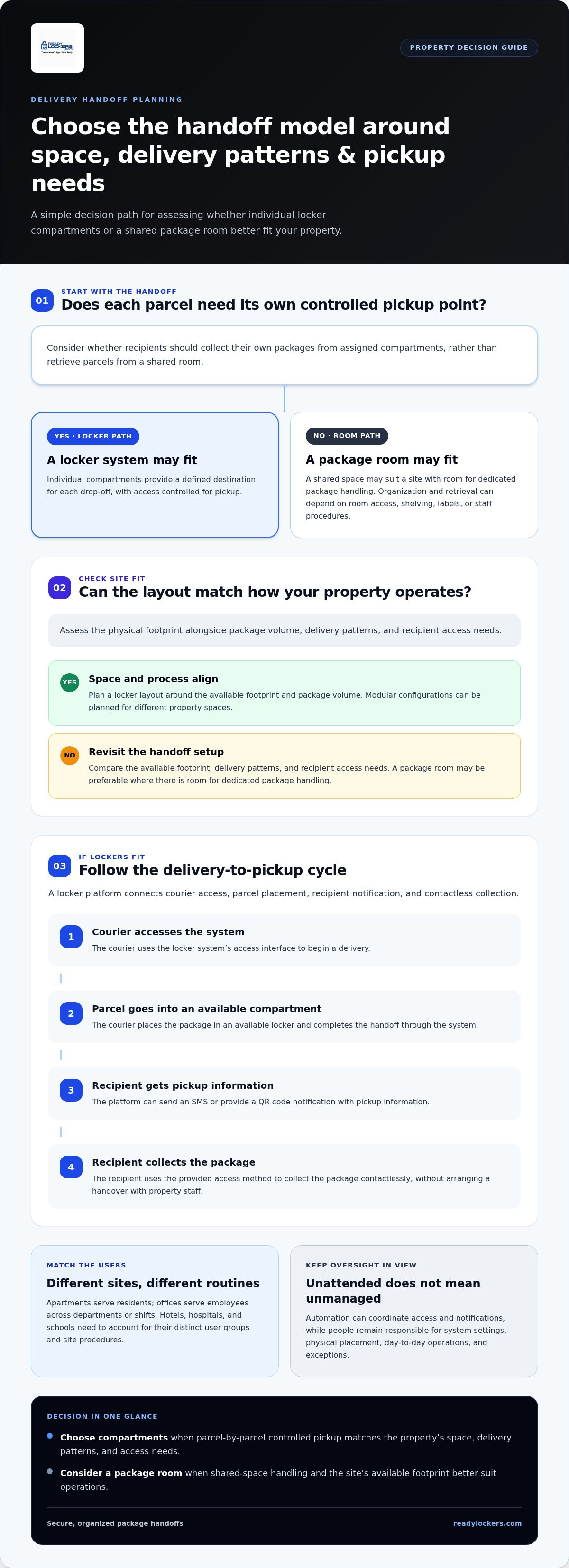
A package room gives parcels a shared space. Organization and retrieval may depend on room access, shelving, labels, or staff procedures. A locker system assigns a delivery to an individual compartment, with access controlled for pickup. That separation can help recipients identify and retrieve their own packages without sorting through other deliveries.
Neither layout suits every site. A compact property with a steady flow of smaller parcels may value compartment-based handoffs, while a site with room for dedicated package handling may prefer a package room. Compare the available footprint, delivery patterns, and recipient access needs before choosing an approach.
Which Properties Can Use Unattended Delivery Lockers?
Properties have different users and delivery routines, so locker layouts and operating processes should reflect the setting. Apartments need a convenient shared pickup point for residents; offices may serve employees across departments or shifts. Hotels can use a controlled handoff process for guest or staff packages, while hospitals and schools need to account for distinct user groups and site procedures.
- Warehouses: Organize deliveries for staff, teams, or designated work areas.
- Retail locations: Provide a structured pickup point for business-related parcels or customer collections, depending on operations.
- HOAs: Support package handoffs for residents in a shared community space.
For any property, consider who deposits packages, who collects them, and how access is managed. A configuration that works for an apartment building may not suit a workplace or healthcare setting. Modular locker layouts can be planned around a property’s space and package volume, aligning the physical setup with how the site operates.
At their core, unattended delivery lockers replace an in-person receiver with a controlled, compartment-based handoff. They can make package delivery and collection more organized, but work best when the layout and process suit the people and delivery patterns at the property.
How Does the Unattended Delivery Locker Process Work?
The delivery-to-pickup cycle has four steps: a courier accesses the system, places a parcel in an available compartment, the recipient receives a notification, and the recipient collects the package. Each step connects the physical locker with access controls and management software, creating a consistent handoff without requiring a staff member to meet the courier.
With unattended delivery lockers, automation coordinates the exchange, but the process still depends on clear access rules and accurate recipient details. Property teams can use access management to organize who may deposit packages and how recipients retrieve them. Platform activity and usage analytics can also provide visibility into locker operations.
- Courier access: The courier uses the locker system’s access interface to begin a delivery.
- Package placement: The courier places the parcel in an available compartment and completes the handoff through the system.
- Recipient notification: The platform sends an SMS or provides a QR code notification with pickup information.
- Recipient collection: The recipient uses the provided access method to collect the package contactlessly.
What Happens When a Courier Delivers a Package?
The courier uses the system’s courier access interface to complete a drop-off, then places the package in an available locker compartment. Access management helps organize courier use, while the compartment provides a defined destination for the parcel. The exact interaction depends on the system setup. The essential point is that the courier can complete the handoff without passing the package to an onsite receiver.
How Do Recipients Know a Package Is Ready?
After the deposit, the platform can notify the recipient by SMS or provide a QR code for pickup. The recipient can then collect the package contactlessly at any time, without arranging a handover with property staff. Notification details are part of the user experience, so keep recipient information and pickup instructions clear. ReadyLockers’ locker management software supports notifications and operational visibility.
Access management also helps keep courier and recipient use organized as people change roles, move in or out, or need updated access. Property teams can review usage and address routine questions. Unusual situations, such as a misdirected parcel or a recipient who can’t access a compartment, may still need human attention. The system handles the standard handoff; staff define procedures for exceptions.
ReadyLockers brings smart locker hardware, a courier access interface, and cloud-based management together to coordinate package handoffs. Configurable layouts can be planned around property space and package volume, while SMS or QR code notifications support recipient pickup. Explore the ReadyLockers locker platform to see how it can support a structured handoff process for your property.
What Still Needs Oversight When Delivery Lockers Operate Unattended?
“Unattended” means a courier can complete a standard handoff without a staff member receiving the package. It doesn’t mean every exception resolves itself. Reliable operation depends on deciding in advance who reviews activity, manages access, and responds when a package or pickup doesn’t follow the expected path.
Separate routine platform functions from remote oversight and situations that need a property-side response. The exact division depends on the site, but assigning clear ownership helps prevent issues from being overlooked.
| Area | What it can involve | Where oversight fits |
|---|---|---|
| Automated tasks | Sending recipient notifications, controlling courier access, and enabling contactless pickup. | Set clear access procedures and keep recipient details accurate so routine handoffs can proceed smoothly. |
| Remote management | Reviewing usage analytics and managing access through cloud-based locker software. | Assign someone to review activity, update user access when needed, and identify patterns that may need attention. |
| Human attention | Handling uncollected parcels, recipient access questions, or reports of a delivery that doesn’t match expectations. | Define who follows up, what steps they take, and how an issue is recorded or escalated within the property. |
Which Tasks Can the Locker Platform Support?
A locker platform can coordinate recipient notifications, courier access management, and pickup while recording usage for operational review. Cloud-based management lets authorized property staff oversee relevant activity without being physically beside the lockers. The platform provides visibility into routine use, but staff still interpret that information and decide whether follow-up is appropriate. For more on these platform functions, explore the smart locker management software guide.
Which Exceptions Need a Property-Side Plan?
Start with common questions: What happens when a package remains uncollected? Who responds if a recipient can’t access a compartment? How should staff handle a report that a parcel is missing or was placed in the wrong locker? A documented procedure gives the team a consistent way to assess each case without assuming the platform can resolve it automatically.
Then assign responsibility. A named role or team should review usage, manage changes to user access, and direct questions to the appropriate property contact. The person handling a case doesn’t have to be onsite at the locker, but someone needs to own the follow-up. Clear instructions also help recipients know where to raise an issue and what information to provide.
Reliable unattended delivery lockers automate routine handoffs, while people remain accountable for exceptions and operational review. Before rollout, map each likely issue to an owner and a next step. This can reveal gaps, such as access changes with no assigned administrator or uncollected packages without a follow-up process. The locker system provides tools for organized operations; a property-side plan makes those tools useful when the ordinary process doesn’t fit.
How Can You Assess Whether Unattended Delivery Lockers Fit Your Property?
Start with the way packages move through your property today. Unattended delivery lockers are useful when deliveries regularly arrive faster or at different times than staff or recipients can manage them. Review package volume, delivery frequency, available space, and who will use the system. The goal is to match the locker configuration and operating process to actual site needs, not to choose a layout based on guesswork.
Include the people and procedures around the hardware, too. Couriers need a clear access process; recipients need straightforward pickup instructions; property teams need visibility into use and a plan for exceptions. If nobody owns access changes or follow-up, even a well-placed locker system can create avoidable confusion.
What Should You Map Before Selecting a Locker Configuration?
Use your property’s delivery records to estimate typical and peak package volume, and note when deliveries tend to arrive. Peaks matter: a setup sized only for an average day may have too little compartment capacity during busy periods. Then identify possible placement areas, how users reach them, and whether the space supports a clear route from delivery access to recipient pickup.
- Volume: Review package counts and delivery patterns, including busy periods.
- Space: Identify practical locations and how much room the site can allocate.
- Users: Define who deposits and collects packages, and how access is managed.
- Operations: Decide how recipients receive pickup information and who handles exceptions.
Modular locker layouts can be configured around a property’s footprint and package volume. Use the information you’ve gathered to guide compartment capacity and placement rather than assuming every site needs the same arrangement.
How Do Requirements Change by Property Type?
Property type shapes both access and operating procedures. Apartments need a convenient shared location and a process that works for residents; offices need to account for employee pickup patterns and workplace access. Schools may plan around students, faculty, or staff, while hotels and healthcare sites must align package handling with their distinct users and internal routines.
- Warehouses: Consider which teams or designated users receive packages and how they reach the lockers.
- Retail: Define whether the handoff supports staff, customers, or both.
- HOAs: Plan for shared community access and clear resident instructions.
- Hotels and healthcare: Match access procedures to the people and workflows at the site.
Across all settings, assess courier access, recipient communication, management visibility, and ownership of exceptions. A broader evaluation of system requirements is available in the smart package lockers buyer’s guide.
Use your package patterns and space constraints to guide the plan. Explore configurable locker solutions designed around property layout and package volume.
How ReadyLockers Supports Unattended Package Handoffs
Once you’ve assessed delivery patterns, space, and operating needs, ReadyLockers brings the handoff components together in one managed setup. Smart locker hardware provides the physical compartments, while a cloud-based management platform supports courier access management, notifications, and usage analytics. Recipients can collect packages contactlessly using SMS or QR code notifications, and property teams gain visibility into how the system is being used.
The configuration can be shaped around a property’s footprint and package volume instead of assuming every site needs the same layout. Apartments, workplaces, hospitality settings, healthcare facilities, schools, retail sites, warehouses, and HOAs can plan around their users and delivery flow. The system supports the handoff between courier delivery and recipient pickup.
How Do Hardware and Management Software Work Together?
Each locker compartment creates a designated place for a package handoff. The courier access interface supports courier use, and the cloud platform connects that deposit with recipient notifications and access management. After receiving a notification, the recipient can collect the package contactlessly. Usage analytics give property teams information to review, connecting the physical flow of packages with operational oversight.
This combined approach matters because hardware alone provides storage, but not the same level of managed access and visibility. The platform helps coordinate standard use, while property staff retain responsibility for site procedures and exceptions. Couriers transport and deliver packages, and ReadyLockers’ system supports the handoff point between delivery and recipient pickup.
- Configurable layout: Plan locker arrangements around available property space and package volume.
- Courier access management: Organize access for couriers using the locker interface.
- Recipient notifications: Send SMS or QR code notifications to support pickup.
- Usage analytics: Give property teams information to review locker activity and usage patterns.
Together, these functions make unattended delivery lockers a managed handoff system, not simply a bank of compartments. Recipients get a clear route to collection, while property teams can review usage without standing beside the lockers for each delivery.
What Is a Practical Next Step for Property Teams?
Prepare a short outline of your property type, typical and peak package volume, delivery patterns, available space, and expected user groups. Note how couriers would access the locker area and who will manage recipient questions or exceptions. These details create a useful starting point for discussing a configuration suited to the site’s operating requirements.
ReadyLockers can tailor configurable layouts to the property’s space and package volume. Explore unattended locker solutions and start a conversation about a setup for your property.
Turn Your Package Workflow Into a Practical Locker Plan
The strongest next step isn’t choosing a cabinet configuration in isolation. First, identify where your current package process creates friction: deliveries waiting for attention, unclear pickup instructions, or limited visibility into locker use. Then decide what a better handoff should make easier for recipients and property teams.
Use those priorities to shape a setup around your property’s workflow. ReadyLockers pairs smart package locker hardware with cloud-based management, SMS or QR code notifications, courier access management, and usage analytics. Configurable locker layouts can be tailored to different property spaces and package volumes, giving your team a practical starting point for planning unattended delivery lockers.
Bring your property type, delivery patterns, available space, and user needs into the conversation. Explore unattended locker solutions and take the next step toward a package handoff process that fits your property.
Frequently Asked Questions
Can unattended delivery lockers work in a building with no staff?
Yes. Unattended delivery lockers can support package handoffs in buildings without a staff member receiving each delivery. A courier uses the locker’s access interface, and the recipient collects the parcel using the system’s pickup process. Before deployment, establish who manages access settings and who handles reports of missed or misdirected packages. Remote platform management can provide operational visibility, but the property still needs a plan for questions and exceptions.
How do couriers access unattended delivery lockers?
Couriers use the locker system’s courier access interface to complete a package drop-off. The interface manages courier access, while the physical locker provides a designated compartment for the parcel. For example, a property can explain where the lockers are located and how couriers should use the access point in its delivery instructions. The specific process depends on the system configuration.
Are unattended delivery lockers available 24/7?
ReadyLockers supports recipient pickup at any time, so packages can be collected outside typical staffed desk hours. Access also depends on the property’s own entry arrangements. For instance, a locker inside a secured building may be accessible only when a recipient can enter that building. Consider the locker location and user access when deciding how pickup will work at your site.
What happens when a package is not collected?
An uncollected package remains an operational exception for the property to address. Set a clear process for identifying how long parcels may remain in compartments, who reviews usage, and how staff follow up with the recipient. A property might designate a manager to check locker activity and apply its existing package-handling policy. The software can provide usage information, but it doesn’t decide what happens to an uncollected parcel.
Do unattended delivery lockers prevent package theft?
No package handoff method can guarantee that theft will never occur. Lockers provide controlled compartments rather than leaving parcels in an open lobby or shared area, which can reduce exposure to casual access. Their effectiveness also depends on thoughtful placement, controlled access, and clear operating procedures. Treat a locker system as one part of a property’s package security approach, not as a substitute for reviewing how people enter and use the delivery area.
Do unattended delivery lockers replace a property manager or mailroom team?
No. Lockers can automate parts of routine package intake and pickup, but they don’t replace the people responsible for property operations. A manager or mailroom team may still need to update user access, review usage, answer questions, and respond to unusual delivery issues. For a small site, those tasks may fit into an existing role; larger or busier properties may need a more formal ownership process. Assigning responsibility keeps exceptions from being overlooked.
Ready to plan a locker setup around your property’s package volume, space, and operating needs? Explore ReadyLockers solutions.

Frequently Asked Questions
How Do Hardware and Management Software Work Together?+
Each locker compartment creates a designated place for a package handoff. The courier access interface supports courier use, and the cloud platform connects that deposit with recipient notifications and access management. After receiving a notification, the recipient can collect the package contactlessly. Usage analytics give property teams information to review, connecting the physical flow of packages with operational oversight. This combined approach matters because hardware alone provides storage, but not the same level of managed access and visibility. The platform helps coordinate standard use, while property staff retain responsibility for site procedures and exceptions. Couriers transport and deliver packages, and ReadyLockers’ system supports the handoff point between delivery and recipient pickup. Together, these functions make unattended delivery lockers a managed handoff system, not simply a bank of compartments. Recipients get a clear route to collection, while property teams can review usage without standing beside the lockers for each delivery.
What Is a Practical Next Step for Property Teams?+
Prepare a short outline of your property type, typical and peak package volume, delivery patterns, available space, and expected user groups. Note how couriers would access the locker area and who will manage recipient questions or exceptions. These details create a useful starting point for discussing a configuration suited to the site’s operating requirements. ReadyLockers can tailor configurable layouts to the property’s space and package volume. Explore unattended locker solutions and start a conversation about a setup for your property. The strongest next step isn’t choosing a cabinet configuration in isolation. First, identify where your current package process creates friction: deliveries waiting for attention, unclear pickup instructions, or limited visibility into locker use. Then decide what a better handoff should make easier for recipients and property teams. Use those priorities to shape a setup around your property’s workflow. ReadyLockers pairs smart package locker hardware with cloud-based management, SMS or QR code notifications, courier access management, and usage analytics. Configurable locker layouts can be tailored to different property spaces and package volumes, giving your team a practical starting point for planning unattended delivery lockers. Bring your property type, delivery patterns, available space, and user needs into the conversation. Explore unattended locker solutions and take the next step toward a package handoff process that fits your property.
Can unattended delivery lockers work in a building with no staff?+
Yes. Unattended delivery lockers can support package handoffs in buildings without a staff member receiving each delivery. A courier uses the locker’s access interface, and the recipient collects the parcel using the system’s pickup process. Before deployment, establish who manages access settings and who handles reports of missed or misdirected packages. Remote platform management can provide operational visibility, but the property still needs a plan for questions and exceptions.
How do couriers access unattended delivery lockers?+
Couriers use the locker system’s courier access interface to complete a package drop-off. The interface manages courier access, while the physical locker provides a designated compartment for the parcel. For example, a property can explain where the lockers are located and how couriers should use the access point in its delivery instructions. The specific process depends on the system configuration.
Are unattended delivery lockers available 24/7?+
ReadyLockers supports recipient pickup at any time, so packages can be collected outside typical staffed desk hours. Access also depends on the property’s own entry arrangements. For instance, a locker inside a secured building may be accessible only when a recipient can enter that building. Consider the locker location and user access when deciding how pickup will work at your site.
What happens when a package is not collected?+
An uncollected package remains an operational exception for the property to address. Set a clear process for identifying how long parcels may remain in compartments, who reviews usage, and how staff follow up with the recipient. A property might designate a manager to check locker activity and apply its existing package-handling policy. The software can provide usage information, but it doesn’t decide what happens to an uncollected parcel.
Do unattended delivery lockers prevent package theft?+
No package handoff method can guarantee that theft will never occur. Lockers provide controlled compartments rather than leaving parcels in an open lobby or shared area, which can reduce exposure to casual access. Their effectiveness also depends on thoughtful placement, controlled access, and clear operating procedures. Treat a locker system as one part of a property’s package security approach, not as a substitute for reviewing how people enter and use the delivery area.
Do unattended delivery lockers replace a property manager or mailroom team?+
No. Lockers can automate parts of routine package intake and pickup, but they don’t replace the people responsible for property operations. A manager or mailroom team may still need to update user access, review usage, answer questions, and respond to unusual delivery issues. For a small site, those tasks may fit into an existing role; larger or busier properties may need a more formal ownership process. Assigning responsibility keeps exceptions from being overlooked. Ready to plan a locker setup around your property’s package volume, space, and operating needs? Explore ReadyLockers solutions.